

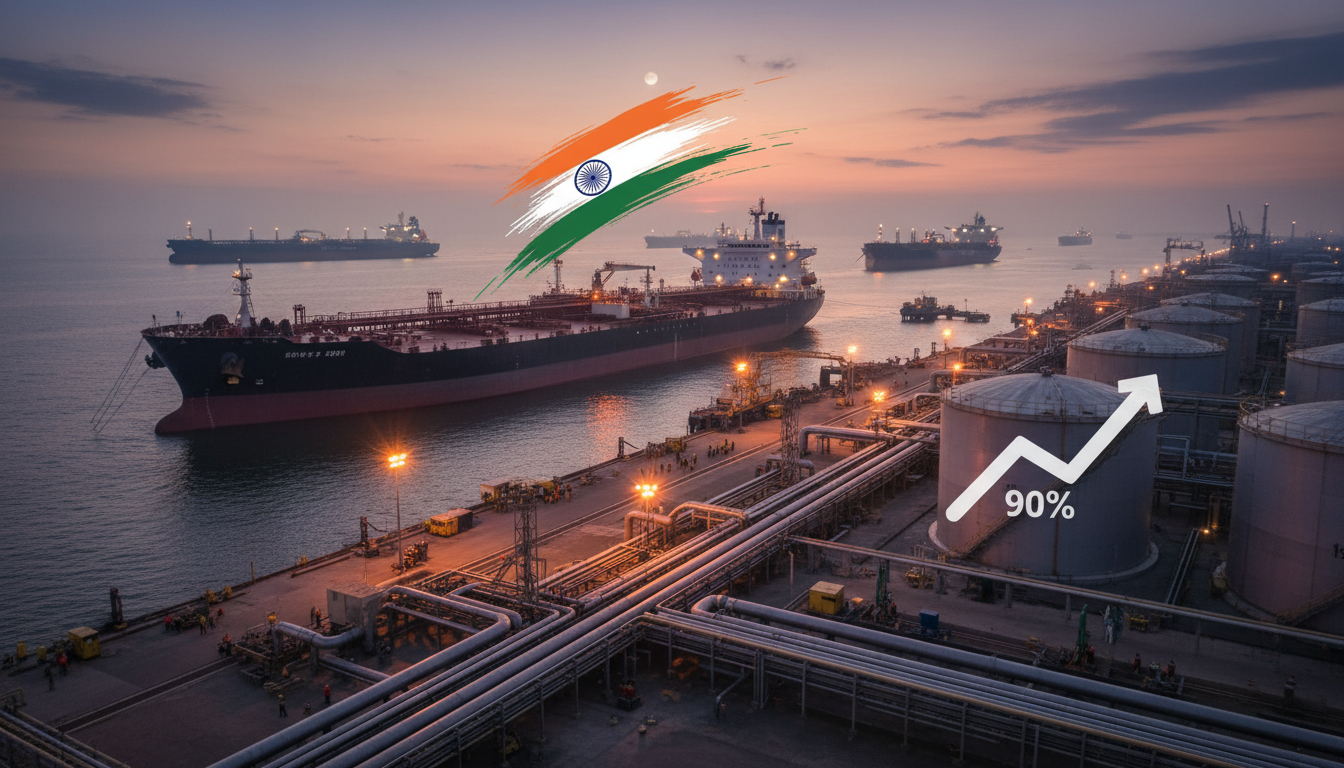
India’s Oil Market Pivot: Russian Crude Surges Amidst Middle East Supply Shocks
The global energy landscape is undergoing a profound transformation, with India, a burgeoning powerhouse in global crude demand, dramatically recalibrating its oil procurement strategy. March witnessed an extraordinary shift in the nation’s import patterns, as Russian crude inflows experienced an astonishing 90% surge compared to February. This unprecedented pivot directly responds to escalating geopolitical tensions in the Middle East and crucial policy adjustments in the West, sending ripples through international oil markets and demanding close attention from energy investors.
The Russian Resurgence: A Strategic Reorientation
Following a period of subdued purchases between November and February, India’s appetite for Russian crude saw a spectacular rebound last month. The 90% month-over-month increase highlights a decisive strategic move by Indian refiners. This accelerated procurement was significantly facilitated by a U.S. waiver that permitted the purchase of Russian crude already loaded onto tankers. This policy decision effectively unlocked tens of millions of barrels of oil that had accumulated at sea, providing an attractive alternative source as traditional supply lines faced severe disruptions.
This rapid increase in Russian crude imports signals India’s pragmatic approach to energy security, prioritizing stable and potentially more competitively priced supplies amidst a turbulent global market. For investors, this trend underscores the ongoing re-calibration of global oil trade routes and the resilience of Russian crude exports in finding new, substantial markets, impacting regional refining economics and global price differentials.
Middle East Supply Crunch and Overall Import Decline
While Russian volumes soared, India’s overall crude imports experienced a notable contraction, slumping by 15% in March. This significant decline is primarily attributable to the de facto closure of the Strait of Hormuz, a critical maritime chokepoint through which a substantial portion of the world’s oil transits. Data from commodity intelligence firm Kpler indicates a sharp plunge in deliveries from India’s traditional Middle Eastern suppliers, including Iraq, Saudi Arabia, and the United Arab Emirates, during the same period.
The disruption underscores the acute vulnerability of global energy supply chains to regional instability. With a major artery of oil flow constrained, nations heavily reliant on Middle Eastern crude are compelled to explore and solidify alternative sourcing strategies. This situation creates both challenges and opportunities for energy companies, particularly those involved in refining and trading, who must navigate a more complex and geographically diverse supply matrix.
Diversification and Logistical Challenges
In response to the Middle Eastern squeeze, India also sought out other suppliers. Although still representing a smaller fraction of the total import basket, crude deliveries from Angola, one of Africa’s leading oil producers, tripled in March. This reflects a broader effort by India to diversify its crude sources in the face of Persian Gulf uncertainties.
Furthermore, some Middle Eastern producers, including Saudi Arabia and the UAE, attempted to circumvent the Strait of Hormuz bottleneck by re-routing export shipments through ports situated outside the Persian Gulf. However, these logistical workarounds proved insufficient to compensate for the significant volumes of crude lost due to the practical closure of the critical chokepoint. Market analysis confirms the persistent challenges; an expert from Kpler noted that while bilateral negotiations, potentially involving Iran granting passage, might allow for “selective access to MEG cargoes,” the absence of “consistent tanker movement” prevents any assertion that the Strait is “meaningfully open.” This assessment highlights the continuing fragility of Middle Eastern crude availability.
The U.S. Waiver’s Impact: Unlocking Russian Barrels
The pivotal U.S. waiver on purchases of Russian crude oil already in transit fundamentally altered the supply dynamics for Indian refiners. This policy adjustment immediately opened a significant avenue for secure, and likely more affordably priced, crude acquisition. By allowing refiners to accept pre-loaded Russian barrels without immediate sanction risk, the waiver not only provided a vital market for Russian exports but also offered a crucial alternative for India at a time when its primary suppliers were heavily constrained. For astute investors, this demonstrates the immediate and profound impact that geopolitical policy decisions can have on global commodity flows and the strategic positioning of major energy consumers.
Geopolitical Dynamics: India Outmaneuvers China
The intensified demand for Russian crude has sparked a quiet but significant competition between major Asian economies. By mid-March, India had successfully outmaneuvered China, securing numerous Russian crude cargoes that were initially bound for Chinese ports. Vessels were observed altering their trajectories mid-voyage to instead head for India, illustrating the aggressive nature of this procurement drive.
This current scramble for Russian barrels follows a period earlier in the year when millions of barrels of Russian crude accumulated on tankers. During that time, most international buyers, with the notable exception of China, largely avoided Russian oil due to the specter of U.S. sanctions and considerable diplomatic pressure from Washington on nations like India to reduce their reliance on Russian energy. India’s latest procurement strategy represents a clear decision to prioritize economic advantage and energy supply security, even if it entails navigating complex geopolitical currents and recalibrating previous positions. This competitive dynamic for Russian crude adds another layer of intrigue to the evolving global energy trade narrative.
Investor Takeaway: Navigating a Volatile Energy Landscape
The dramatic shifts in India’s crude procurement underscore the inherent volatility and heightened geopolitical risks embedded within global oil markets. Investors must acknowledge that the prevailing environment rewards agility and diversification in national energy strategies. The capacity of a major energy consumer like India to rapidly pivot towards alternative suppliers, even amidst international scrutiny, highlights the resilience and adaptability of key players within the global energy trade ecosystem.
Companies possessing flexible refining capabilities, diversified supply chains, and robust risk management frameworks are optimally positioned to navigate these ongoing disruptions. The enduring influence of geopolitical factors in dictating oil flows necessitates a keen awareness for those investing across the energy sector, as price dynamics, supply security, and profitability remain inextricably linked to the complexities of international relations. The recent saga of India’s oil imports offers a compelling case study: traditional trade patterns can be upended swiftly by unforeseen events and policy shifts, creating both significant challenges and compelling opportunities for the informed energy investor.
