

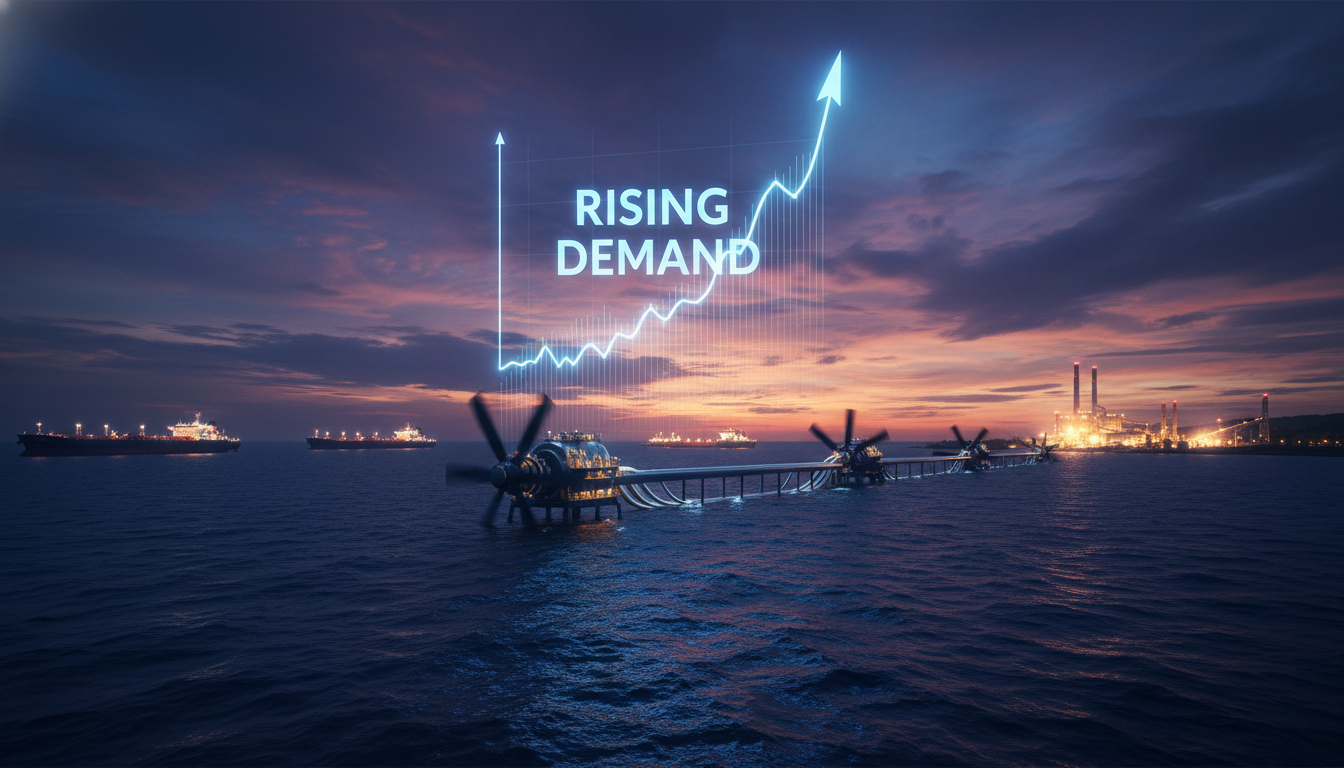
Great Lakes Hydropower Emerges as Strategic Investment Amid Soaring Energy Demand
The vast Great Lakes region, a critical economic engine for North America, is witnessing a renewed focus on its immense freshwater resources as a vital source of baseload power. With electricity prices climbing across key markets like New York, Michigan, and Ohio, and industrial demand accelerating, submersible hydropower projects are poised to unlock significant new capacity. Estimates suggest an impressive 60 to 90 megawatts (MW) of potential generation within the strategic urban corridors connected to this immense freshwater system.
This evolving energy landscape underscores a fundamental shift: hydropower generation is moving beyond remote installations and into the heart of urban energy grids. This transition presents compelling investment opportunities for those tracking the future of North American power generation and grid resilience.
Montreal Spearheads Urban Hydropower Innovation
Montreal is quickly positioning itself as a hub for this next phase of North American hydropower development. Spearheading this charge is Ocean Renewable Power Company (ORPC), which is preparing for the installation of two submersible hydroelectric devices within the powerful St. Lawrence River. This marks ORPC’s strategic pivot into urban deployments, building on its extensive operational track record in challenging environments like Alaska and Maine.
The timing of these projects aligns perfectly with escalating electricity demand across the Great Lakes region. Rapid population growth, a resurgence in industrial activity, and the exponential expansion of data infrastructure – driven by the burgeoning Artificial Intelligence sector – are collectively straining existing grid capabilities. Reliable, consistent energy solutions are no longer just an environmental aspiration; they are an economic imperative.
Unlocking the Power of the Great Lakes’ Connecting Waterways
While the Great Lakes themselves lack the strong tidal movements suited for some marine energy technologies, their vast outflow through connecting waterways offers a distinct advantage. Rivers such as the St. Lawrence and Niagara present ideal conditions for next-generation hydropower systems, characterized by consistent, high-velocity flows.
Stuart Davies, ORPC’s chief executive officer, highlights the immense potential. “The St Lawrence River stands as one of North America’s premier opportunities for our technology due to its consistent, high-velocity water extending for hundreds of miles,” Davies stated. He added, “The Montreal area alone offers 60 to 90 megawatts of resource potential. The Niagara River and the St. Lawrence River are powerful conduits, driven by the sheer hydrology of the lakes’ drainage.”
ORPC’s innovative turbines are engineered from durable carbon fiber, designed for full submersion. This approach allows them to harness continuous river flow without the need for large-scale, environmentally impactful dams or extensive infrastructure. This represents a significant advancement, offering a more localized and adaptable form of clean energy generation.
Rising Energy Costs Reshape the Investment Calculus
The strategic deployment of these submersible hydropower systems is inextricably linked to the significant pricing pressures currently impacting U.S. energy markets. In western New York, electricity rates have already seen increases following regulatory approval for higher delivery charges, with further hikes slated through 2027. Similar market tensions are emerging in Michigan and Ohio, where the burgeoning demand from energy-intensive data centers is placing unprecedented strain on regional grids.
For corporate energy buyers, particularly those in the AI and data storage sectors where operational continuity is paramount, reliability has become as critical as decarbonization. Stuart Davies emphasized this dual benefit: “If you are an industrial customer, particularly contemplating the growth of AI, we can provide that 24/7 electricity resource, serving as essential baseload power during normal operations. Furthermore, should the grid experience an outage, that river continues to flow, ensuring a crucial level of emergency power.”
This robust positioning aligns hydropower with the broader trend towards distributed, resilient energy systems. Such systems are vital for simultaneously meeting stringent climate targets and ensuring uninterrupted operational continuity for critical industries. This makes investments in such technologies increasingly attractive for long-term portfolio strategies.
Global Momentum Builds in Marine and Current-Based Energy
The global energy landscape is increasingly embracing marine and current-based hydropower technologies. Scotland has successfully deployed advanced tidal systems capable of powering thousands of homes, demonstrating the commercial viability of these innovative solutions. In Asia, South Korea’s Sihwa Lake facility stands as a testament to large-scale marine energy, generating approximately 550 GWh annually.
North America is now accelerating its efforts to scale similar solutions. ORPC has already outlined plans for a second Great Lakes installation in Buffalo, New York, while other developers are actively targeting high-flow marine environments, including Canada’s powerful Bay of Fundy. This burgeoning interest signals a growing recognition among policymakers and institutional investors that non-dam hydropower technologies can provide stable, predictable output, effectively complementing the intermittent nature of renewables like wind and solar.
Navigating Regulatory Hurdles and Securing Investment
Despite the compelling resource potential, regulatory timelines in the United States present a significant challenge for hydropower development. Projects frequently require up to eight years to secure full licensing approval, creating substantial uncertainty for developers and investors alike. This protracted process directly impacts project economics and increases the cost of capital, potentially deterring crucial investment.
This contrasts sharply with regions like Quebec, where a well-established and streamlined hydropower framework has fostered lower-cost electricity and significantly faster deployment cycles. The divergence highlights the pivotal role of effective governance in accelerating clean energy adoption, particularly for emerging technologies that offer substantial long-term benefits.
For executives and investors assessing opportunities in the evolving energy sector, the implications are clear. Hydropower in the Great Lakes region offers a scalable, resilient energy source that aligns with both decarbonization objectives and critical energy security goals. However, unlocking its full investment potential will hinge on concerted efforts in regulatory reform, strategic infrastructure investment, and improved alignment between state and federal energy policies.
As electricity demand continues its aggressive upward trajectory, fueled by AI-driven growth and the electrification of industrial processes, river-based generation is rapidly transitioning from a niche innovation to a foundational component of North America’s comprehensive energy transition strategy. Savvy investors are taking note of this critical shift.
