

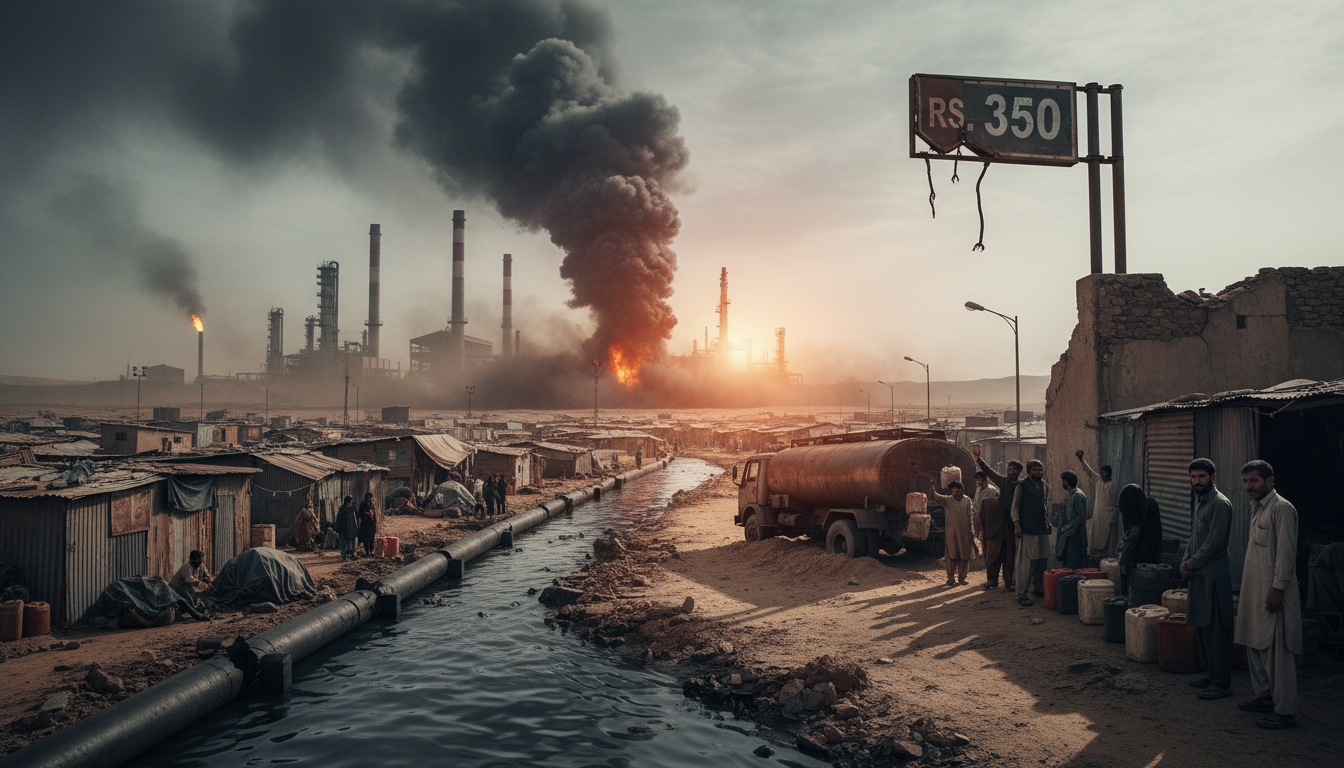
Pakistan Faces Unprecedented Fuel Price Surge Amidst Middle East Tensions, Investors Watch Closely
ISLAMABAD – Investors tracking global energy markets are closely monitoring Pakistan, where citizens are reeling from record-setting fuel price hikes. Effective Friday, the nation witnessed a dramatic increase in petrol and diesel costs, with some prices surging by an astounding 54%. This precipitous rise is directly attributed to escalating geopolitical tensions in the Middle East, which have driven international crude oil benchmarks significantly higher, sending ripple effects across the globe.
The impact of this latest increase is particularly acute for Pakistan, an economy already grappling with formidable financial challenges and persistent high inflation. Economic analysts are sounding alarms, warning that these elevated fuel costs will inevitably translate into broader inflationary pressures, pushing up food prices and further eroding the purchasing power of an already strained populace. Such developments in key emerging markets like Pakistan often signal wider vulnerabilities for investors in volatile regions.
Detailed Price Adjustments and Government Rationale
In an announcement late Thursday, Pakistan’s Petroleum Minister, Pervez Malik, confirmed the necessity of these adjustments, labeling them “unavoidable.” The government moved to increase petrol prices by 137 Pakistani rupees, equivalent to approximately 49 U.S. cents, per liter. This follows a significant 20% increase imposed just last month, indicating a sustained upward trend in energy costs for Pakistani consumers and businesses.
Even more impactful was the overnight surge in diesel prices, which climbed by an additional 184.49 rupees, or about 67 U.S. cents, per liter. This represents a staggering increase of approximately 54.9%. Minister Malik reiterated that these adjustments were not discretionary but were “necessary and unavoidable” in order to align domestic prices with current global market trends, reflecting the severe financial pressures on the government to procure fuel at international rates. He also outlined plans for the government to subsidize fuel for motorcyclists, who constitute a critical segment of the transport sector, making up nearly 78% of all vehicles on Pakistan’s roads. The specifics of this subsidy mechanism, however, are still under development.
Immediate Relief Measures and Strategic Energy Procurement
In response to the immediate economic burden on citizens, Interior Minister Mohsin Naqvi announced that public transport services in Islamabad would be offered free of charge for 30 days, commencing Saturday. This directive, issued under the Prime Minister’s instructions, will see the Interior Ministry absorb the associated fuel costs, providing a temporary reprieve for commuters in the capital. This measure highlights the government’s recognition of the severe immediate impact on daily life and economic activity.
Concurrently, reports indicate Pakistan has been actively pursuing alternative routes for oil procurement in recent weeks. This strategic shift comes in the wake of disruptions and potential closures affecting the Strait of Hormuz, a critical choke point for global oil shipments. Such proactive measures underscore the heightened geopolitical risks impacting energy supply chains and the lengths nations must go to ensure continued access to vital resources, a factor always considered by energy sector investors.
Geopolitical Undercurrents and Economic Fragility
The unprecedented rise in fuel costs arrives at a time when Prime Minister Shehbaz Sharif has publicly acknowledged the detrimental effects of regional instability on Pakistan’s already fragile economy. The Prime Minister has emphasized his government’s commitment to diplomatic engagement, pursuing efforts to de-escalate tensions and foster dialogue among involved parties in the broader Middle East. Pakistan has even extended an offer to host peace talks, although no specific dates for such meetings in Islamabad have been announced.
For investors, this confluence of geopolitical risk and domestic economic vulnerability presents a complex landscape. The direct linkage between international conflict and local fuel prices underscores the interconnectedness of global energy markets and the disproportionate impact on import-dependent emerging economies. This situation elevates the risk profile for investments in sectors sensitive to commodity price fluctuations and currency depreciation.
Societal Impact and Economic Outlook
On the ground, the immediate impact of these escalating tensions and the subsequent fuel price increases has been palpable. Households and daily commuters across Pakistan are bracing for significantly higher transportation costs and an overall surge in the cost of living. The sentiment among the populace reflects deep concern and frustration. “Life was already very difficult for us, and now everything will become more expensive,” remarked Mohammad Zain Alvi, an Islamabad commuter, encapsulating the pervasive anxiety.
Observations from major cities on Friday depicted unusually quiet fuel stations and noticeably lighter traffic, as many individuals opted to stay home, either unable or unwilling to absorb the new, elevated expenses. Stories from citizens like Azhar Ali, a junior government employee, illustrate the widespread feeling of injustice: “We have nothing to do with the war. Why are we being made to pay for it? This will affect everything — transport, food, our entire lives.” Similarly, food delivery riders, such as Sher Khan in Peshawar, expressed profound uncertainty about their ability to continue working, noting that most of their meager earnings would now be consumed by fuel costs.
Jabran Sarfraz, a prominent economist based in Karachi, echoed these concerns, highlighting that the immediate burden would fall squarely on consumers. He unequivocally warned that the higher fuel prices are set to ignite further inflation, raising the cost of essential daily necessities and disproportionately affecting lower-income groups. Sarfraz also noted that the duration of this economic strain would largely hinge on how swiftly global crude oil prices moderate. For investors, this translates into potential headwinds for domestic consumption, retail sector performance, and overall economic growth projections for Pakistan.
Navigating the Volatile Energy Landscape
The situation in Pakistan serves as a stark reminder of the intricate interplay between global geopolitical events, international energy markets, and domestic economic stability. As global oil prices continue to be influenced by Middle Eastern dynamics, countries like Pakistan, heavily reliant on imported energy, face immense pressure. Investors must consider these factors when evaluating emerging market portfolios, particularly those with significant exposure to energy-importing nations. The ability of governments to manage inflationary spirals, secure stable energy supplies, and implement effective social safety nets will be critical in mitigating the long-term economic and social fallout, directly impacting the investment climate and sovereign risk profile.
