

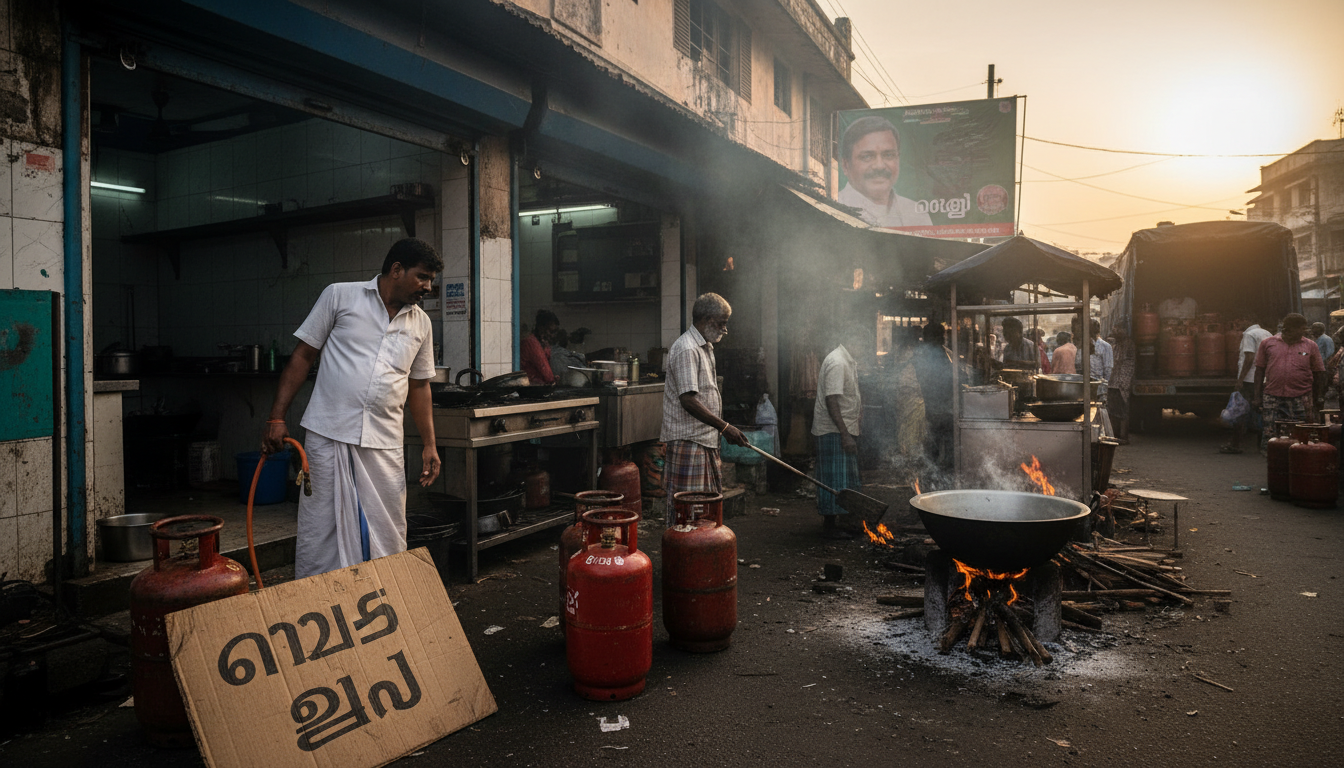
Kerala’s Commercial LPG Crisis: A Sobering Investment Signal
The vibrant economic pulse of Kerala’s culinary landscape is currently faltering under the severe pressure of a commercial liquefied petroleum gas (LPG) cylinder shortage. This burgeoning crisis transcends mere inconvenience, serving as a stark reminder for investors of how global geopolitical events and fragile supply chains can ripple down to impact local economies and consumer markets. OilMarketCap.com observes this situation closely, highlighting the direct financial implications for businesses and the broader energy market dynamics at play.
Kerala, a state renowned for its sprawling network of outdoor eateries, bustling ‘thattukadas’ (roadside food carts), and growing ‘veettile oonu’ (licensed home-based meal outlets), sees these establishments as integral to daily life. They cater to a significant portion of the population’s dining habits, from takeaway meals to regular sustenance for students and the elderly. However, the current scarcity of commercial LPG, even at elevated prices, is now throttling this vital food trade, leaving stakeholders deeply concerned about sustained profitability and operational continuity. The unfolding situation during a political peak season, ahead of assembly elections, further complicates an already strained commercial environment.
Operational Paralysis: Businesses Struggle Amidst Fuel Scarcity
The impact on businesses has been immediate and severe. Many restaurants have been forced to scale back their operations dramatically, while numerous smaller, more vulnerable ventures have ceased trading entirely, hoping for a swift resolution to the supply crunch driven by the West Asia conflict. This poses significant revenue and liquidity challenges, directly affecting their ability to meet financial obligations and sustain employment.
Consider Shyam, who operates a ‘chicken & snacks’ takeaway. He has been compelled to halt all cooking activities due to the unavailability of commercial LPG cylinders. His business, once thriving, is now limited to selling fruit juices and tea prepared on an electric stove. This operational pivot has inevitably led to a substantial reduction in his daily earnings, underscoring the direct link between energy access and business viability. His immediate neighbor, running a ‘thattukada’, has completely suspended operations, illustrating the widespread nature of the disruption.
This widespread operational distress raises critical questions for investors regarding the resilience of small and medium-sized enterprises (SMEs) in regions susceptible to energy supply shocks. The cascading effect on employment and local consumption patterns could have broader macroeconomic consequences for the state.
Escalating Costs and Black Market Dynamics
Beyond the simple lack of supply, the crisis is characterized by extreme price volatility and the emergence of a predatory black market. While the official rate for a commercial LPG cylinder has climbed to approximately ₹2,000, many businesses report immense difficulty securing supplies even at this price point. This scarcity has inadvertently fueled an illicit trade, with black-market operators reportedly demanding exorbitant rates, sometimes as high as ₹4,000 per commercial LPG cylinder. This represents a staggering 100% premium over the already hiked official price, creating an unsustainable cost burden for food service providers.
Sheeba, who manages a small ‘veettile oonu’ with her husband near Ettumanoor, exemplifies this struggle. Their gas stoves have remained idle for days due to failed attempts at LPG refueling. To maintain some level of service, they have reverted to using firewood, an alternative that is itself becoming increasingly expensive as more outlets make the switch, driving up demand. The resulting reduction in capacity has led to significant revenue losses, impacting their personal finances and their ability to service commitments, such as a missed bank loan installment. This highlights the double burden of rising input costs and diminished sales, a precarious position for any business.
Salaam, a small restaurant owner in Chalakudy, echoes these concerns, noting that the underutilization of his kitchen due to the LPG shortage has caused a significant dip in daily revenue. Crucially, fixed costs such as rent, procurement expenses, and staff wages remain constant, squeezing profit margins and threatening the long-term viability of his establishment. This scenario underscores the fundamental challenges in maintaining profitability when core operational inputs are volatile and scarce.
Broader Socio-Economic Ripple Effects and Energy Security Imperatives
The ramifications of this commercial LPG shortage extend far beyond the immediate business owners. Regular customers, including students and employees living away from home who rely on these eateries for daily meals, face substantial disruption. The acclaimed ‘parcel’ system, where individuals pick up takeaway meals, is also complicated, forcing many to consider cooking at home despite busy schedules. Furthermore, an increasing number of elderly couples, often living alone with children abroad, depend heavily on these neighborhood caterers for their daily food supply. For these vulnerable segments, the LPG crisis translates directly into food insecurity and diminished quality of life.
From an investor’s perspective, this situation in Kerala serves as a compelling case study on regional energy security and the imperative for supply chain resilience. The dependence on a single fuel source for a critical industry like food service exposes inherent vulnerabilities. Geopolitical instabilities, such as the West Asia conflict, can instantaneously disrupt supply lines, leading to market imbalances, price spikes, and severe economic consequences at the local level.
This crisis underscores the urgent need for diversification in energy infrastructure and a robust strategy for managing commodity price volatility. Investments in alternative cooking fuels, decentralized energy solutions, and resilient supply chain logistics could mitigate such risks in the future. The political significance of LPG cylinders, now reportedly as sought-after as votes in this election season, further emphasizes the critical role of energy access in societal stability and economic well-being. Investors tracking emerging markets and energy transition trends should view this Kerala incident not as an isolated event, but as a microcosm of broader challenges that can impact investment performance and market stability across various sectors.
