

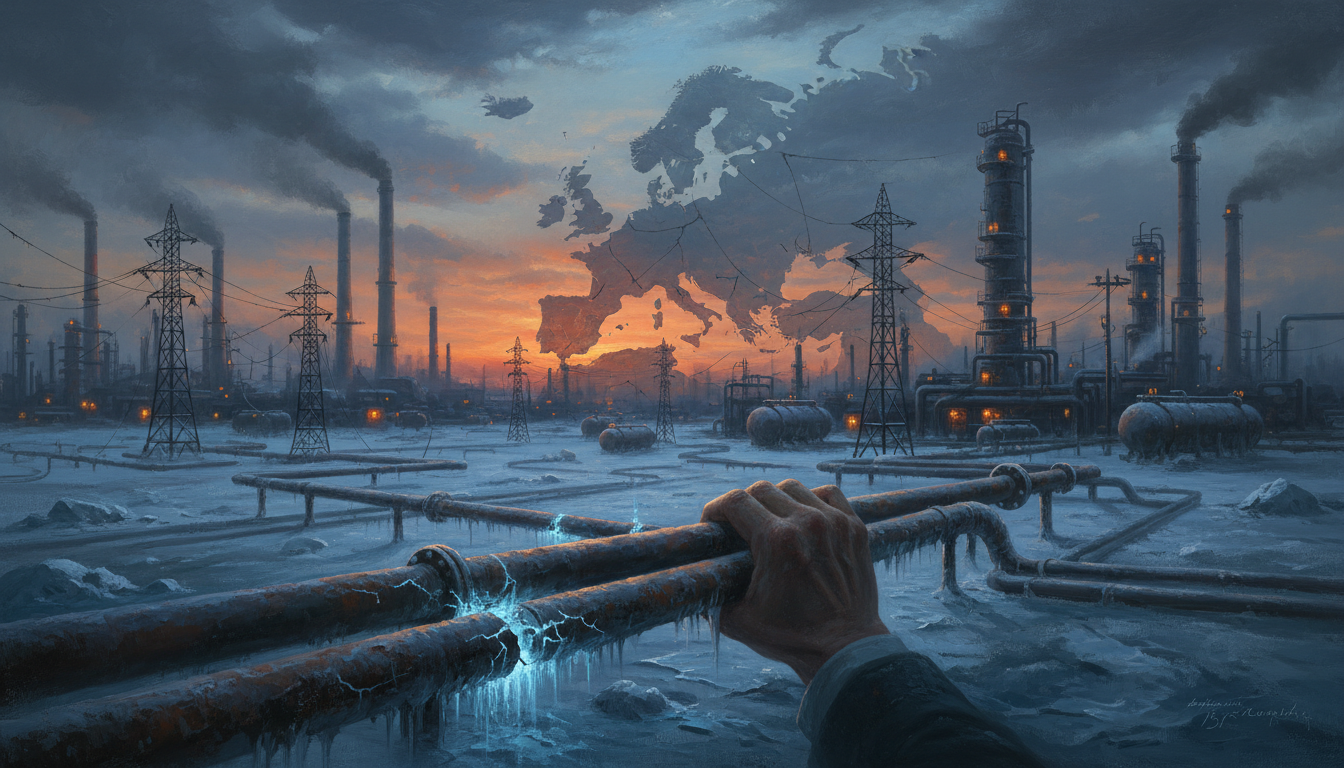
Europe Braces for Enduring Energy Crisis: Investment Implications in a Tight Market
European policymakers are signaling a profound and protracted period of scarcity in critical oil and gas supplies, a development with significant implications for global energy investors. Dan Jørgensen, the European Union’s energy commissioner, recently issued a stark warning: prepare for a “long crisis” characterized by persistently elevated energy prices. This outlook suggests that the current volatility and high costs in energy markets are not transient but represent a fundamental shift in the supply-demand paradigm, challenging assumptions about future commodity price trajectories and emphasizing the critical need for robust energy security strategies across the continent. For investors monitoring the oil and gas sector, this forecast underscores an environment of sustained opportunity and heightened risk, particularly within refining and distribution segments.
The Deepening Gravity of Europe’s Energy Outlook
Commissioner Jørgensen’s recent remarks underscore a growing apprehension within Brussels regarding the true scale of the looming energy challenges. While acknowledging that the full force of the crisis has yet to manifest, he admitted that the language employed by officials has become “more serious now than it was earlier.” This shift in rhetoric from European leadership indicates an urgent recognition of the structural vulnerabilities exposed by recent geopolitical events and supply chain disruptions. The commissioner’s analysis confirms that this situation will be “prolonged,” necessitating that member states rigorously secure their energy requirements. Investors should interpret this as a long-term inflationary signal for energy commodities, potentially driving sustained capital expenditure in exploration and production, and reinforcing the strategic value of existing energy assets capable of resilient output in a constrained market.
Financial Impact and Persistent Price Pressures
The financial repercussions of the current geopolitical landscape are already substantial and continue to mount. Commissioner Jørgensen revealed to EU energy ministers that just 30 days of conflict in the Middle East have burdened the bloc with an additional $16.2 billion (equivalent to 14 billion euros) on its collective oil and gas import bill. Crucially, he emphasized that even a swift resolution to current geopolitical tensions would not see energy prices revert to pre-conflict levels. This assessment implies that the underlying market dynamics—including reduced availability of specific products and increased logistical costs—are now fundamentally altered. For oil and gas investors, this scenario solidifies the expectation of higher revenue streams for producers and refiners in the foreseeable future, translating into potentially stronger balance sheets and increased shareholder returns for companies positioned to navigate this new pricing environment.
Critical Pinch Points: Jet Fuel and Diesel Markets Under Strain
Within the broader energy complex, specific products are experiencing acute stress, signaling potential investment hotspots and areas of concern. The situation regarding jet fuel and diesel is particularly alarming for European markets. The continent’s significant reliance on Middle Eastern sources for these essential refined products has exposed it to severe supply disruptions, leading to sharp price escalations. Jet fuel, vital for air travel and logistics, has seen its market tighten considerably. Simultaneously, the diesel market has witnessed extraordinary price surges, with per-barrel costs hitting an astonishing $200 this week. This unprecedented pricing reflects a deep imbalance between supply and demand, exacerbated by re-routing of global shipments and domestic refining capacity constraints. Investors should closely monitor the refining sector and companies with exposure to these specific product markets, as both significant profit opportunities and supply chain vulnerabilities are emerging.
Global Diesel Squeeze: Tanker Rerouting Highlights Supply Tightness
The global nature of the diesel supply crunch provides a critical lens for oil and gas investors. Reports indicate that at least three tankers, initially destined for Europe with diesel loaded from the United States, have unexpectedly altered course, now heading for African markets. This diversion underscores the intense competition for scarce refined products across continents. Further illustrating this global scramble, another tanker carrying diesel from the United Kingdom is reportedly en route to Australia, a nation grappling with its own substantial fuel shortages. These re-routings are not isolated incidents but reflect a broader, interconnected global diesel market under severe pressure, where suppliers are optimizing shipments to meet the most urgent or highest-paying demand, regardless of traditional trade routes. Such dynamics suggest sustained, elevated prices for diesel globally, offering robust margins for efficient refiners and traders, but also posing considerable operational challenges for industries reliant on stable diesel supplies.
Brussels Considers Legislative Measures Amid Worsening Outlook
As the energy situation in Europe continues to deteriorate, Commissioner Jørgensen indicated a willingness to explore more interventionist approaches. “We are looking at all possibilities,” he stated, adding that “the more serious the situation gets, the more, of course, we will also have to look into legislative tools.” This signals a potential shift towards direct government intervention, which could range from strategic reserve releases and demand-side management to price caps or even rationing. For oil and gas investors, this introduces a new layer of regulatory risk and uncertainty. While interventions might stabilize prices in the short term, they could distort market signals, disincentivize new investment in supply, or impact the profitability of energy companies operating within the EU. Understanding potential policy responses is paramount for assessing future operational frameworks and investment strategies in the European energy sector.
Navigating the Prolonged Crisis: An Investor’s Perspective
The consistent messaging from European leadership confirms that the continent faces not merely a temporary market fluctuation, but a prolonged structural energy crisis. For savvy oil and gas investors, this environment presents a unique set of challenges and opportunities. The expectation of sustained high energy prices, particularly for critical refined products like diesel and jet fuel, suggests robust profitability for well-positioned upstream producers and efficient refining operations. Companies with diversified supply chains, robust logistics, and strong balance sheets are better equipped to capitalize on these elevated prices and manage supply disruptions. However, investors must also account for increasing regulatory scrutiny and the potential for government intervention aimed at mitigating the crisis’s impact on consumers and industries. Strategic investments in energy infrastructure, alternative energy sources that complement traditional oil and gas, and firms demonstrating exceptional operational resilience will likely yield significant returns in this complex and high-stakes global energy market.
