

Oil Markets Brace for Prolonged Volatility as Geopolitical Tensions Escalate
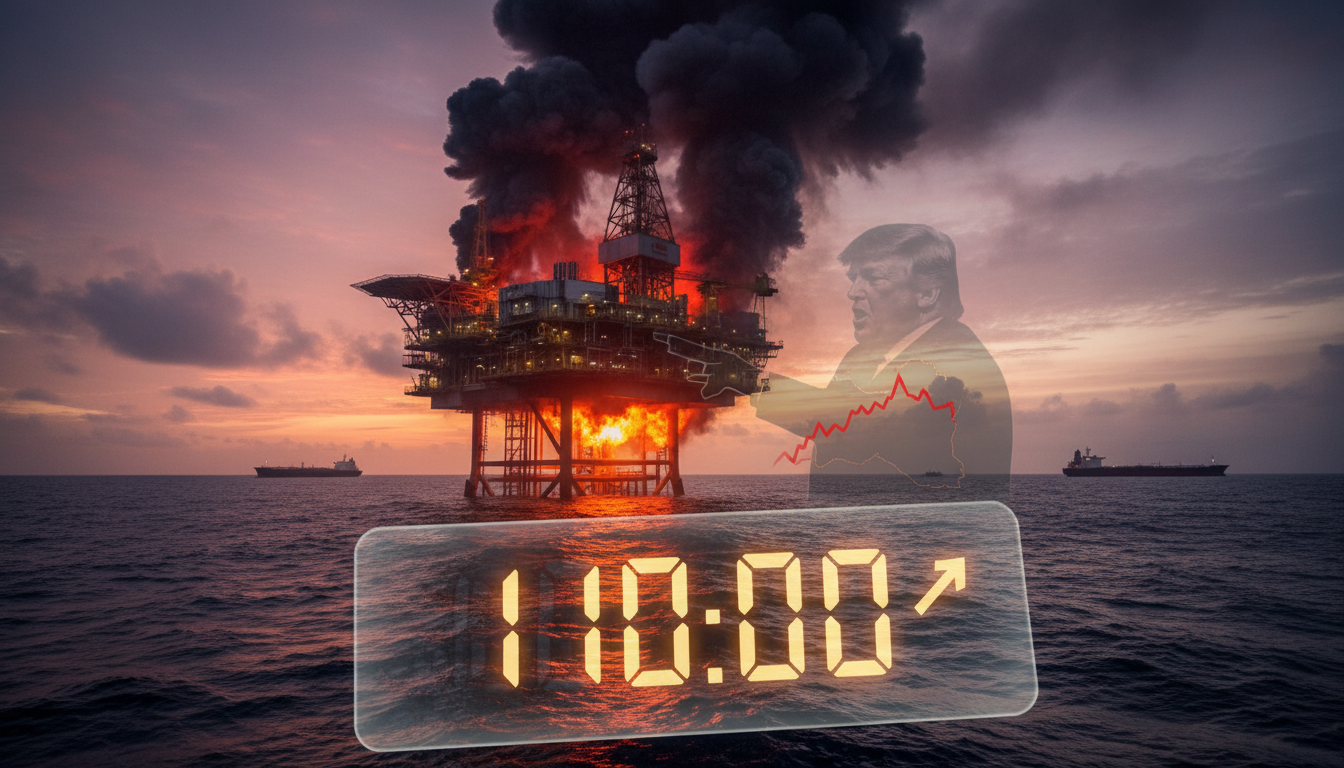
Global crude benchmarks have surged dramatically, with West Texas Intermediate (WTI) catapulting above $110 a barrel, briefly touching $114, as investors digested a hawkish update from US President Donald Trump regarding ongoing hostilities in Iran. This escalation threatens to extend the critical disruptions to energy transit through the Strait of Hormuz, maintaining intense upward pressure on global oil prices and raising the specter of sustained inflationary pressures.
The WTI crude contract experienced a substantial leap, climbing by as much as 13.8 percent in a single session. Concurrently, the international Brent crude benchmark hovered near $110. The impact reverberated strongly through refined product markets as well, with Europe’s diesel futures benchmark soaring past $200 a barrel—a threshold not breached since 2022. These sharp price movements underscore the acute sensitivity of energy markets to geopolitical instability and the tangible threat to vital supply routes.
Trump’s Belligerent Stance Dashes Hopes for Rapid De-escalation
In a rare primetime address, President Trump delivered a resolute message that shattered investor hopes for a swift resolution to the conflict. He asserted that further military operations would unfold “over the next two to three weeks,” menacingly adding that the US would be prepared “to hit each and every one of their electric-generating plants” should Iran fail to capitulate to American demands and cease hostilities. This uncompromising rhetoric firmly signaled a protracted engagement, directly influencing market sentiment.
The prospect of a rapid diplomatic breakthrough or a unilateral Iranian concession, particularly regarding the reopening of the Strait of Hormuz, appears increasingly remote. The Islamic Republic has demonstrated no inclination towards peace talks or an admission of defeat. Indeed, retaliatory attacks against Israel and Persian Gulf nations continued unabated on Thursday, pushing the conflict into its fifth week. While President Trump alluded to “ongoing” discussions with Iran, he offered no specific details, leaving the market to grapple with significant uncertainty.
Strait of Hormuz: The Unyielding Chokepoint
The critical importance of the Strait of Hormuz cannot be overstated. As the world’s most vital oil transit chokepoint, its closure or sustained disruption sends immediate shockwaves across the energy complex. Without a definitive resumption of flows through this narrow waterway, the intense pressure on crude markets is unlikely to diminish. Investors have witnessed WTI prices roughly double since the beginning of the year, a stark illustration of the supply fears emanating from the region.
President Trump’s unexpectedly hawkish pronouncements spurred a dramatic shift in market positioning. WTI’s prompt spread, which measures the premium of the nearest delivery contract over the second-nearest, widened to an unprecedented level of over $16 a barrel on Thursday. This record premium reflects a rapid unwinding of bearish positions betting on a quick end to the conflict, coupled with surging expectations of tighter US crude supply as international buyers scramble for American barrels. The market dynamic suggests a profound and sudden re-evaluation of short-term supply availability.
Scott Shelton, a seasoned energy specialist at TC ICAP, succinctly captured the market’s surprise, stating, “The market was not positioned for this. Investors expected de-escalation talk and got the exact opposite.” This sentiment highlights the significant disconnect between pre-speech market expectations and the reality delivered by the President’s address, underscoring the inherent volatility in politically charged energy markets.
Refined Products Under Intense Pressure and Emerging Diplomatic Efforts
While crude oil prices have commanded significant attention, markets for refined fuels have experienced even more pronounced gains. The sharp ascent of European diesel futures on Thursday serves as a potent indicator of the potential inflationary impact on the broader global economy. The logistical challenges are already manifesting, with some refined product cargoes traversing thousands of miles as buyers worldwide compete to secure dwindling available supplies, straining global shipping and distribution networks.
Amidst the escalating rhetoric and market turmoil, there were glimmers of potential diplomatic maneuvers. Iranian state media reported that Iran is in the process of drafting a protocol with Oman to monitor maritime traffic through the Strait of Hormuz. Such a development, if materialized, could offer a pathway towards managed transit, though its effectiveness and implementation timeline remain speculative.
Concurrently, the United Arab Emirates has appealed to the United Nations, seeking authorization for a range of measures, potentially including the use of force, to restore the free flow of oil and gas through the vital strait. These parallel diplomatic and multilateral efforts underscore the international community’s profound concern over the economic and strategic implications of the Hormuz blockade, even as the immediate military standoff shows no signs of abating. Investors must monitor these developments closely, as any credible move towards a resolution could trigger significant market shifts.
