

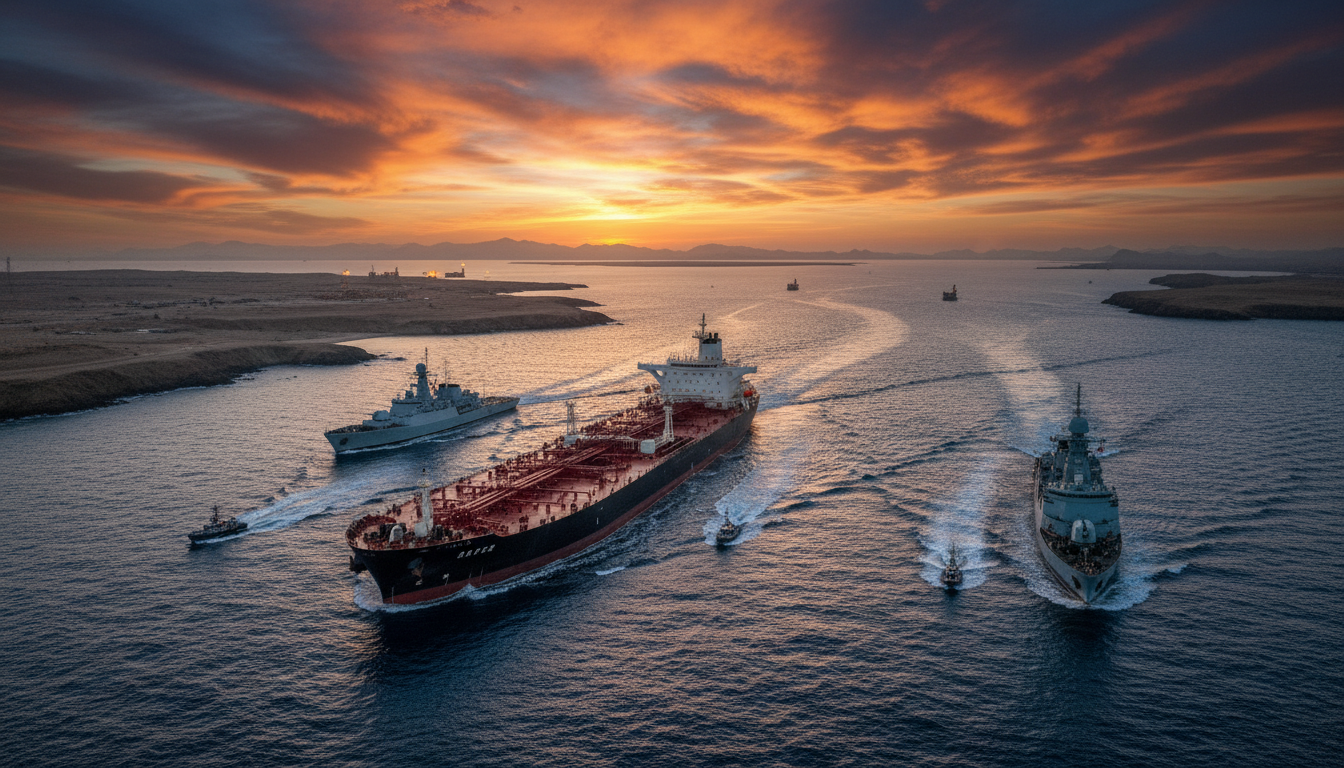
Global energy markets remain acutely sensitive to geopolitical shifts, and few chokepoints command as much investor attention as the Strait of Hormuz. In a recent high-level diplomatic engagement, international powers converged to address escalating concerns over maritime security in this vital waterway, a development closely watched by energy investors monitoring supply chain integrity and crude oil price stability.
Geopolitical Stakes: Securing the World’s Foremost Energy Chokepoint
The Strait of Hormuz stands as a critical artery for global crude oil and liquefied natural gas (LNG) shipments, funneling approximately one-fifth of the world’s total oil supply daily. Any disruption to free navigation through this narrow passage immediately sends ripples across international energy prices and raises anxieties over supply security. Recognizing these immense stakes, the United Kingdom recently convened a significant virtual meeting, drawing participation from over 60 nations, to forge a path towards de-escalation and secure transit. The discussions explicitly prioritized diplomatic and political resolutions, distancing themselves from military intervention as the primary means to restore unimpeded passage for commercial shipping.
For investors deeply entrenched in the oil and gas sector, the outcome of such diplomatic initiatives carries profound implications. Stability in the Strait directly correlates with predictable global supply, influencing long-term investment strategies in exploration, production, and infrastructure. Conversely, heightened tensions introduce volatility, spurring speculative trading and impacting tanker insurance premiums, which ultimately inflate shipping costs and reduce margins for commodity traders.
India’s Strategic Engagement: Prioritizing Energy Security and Maritime Rights
India, a major global energy consumer and a nation with substantial economic reliance on the Strait of Hormuz, played a crucial role in these international deliberations. Foreign Secretary Vikram Misri represented New Delhi, underscoring the paramount importance of upholding the principles of freedom of navigation and uninterrupted transit through international waterways. His remarks highlighted the tangible impact of regional instability on India’s vast energy security needs, a concern amplified by the fact that India holds the unfortunate distinction of being the sole country to have lost mariners in attacks on merchant vessels within the Gulf region. This stark reality imbues India’s diplomatic efforts with a unique urgency and human dimension, reinforcing its commitment to a peaceful resolution.
Secretary Misri articulated a clear stance advocating for de-escalation and a definitive return to constructive diplomacy and direct dialogue among all concerned parties. For investors assessing country-specific risks and energy demand growth, understanding India’s active and nuanced engagement is vital. India’s proactive pursuit of stability reflects its strategic imperative to safeguard its economic lifelines, positioning it as a key stakeholder in the regional security architecture and influencing its energy trade policies and partnerships.
International Divides and Washington’s Absence
While over 60 countries participated in the UK-hosted forum, aiming for a unified diplomatic front, the proceedings also underscored significant geopolitical cleavages. Notably, Washington opted out of the virtual conference, which was expertly chaired by British Foreign Minister Yvette Cooper. This decision aligns with previous statements by former US President Donald Trump, who controversially asserted that the burden of securing the Strait should fall predominantly on Asian and European nations, given their higher dependency on the oil and gas transiting the chokepoint compared to the United States.
This divergent approach from a major global power like the United States introduces an element of uncertainty for energy market participants. The absence of a unified international security framework could complicate responses to future incidents, potentially increasing geopolitical risk premiums for crude oil. Investors must carefully weigh the implications of varying national interests and responsibilities in maintaining global maritime security, as these factors can significantly influence market sentiment and commodity price trajectories.
New Delhi’s Independent Path and Bilateral Progress
Despite its active participation in the multilateral discussion, India has deliberately refrained from endorsing a joint statement, signed by the UK and 35 other nations, which expressed a collective readiness to contribute to “appropriate efforts to ensure safe passage through the Strait.” This strategic reserve reflects India’s preference for direct, bilateral engagement to navigate the complex regional dynamics.
External Affairs Minister S. Jaishankar previously highlighted New Delhi’s ongoing direct discussions with Tehran, indicating that these diplomatic channels have yielded demonstrable positive results. A key success point illustrates this approach: Iran has facilitated the transit of six India-flagged vessels through the Strait of Hormuz without incident. This tangible outcome underscores the efficacy of India’s independent, pragmatic diplomatic strategy, offering a distinct model for de-escalation and maintaining maritime access.
For energy investors, India’s successful direct negotiations with Iran present a unique case study in risk mitigation. Such bilateral efforts can offer more immediate and tailored solutions than broader, often slower-moving, multilateral initiatives. This underscores the importance of monitoring not just global consensus but also specific bilateral agreements that directly impact shipping logistics and trade flows, particularly for major importing nations.
Investment Outlook: Navigating Geopolitical Headwinds
The ongoing diplomatic maneuvers surrounding the Strait of Hormuz highlight the persistent geopolitical risks embedded within global energy markets. While the international community gravitates towards diplomatic solutions, the fragmented nature of these efforts, coupled with varying national interests, ensures that maritime security in this critical region will remain a key concern for investors. The emphasis on de-escalation and dialogue, while positive, does not entirely negate the potential for sudden escalations that could disrupt oil flows and introduce significant price volatility.
Investors in the oil and gas sector, from integrated majors to shipping companies and refiners, must factor these complex geopolitical considerations into their financial models and risk assessments. Monitoring diplomatic engagements, understanding the diverse strategies of key nations like India and the United States, and evaluating their real-world impact on shipping lanes and supply chains will be crucial for navigating the evolving landscape of global energy security and making informed investment decisions. The long-term stability of the Strait of Hormuz remains an undeniable cornerstone of predictable global crude oil supply and sustained market confidence.
