

Beyond the Buzzwords: Why Oil & Gas Investors Should Scrutinize How Companies Communicate Internally and Externally
In the dynamic world of energy finance, where capital allocation decisions can dictate the trajectory of multi-billion dollar projects, the method of communication within a company is far from a mere administrative detail. For savvy investors tracking the pulse of the oil and gas sector on OilMarketCap.com, discerning how leadership teams vet ideas, manage risk, and foster innovation is paramount. A growing trend among some of the tech industry’s most impactful leaders offers a stark lesson: the era of the ubiquitous slide deck might be drawing to a close, replaced by more substantive, data-rich alternatives that hold profound implications for operational efficiency and shareholder value across all industries, including our own capital-intensive domain.
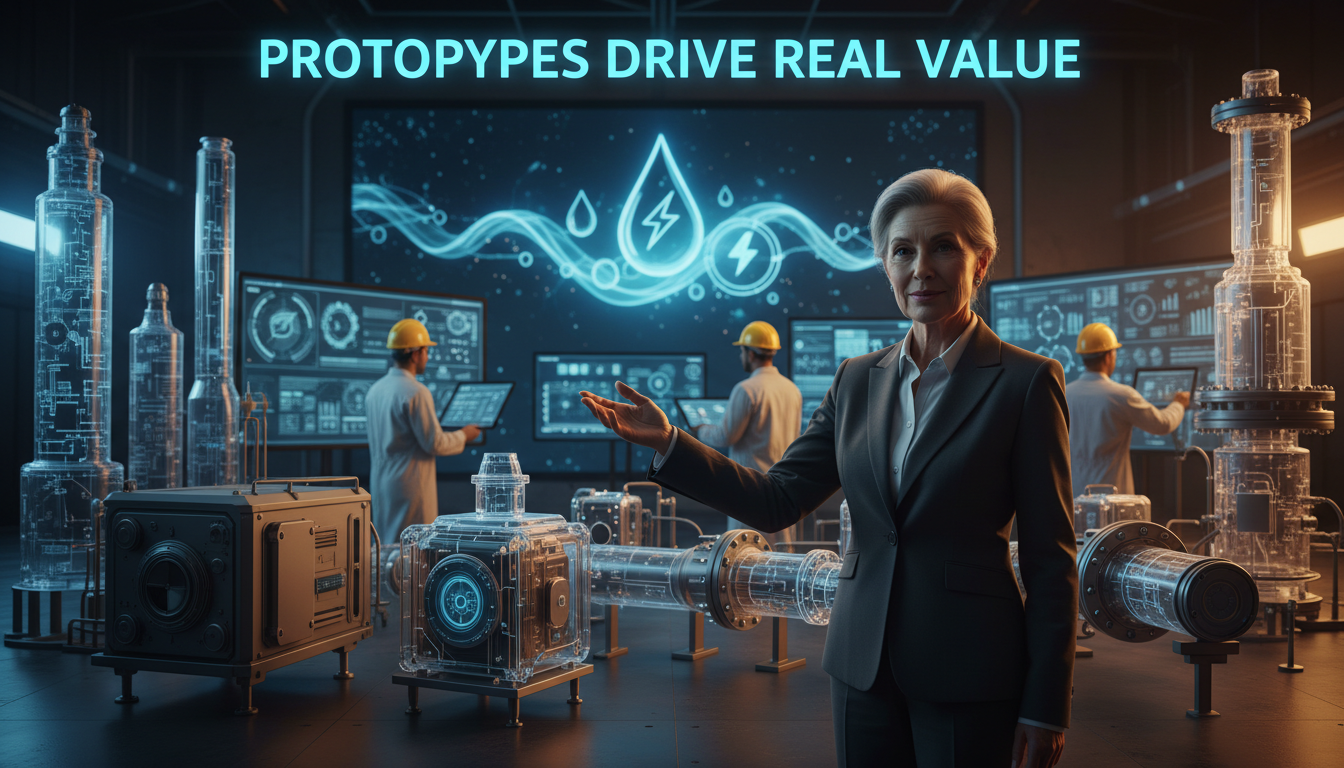
The latest to join this evolving paradigm is Block, the fintech powerhouse helmed by co-founder Jack Dorsey. Just two months ago, Dorsey revealed a significant internal shift: slide decks have been entirely banished from internal meetings. Instead, teams are now required to present prototypes, meticulously constructed with either simulated or real-world data. This isn’t just a stylistic preference; Dorsey emphasizes that these interactive models provide unparalleled “depth and realism” compared to static presentations. Crucially, they can be modified on the fly, allowing for immediate iteration and stress-testing of concepts. This approach dramatically reduces the inherent cost associated with making an incorrect decision, empowering teams to pivot swiftly and efficiently. For an oil and gas exploration or production firm, where the capital expenditure for a single drilling campaign or facility upgrade can run into hundreds of millions, the ability to minimize the cost of a wrong turn is invaluable.
Dorsey’s push for enhanced efficiency aligns with Block’s recent restructuring, which saw the company reduce its workforce by over 4,000 employees, roughly 40% of its total. He directly linked a significant portion of these cuts to efficiencies gained through AI integration and more streamlined operational processes. This serves as a potent reminder for the energy sector: the pursuit of AI-driven efficiency isn’t limited to optimizing well performance or seismic interpretation; it extends to the very core of how management teams make strategic decisions and allocate resources. Investors must ask: How are our portfolio O&G companies leveraging advanced tools to refine their internal decision-making frameworks, and what does this mean for their operational gearing?
A Broader Movement: From Pitches to Prototypes and Memos
The move away from traditional slide decks is not isolated to Dorsey’s ventures. It represents a deeper current among influential business leaders who prioritize critical thinking and tangible outputs over polished narratives. Aravind Srinivas, the CEO and co-founder of AI search engine Perplexity, has publicly stated that his company stopped using pitch decks for fundraising after its Series A round. His method is refreshingly direct: potential investors receive a comprehensive memo, followed by an open Q&A session. For any external data, Srinivas simply directs them to Perplexity itself, underscoring the power of readily accessible, verified information.
This preference for substance over superficiality is not new. Legendary figures like Amazon founder Jeff Bezos set similar precedents decades ago. In a pivotal 2004 email, Bezos famously banned “PowerPoint-style presentations,” instead mandating that teams craft “4-page memos” to articulate their ideas. His rationale was clear: writing demands a level of cognitive effort and clarity that bullet points often evade. Similarly, Apple co-founder Steve Jobs, renowned for his intense focus on product and user experience, eschewed slides in his meetings. He famously remarked that “People who know what they’re talking about don’t need PowerPoint,” a sentiment that champions deep understanding and genuine expertise over visual aids that can sometimes mask a lack of true insight.
Implications for Oil and Gas Investing: Beyond the PowerPoint
For investors focused on the intricacies of the oil and gas market, these developments are more than just intriguing corporate anecdotes; they offer a lens through which to evaluate the internal rigor and forward-thinking nature of energy companies. The oil and gas industry is inherently capital-intensive, characterized by long project lifecycles, significant upfront investments, and exposure to volatile commodity prices and geopolitical risks. In this environment, every decision, from sanctioning a new upstream development to investing in midstream infrastructure or optimizing downstream refining processes, carries substantial financial weight.
Consider the typical board meeting or investment committee review in an O&G major. Traditionally, these high-stakes discussions are often preceded by voluminous slide decks outlining geological prospects, reservoir models, drilling plans, production forecasts, cost estimates, and risk assessments. While these presentations serve a purpose, their static nature can sometimes oversimplify complex realities. Imagine instead an interactive digital twin of an offshore platform, allowing executives to simulate different operational scenarios in real-time, or a dynamic model of a pipeline network responding to various market conditions. Such prototypes could offer unparalleled clarity and enable more robust risk mitigation strategies than any series of static slides.
Furthermore, in an era where environmental, social, and governance (ESG) factors increasingly influence investment decisions, the demand for transparency and verifiable data is accelerating. A detailed memo outlining an O&G company’s carbon intensity reduction strategy, supported by granular data and clear methodologies, inspires far greater confidence than a high-level presentation filled with aspirational bullet points. For investors on OilMarketCap.com, scrutinizing the depth of a company’s internal analytical processes and its commitment to substantive communication can be a powerful indicator of its long-term viability and its ability to generate sustainable returns.
As the energy transition gains momentum, oil and gas companies are constantly evaluating new technologies, from carbon capture and storage to hydrogen production and renewable energy integration. The ability to prototype new business models, simulate technological impacts, and iterate on strategic pathways with agility, as seen at Block, could be a critical differentiator. Investors should be seeking out O&G companies that are not just adopting digital tools in the field but are also fundamentally transforming how their leadership teams evaluate opportunities and risks. The future of robust capital allocation in oil and gas may well lie not in slick presentations, but in the authentic, data-driven, and interactive engagement that drives genuine understanding and smarter decision-making.
