

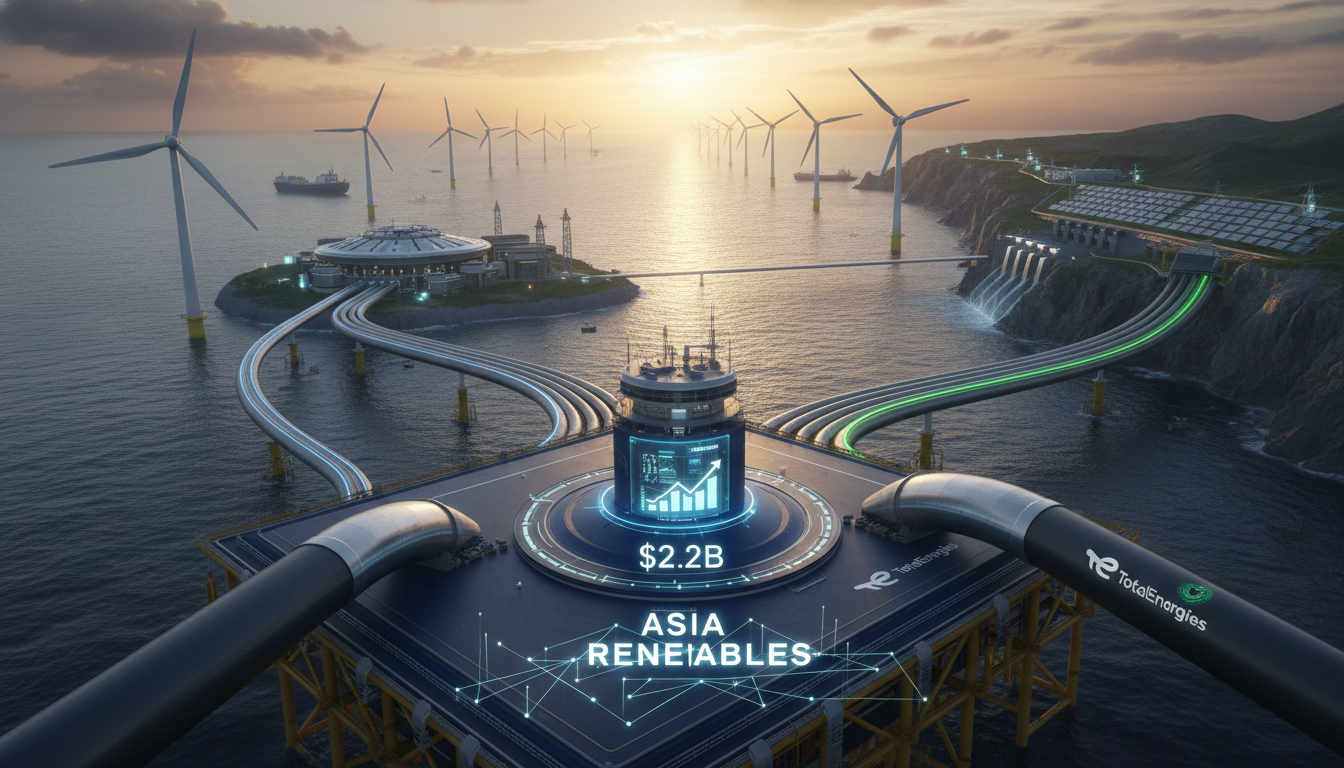
TotalEnergies and Masdar Forge $2.2 Billion Asian Renewable Powerhouse
Abu Dhabi is strategically positioning itself as a central command hub for a monumental expansion in Asia’s renewable energy landscape. Global energy major TotalEnergies and UAE’s clean energy pioneer Masdar have formalized a $2.2 billion joint venture, designed to consolidate and significantly scale their onshore clean energy portfolios across nine key Asian markets. This ambitious partnership signals a profound commitment to capturing the region’s burgeoning electricity demand while accelerating vital clean energy deployment.
Consolidating a Dominant Platform for Asian Growth
The newly established 50:50 joint venture stands as the exclusive vehicle for both companies’ onshore renewable energy operations across a geographically diverse and economically dynamic set of nations: Azerbaijan, Indonesia, Japan, Kazakhstan, Malaysia, the Philippines, Singapore, South Korea, and Uzbekistan. This strategic alliance leverages the complementary strengths of two industry leaders, creating an immediate operational footprint of 3 gigawatts (GW) in clean energy capacity.
Critically, the venture also incorporates a substantial 6 GW development pipeline, with projects slated for commissioning by 2030. This combined 9 GW portfolio positions the platform among the most significant renewable energy players in Asia, offering the scale necessary to address the region’s rapidly escalating electricity needs. The operational focus spans solar, wind, and advanced battery storage solutions, reflecting a forward-looking strategy towards integrated clean power systems essential for grid stability amidst increasing renewable penetration.
Asia: The Epicenter of Global Electricity Demand Expansion
Analysts project that Asia will account for the lion’s share of global electricity demand growth throughout this decade. This surge is primarily driven by relentless industrial expansion, rapid urbanization, and the foundational build-out of digital infrastructure across the continent. The scale and geographical targeting of this joint venture directly align with this macroeconomic trend, focusing on markets where robust demand growth converges with supportive policy environments.
The UAE has consistently demonstrated its leadership in the global energy sector through large-scale delivery, resolute investment, and the cultivation of enduring partnerships. Masdar epitomizes this approach, having spearheaded renewable energy deployment across Central Asia and the Caucuses, while also building an expanding portfolio in Asia-Pacific’s most attractive growth markets. As Asia leads global electricity demand growth this decade, this collaboration with TotalEnergies is poised to significantly accelerate progress across the continent, unlocking new opportunities to deliver competitive, reliable energy solutions for partners and customers.
Strategic Alignment and Enhanced Competitive Positioning
For TotalEnergies, this landmark agreement significantly strengthens its Integrated Power strategy. This involves the deliberate combination of renewable generation assets with flexible power solutions and robust market access. For Masdar, the partnership deepens its strategic footprint across high-growth Asian markets, simultaneously diversifying its portfolio through collaboration with a global energy major.
Bringing together two major renewable players is expected to create an Asian renewable champion. This synergy will combine the inherent strengths of both companies, allowing them to secure substantial market positions and generate greater value than either could achieve independently. This agreement perfectly aligns with TotalEnergies’ integrated power business strategy and further deepens the long-standing relationship between the United Arab Emirates and TotalEnergies.
Beyond the immediate corporate benefits, the joint venture also reflects a broader strategic alignment between European and Middle Eastern capital in funding and scaling critical energy transition infrastructure across burgeoning markets. This international collaboration underscores the global imperative to accelerate clean energy adoption.
Governance Structure and Execution Roadmap
The new entity will establish its headquarters within the Abu Dhabi Global Market, initially staffed by approximately 200 employees drawn from both TotalEnergies and Masdar. Key leadership appointments are anticipated as the transaction navigates the necessary regulatory approval processes.
This joint venture further solidifies Abu Dhabi’s status as a premier global center for energy leadership. It expertly combines the distinct expertise of Masdar and TotalEnergies to aggressively drive renewable energy deployment throughout Asia. For Masdar, this JV strategically strengthens and diversifies its existing portfolio, unlocking compelling new opportunities in highly attractive, high-growth markets. Simultaneously, it introduces a like-minded partner to accelerate growth and unlock additional value within Masdar’s established markets.
What This Partnership Means for Investors and Energy Executives
For discerning investors, this joint venture offers compelling exposure to long-term infrastructure assets situated in markets characterized by robust demand fundamentals and increasingly supportive policy frameworks. The strategic combination of existing operational capacity (3 GW) with a substantial near-term development pipeline (6 GW) serves to mitigate typical development risks, while simultaneously preserving significant upside potential through future expansion and market penetration.
For corporate energy buyers and governmental bodies, the platform markedly enhances access to large-scale, reliable renewable projects. This access is crucial for achieving ambitious decarbonization targets and bolstering national energy security strategies across the region.
On a global scale, this landmark partnership illuminates a clear trend towards consolidation and scale within the renewable energy sector. In this evolving landscape, the strategic deployment of capital, proven execution capabilities, and diversified geographic presence are rapidly becoming decisive competitive factors, driving the future of energy investment.
