

Geopolitical Tensions Drive Crude Prices Skyward as Supply Concerns Deepen
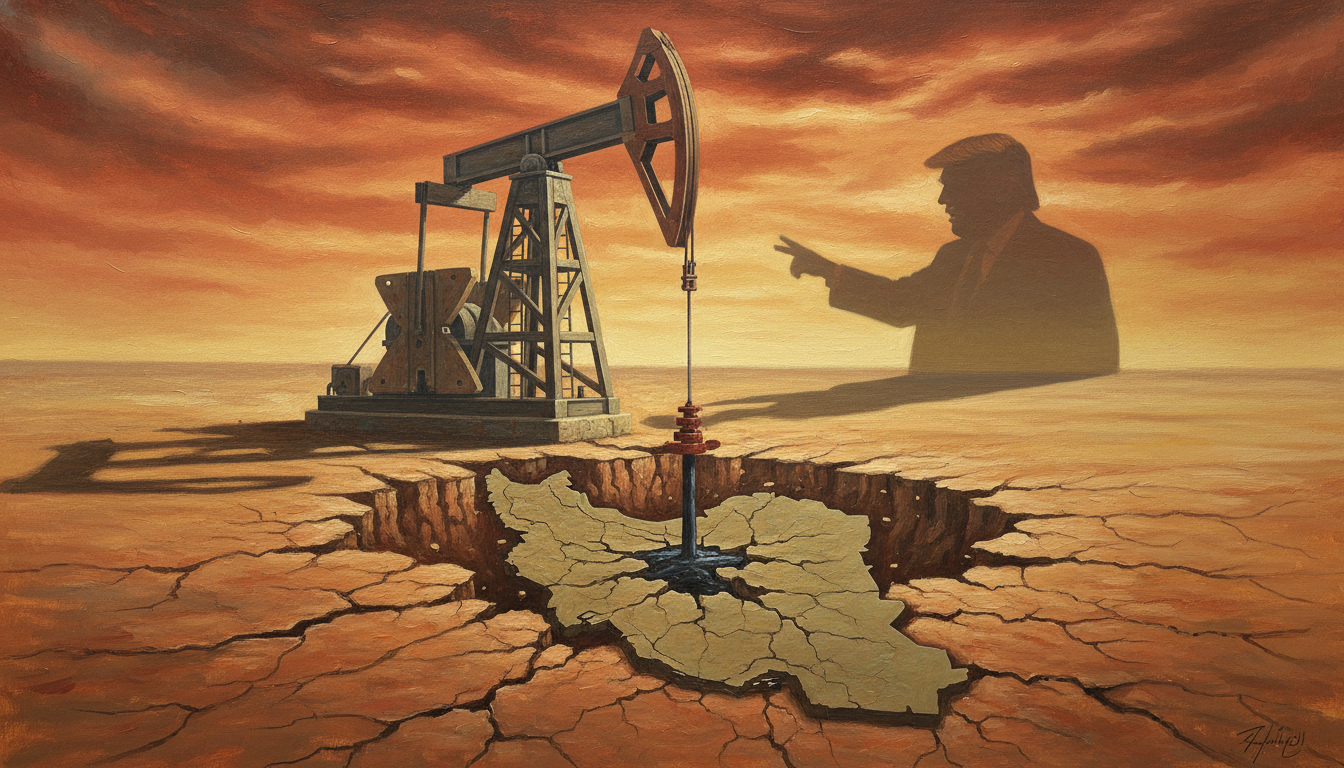
Investors are closely watching the Middle East as the U.S. administration signals an extended confrontation with Iran, pushing global crude benchmarks significantly higher. This geopolitical escalation immediately reverberated across energy markets, amplifying existing supply concerns and prompting a rapid repricing of risk by commodity traders worldwide.
Market Outlook: Prolonged Conflict & Significant Supply Deficits
Initial market optimism for a swift resolution evaporated after President Trump’s recent address, which indicated a prolonged engagement and pledged severe actions against Iran. This hawkish stance has prompted analysts to revise their supply forecasts downward, signaling substantial deficits for global energy investors. Ryan McKay, Senior Commodity Strategist at TD Securities, warns that the ongoing conflict, projected to extend well into April, presents a “grim” outlook for oil supplies. His firm estimates a staggering loss of nearly 1 billion barrels by month’s end, comprising up to 600 million barrels of crude oil and approximately 350 million barrels of vital refined products such as jet fuel, diesel, and gasoline. Furthermore, each month the hostilities persist is expected to strip an additional 450 million combined barrels from global availability. Independent analysis from Rapidan Energy reinforces this dire assessment, projecting a net loss of 630 million barrels of oil and products by the close of June, even after factoring in supply mitigation efforts like pipeline diversions, emergency reserve releases, and inventory drawdowns.
Price Action & Investor Sentiment
The President’s comments sent a shockwave through commodity trading desks. U.S. crude oil futures immediately surged over 10%, breaking above the $110 per barrel mark. Simultaneously, Brent crude, the international benchmark for oil prices, climbed more than 6% to exceed $107 per barrel. This sharp ascent reflects a market rapidly adjusting to elevated geopolitical risk. Physical market indicators confirm the bullish sentiment: in Houston, buyers are reportedly offering close to $120 for immediate delivery of U.S. oil barrels, a significant premium of roughly $5.50 over the May futures contract, according to Tom Kloza, an independent oil analyst at Kloza Advisors. John Kilduff, a founding partner at Again Capital, characterized the recent address as a “disaster” for market stability, emphasizing that traders are now aggressively pricing in the severe implications of an extended conflict and the potential for a complete, sustained closure of the Strait of Hormuz.
The Critical Strait of Hormuz Dilemma
A critical point of contention for global oil markets remains the Strait of Hormuz, a vital maritime chokepoint that Iran has effectively disrupted through recent actions against tanker traffic. This strategic waterway links the Persian Gulf to the broader global market, historically facilitating the movement of approximately 20% of worldwide oil supplies. Notably absent from the President’s address was any specific U.S. strategy to reopen this crucial passage. President Trump asserted that the United States has minimal reliance on Hormuz for its own energy imports, stating, “The United States imports almost no oil through the Hormuz Strait and won’t be taking any in the future. We don’t need it.” Instead, he placed the onus squarely on other nations, remarking that countries dependent on the Strait “must take care of that passage” and “take the lead in protecting the oil that they so desperately depend on.” Alongside this, the President issued stark warnings, threatening to bomb Iran’s power infrastructure and suggesting countries impacted by the Strait’s closure should source their oil from the U.S. Bob McNally, President of Rapidan Energy, expressed considerable bewilderment at the perceived lack of proactive U.S. military measures to counter Iran’s interdiction capabilities in Hormuz from the outset of the conflict.
Future Price Drivers Beyond the Conflict
While crude prices have spiked, several mitigating factors have prevented an even more aggressive rally thus far. Matthew Bernstein, an analyst at Rystad Energy, attributes this to existing refinery run cuts, a pre-conflict surplus in global supplies, and strategic releases from emergency oil reserves by over 30 member nations of the International Energy Agency. However, Bernstein warns that energy markets are now commencing to factor in the long-term ramifications of this geopolitical standoff. Investors should anticipate a “new normal” for oil prices, even once hostilities cease. “There will be no going back to the pre-war status quo,” he asserts. Future price floors will be structurally higher, underpinned by several persistent factors: an anticipated surge in demand for strategic stockpiling, permanently elevated insurance and freight costs for maritime routes, particularly those linked to the Strait of Hormuz, and an entrenched, broader geopolitical risk premium now embedded within the global energy market.
Global Fuel Shortage Ripple Effect Accelerates
The continued closure of the Strait of Hormuz will inevitably lead to significant pressure on global oil stockpiles. TD Securities’ Ryan McKay anticipates a rapid depletion of crude held on tankers, with onshore inventories potentially plummeting to multi-year lows as early as August. McKay highlights a crucial cascading effect: “As market inventory buffers erode, the physical tightness seen thus far in Asia begins to cascade globally.” This implies relentless upward pressure on both crude oil and refined product prices over the coming weeks and months, a trend expected to persist until soaring costs eventually trigger a substantial reduction in demand. Reinforcing these concerns, Shell CEO Wael Sawan, speaking at the CERAWeek by S&P Global energy conference on March 24, outlined a grim forecast for worldwide fuel shortages. He predicted a ripple effect, starting with jet fuel, then impacting diesel, and ultimately reaching gasoline supplies. Sawan detailed the geographical progression: “South Asia first to get that brunt. That’s moved to Southeast Asia, Northeast Asia and then more so into Europe as we get into April,” signaling widespread implications for diverse energy consumers and industries.
Domestic Impact: U.S. Fuel Prices Under Pressure
While the United States largely benefits from robust domestic production, offering some insulation against immediate widespread shortages, vulnerabilities exist. Natasha Kaneva, Head of Global Commodities Research at JPMorgan, noted in a March 26 client report that the West Coast, particularly California, remains susceptible to supply disruptions by May due to its dependence on energy imports. For American consumers, the financial impact at the pump is already becoming stark. Patrick De Haan, Head of Petroleum Analysis at GasBuddy, indicated via social media that retail gasoline prices nationwide could rapidly escalate to between $4.25 and $4.45 per gallon within the next two weeks, based on current trends. Diesel prices, a critical input for logistics and industry, are projected to surge even higher, potentially reaching $5.80 to $6.05 per gallon. De Haan warned that historical record gasoline prices, which peaked at $5.02 per gallon in June 2022 following the Russia-Ukraine conflict, may soon be challenged. Independent analyst Tom Kloza emphasized the gravity of the diesel price surge, calling it “the most serious issue right now,” and cautioned that it “should provoke significant inflation in the second quarter,” impacting goods and services across the economy.
Navigating the New Energy Market Paradigm
The oil market now operates under a fundamentally different risk paradigm. Investors must contend with a landscape defined by elevated geopolitical tensions, persistent supply vulnerabilities, and a clear shift in the global energy supply chain dynamics. The implications of this sustained volatility extend beyond crude benchmarks, promising higher costs for refined products and a significant inflationary impulse across various sectors. Strategic positioning in oil and gas equities, particularly those with strong domestic production or exposure to resilient logistics, becomes paramount as the industry navigates this complex and uncertain future, demanding vigilance and informed decision-making from all market participants.
