

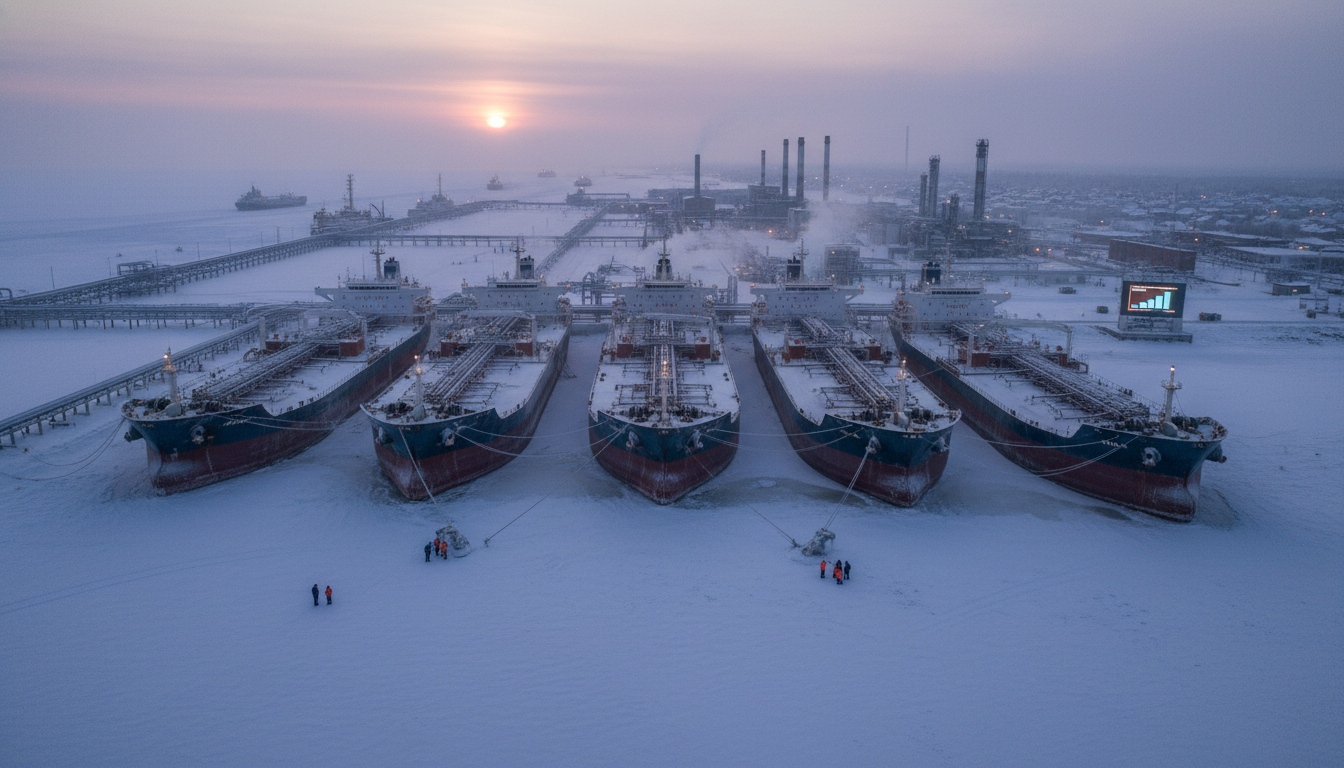
In a significant move poised to send ripples across global energy markets, Russia has announced a comprehensive ban on gasoline exports, effective immediately and extending until July 31. This decree marks a crucial escalation from previous restrictions, now encompassing all gasoline producers within the nation, a development with profound implications for investors closely monitoring the international oil and gas landscape.
The Russian government confirmed Thursday that the export prohibition, initially targeting non-producing entities, has now been broadened to include domestic manufacturers of the fuel. This expanded measure, reported by leading Russian news outlets, signals a determined effort by Moscow to stabilize its internal fuel market amidst escalating geopolitical tensions and a period of heightened domestic demand.
Strategic Rationale: Domestic Stability Amidst Global Volatility
Moscow’s stated rationale behind this sweeping ban is multi-faceted, reflecting both internal economic imperatives and the turbulent global energy environment. According to official government statements, the decision aims to “maintain a stable situation on the domestic fuel market during the period of high seasonal demand and agricultural field work.” This focus on supporting the critical agricultural sector and ensuring sufficient fuel for ordinary citizens underscores a strategic prioritization of domestic stability.
Furthermore, the government explicitly linked the ban to “the growth of world oil prices due to the geopolitical situation in the Middle East.” This acknowledgment highlights how global crude dynamics, exacerbated by regional conflicts, are directly influencing Russia’s domestic energy policy and, by extension, its participation in the international refined products market. For investors, this signals an environment where geopolitical events continue to exert direct pressure on energy supply chains and pricing mechanisms.
Despite the drastic measure, Russia’s Energy Ministry has attempted to reassure the public and markets regarding the nation’s preparedness. Officials insisted that the country’s oil industry remains “fully prepared” for the anticipated seasonal surge in fuel demand. The ministry also affirmed that “the domestic market has sufficient reserves of light petroleum products” and that “there have been no disruptions in regional supply,” painting a picture of robust internal capacity.
The new export ban does include specific exemptions, primarily for gasoline shipments conducted under bilateral agreements between governments. Mongolia, for example, has been cited as a recipient country that would continue to receive Russian gasoline under such inter-governmental arrangements. This selective exemption underscores Russia’s strategic foreign policy considerations even as it tightens its domestic energy controls.
Geopolitical Headwinds: Drone Strikes Cripple Export Capacity
While Russia maneuvers to secure its domestic fuel supply, its ability to capitalize on the elevated global oil prices—a potential windfall for a major crude exporter—is being severely hampered by external factors. Intense Ukrainian drone attacks have increasingly targeted vital Russian oil export infrastructure, particularly ports on the Baltic Sea, causing significant disruptions to loading operations.
These persistent drone strikes have forced the suspension of activities at key export terminals, effectively sidelining a substantial portion of Russia’s capacity to move crude oil to international buyers. This presents a critical paradox for the Kremlin: surging global oil prices offer an opportunity for increased revenue, yet the physical infrastructure required to realize these gains is under direct assault.
Analysis of the disruptions paints a stark picture. Calculations suggest that as much as 40% of Russia’s crude oil export capacity was offline in the past week alone. This staggering figure accounts for a confluence of issues, including direct port outages, complications with pipeline integrity, and wider tanker-related logistical challenges. For investors in global energy, this represents a significant bottleneck in a crucial supply artery, impacting not just Russia’s export volumes but also contributing to global market tightness and price volatility.
Investment Implications: Navigating a Complex Energy Landscape
The confluence of Russia’s expanded gasoline export ban and the sustained disruption to its crude export capabilities creates a complex and challenging environment for oil and gas investors. The gasoline ban removes a significant volume of refined product from the international market, particularly impacting regions that rely on Russian supplies, potentially pushing up prices for motor fuels globally.
Simultaneously, the reduced crude oil export capacity due to drone attacks limits Russia’s ability to supply major markets like India, which had shown renewed interest in unsanctioned Russian crude. This scenario deprives Russia of much-needed revenue from higher crude prices, even as it struggles to maintain domestic fuel stability. It also means that even with rising global demand, the flow of Russian crude remains constrained by operational realities rather than purely by market forces.
Investors must closely monitor these developments. The Russian government’s actions underscore a strategic shift towards self-preservation in its energy sector, prioritizing domestic needs over export revenues in certain segments. The ongoing conflict and its direct impact on energy infrastructure highlight the persistent geopolitical risks inherent in global oil and gas investing.
The implications extend beyond mere supply and demand. This situation reinforces the importance of diversified supply chains and the potential for greater volatility in refined product markets. Energy companies operating globally may face increased input costs or find new opportunities in specific regional markets affected by these supply reconfigurations. Ultimately, these Russian policy shifts and operational challenges serve as a potent reminder of the intricate interplay between geopolitics, national energy security, and the fluid dynamics of the international oil and gas market.
