

India’s Strategic Pivot to Piped Natural Gas: An Investment Imperative Amid Geopolitical Volatility
India, a nation of immense energy demands, is rapidly re-evaluating and recalibrating its domestic energy strategy, particularly concerning household fuel. Mounting geopolitical tensions in the Middle East, which have severely impacted vital supply lines, are accelerating a crucial shift from liquefied petroleum gas (LPG) towards a more secure and diversified piped natural gas infrastructure. For astute investors, this pivot signals significant opportunities within India’s evolving energy landscape.
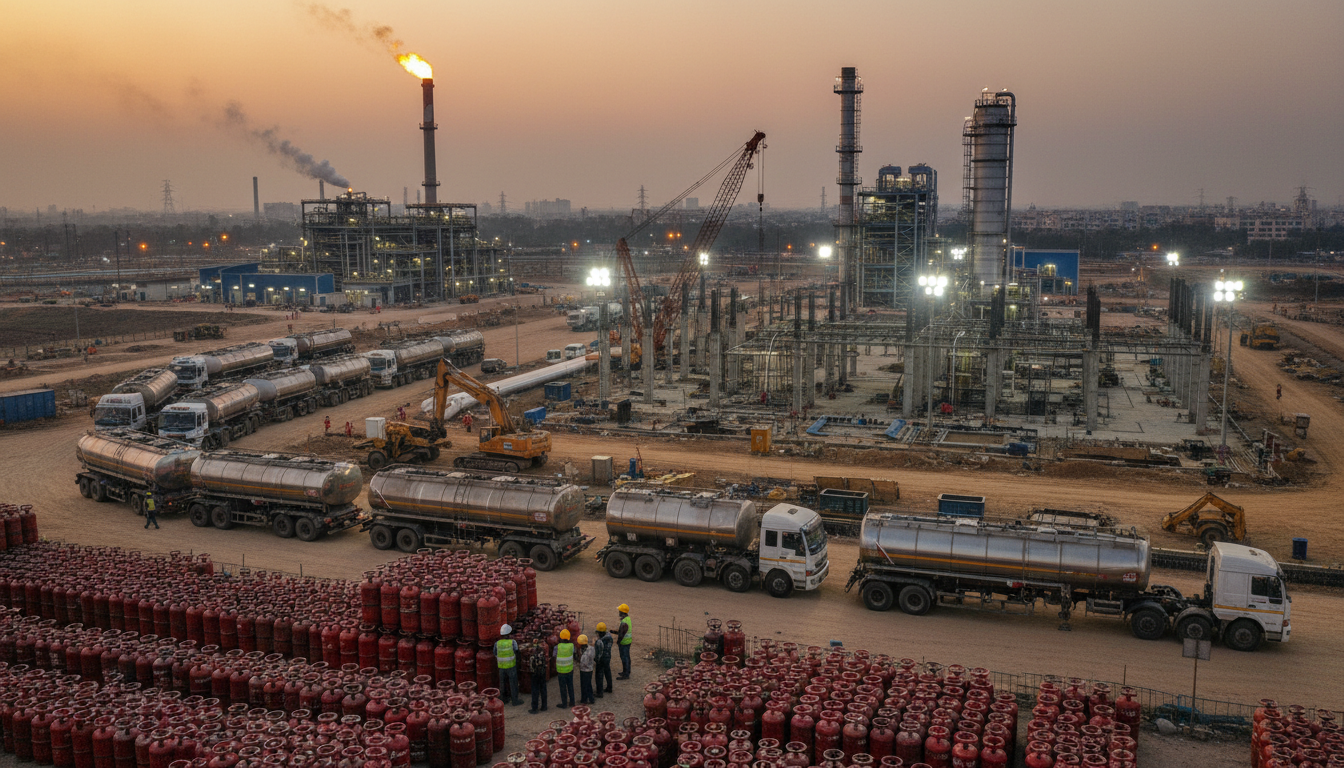
The recent disruptions to global energy transit, particularly affecting the critical Strait of Hormuz, have sent ripples through India’s energy supply chain. A staggering 90% of India’s LPG imports traverse this narrow maritime choke point. Given that approximately 60% of Indian households depend on LPG as their primary cooking fuel, the immediate repercussions of any supply impediment are profound and directly felt by consumers nationwide. This vulnerability has prompted swift, decisive action from the Indian government, which recently rationed LPG supplies to commercial and industrial sectors to safeguard availability for residential use.
This escalating supply crisis has served as a powerful catalyst, effectively acting as a wake-up call for New Delhi to fast-track its long-term ambition of expanding city gas distribution (CGD) networks. The objective is clear: to gradually replace the widespread reliance on LPG cylinders with a more resilient and sustainable piped natural gas system wherever feasible. While some LPG carriers have, in recent days, successfully navigated the Strait of Hormuz en route to India—thanks to Iran’s selective allowance of oil and gas shipments to key Asian partners like China, Pakistan, and India—the overarching vulnerability of such a critical import route remains a paramount concern for national energy security.
Government Action Bolstering Natural Gas Infrastructure Investment
The Indian government’s commitment to this transition is evident in its multi-pronged policy approach. Demonstrating a proactive stance, authorities recently launched an initiative encouraging households already connected to piped gas networks to relinquish their LPG cylinders. This strategic move aims to redirect limited LPG resources towards communities still awaiting pipeline access, optimizing the existing supply chain while the infrastructure expands.
Crucially, a significant regulatory development occurred last week when the Indian government issued a directive designed to accelerate the expansion and laying of natural gas pipelines across the nation. This order directly addresses longstanding impediments, such as delays in obtaining approvals and securing land access. By streamlining these processes, the Ministry of Petroleum and Natural Gas is effectively paving the way for swifter development of critical natural gas infrastructure, including that destined for residential areas. This policy clarification drastically de-risks infrastructure projects, making them more attractive to domestic and international investors.
Such a robust expansion of the pipeline network is fundamental to facilitating a smooth, gradual transition from LPG to piped gas in areas where the necessary infrastructure can be established. The government explicitly states that strengthening and diversifying the city gas distribution networks will significantly reduce India’s dependence on a single fuel source. This strategic diversification not only enhances energy security but also positions India’s energy sector for greater resilience against future geopolitical shocks and commodity price volatility.
Investment Outlook: Opportunities in India’s Expanding Gas Market
From an investor perspective, India’s accelerated push towards natural gas represents a compelling growth story. The commitment expressed by the government to “expanding the role of natural gas in India’s energy mix and fostering a policy environment that promotes investment, innovation, and sustainability” is not merely rhetoric; it is backed by tangible policy changes and strategic initiatives.
Companies involved in pipeline construction, gas distribution, meter manufacturing, and related infrastructure development stand to benefit significantly from this national imperative. The long-term demand for natural gas in India is poised for substantial growth, driven by residential conversion, industrial uptake, and its role as a cleaner alternative to other fossil fuels. Investors should closely monitor public and private sector entities actively participating in the expansion of CGD networks, identifying those with strong execution capabilities and strategic positioning.
This transition underscores a deeper narrative of India’s broader energy transition, balancing immediate energy security needs with long-term sustainability goals. The nation’s sheer scale, coupled with a government keenly focused on strategic energy independence, creates an environment ripe for sustained investment in its natural gas value chain. As India continues to diversify its energy basket, the shift from vulnerable LPG imports to robust domestic gas distribution networks presents a durable and strategically important investment theme for the foreseeable future.
