Navigating the Evolving Landscape of Oil & Gas Investments
The global oil and gas sector remains a cornerstone of the world economy, presenting both compelling opportunities and significant challenges for investors. As an essential commodity, energy drives industrial activity, transportation, and daily life, underpinning the rationale for its inclusion in diversified portfolios. However, the industry’s inherent volatility, geopolitical sensitivities, and the accelerating energy transition demand a sophisticated investment approach. Astute investors must keenly observe market fundamentals, technological advancements, and regulatory shifts to uncover value and manage risk effectively.
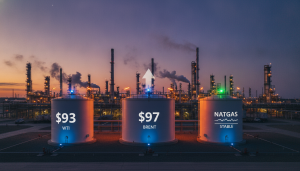
Current market dynamics continue to be shaped by a complex interplay of supply, demand, and geopolitical factors. Production levels from major oil-producing nations, inventory data, and global economic growth forecasts exert constant pressure on crude benchmarks like WTI and Brent. Supply disruptions, whether from geopolitical tensions in key regions or operational issues, can rapidly tighten markets and send prices soaring. Conversely, slowing economic activity or coordinated production increases can lead to oversupply, pushing prices lower. Natural gas markets, increasingly globalized through LNG, face similar dynamics, with regional demand spikes and supply bottlenecks playing pivotal roles in price formation.
Strategic Opportunities Across the Energy Value Chain
Investing in oil and gas is not a monolithic endeavor; the sector offers diverse avenues spanning the entire value chain. Upstream companies, focused on exploration and production (E&P), represent direct exposure to commodity prices. Successful E&P plays hinge on geological expertise, efficient drilling operations, and robust reserve portfolios. For these firms, per-barrel lifting costs, reserve replacement ratios, and capital expenditure discipline are critical metrics guiding investment decisions.
Midstream operations, primarily encompassing pipelines, storage, and processing facilities, often provide more stable, fee-based revenue streams, making them attractive for income-focused investors. Master Limited Partnerships (MLPs) are a common structure in this segment, offering competitive yields with specific tax implications. The predictable cash flows from long-term contracts can partially insulate these assets from commodity price swings, though throughput volumes remain a key sensitivity. Downstream companies, including refiners and petrochemical manufacturers, convert crude oil and natural gas into refined products like gasoline, diesel, and plastics. Their profitability is often determined by crack spreads – the difference between the price of crude oil and the refined products – and operational efficiency. Investors in this segment scrutinize utilization rates, refining margins, and product demand trends.
Essential Metrics for Prudent Energy Sector Investing
Successful navigation of the oil and gas sector demands a rigorous analysis of fundamental metrics beyond just headline commodity prices. For E&P companies, assessing free cash flow generation is paramount; it indicates the capital available for debt reduction, dividends, and share buybacks after all operational and capital expenditures. Robust balance sheets, characterized by manageable debt-to-equity ratios and ample liquidity, provide resilience during market downturns. Dividend policies also play a significant role for many energy investors, with integrated majors often viewed as reliable dividend payers due to their diversified operations and greater scale.
Beyond financial statements, operational performance metrics are equally vital. Production growth, measured in barrels of oil equivalent per day (boe/d), indicates a company’s ability to expand its output. Reserve life, expressed as the ratio of proved reserves to annual production, offers insight into the longevity of a company’s asset base. Furthermore, understanding a company’s cost structure, particularly its all-in sustaining costs per barrel, is crucial for determining profitability across various price environments. Companies with lower operating costs inherently possess a competitive advantage and greater pricing flexibility.
Mitigating Risks in a Dynamic Global Energy Market
Despite its essential role, the oil and gas sector is fraught with inherent risks that investors must carefully weigh. Commodity price volatility remains the most obvious and pervasive risk, capable of swiftly impacting earnings and cash flows. Geopolitical instability, regulatory changes related to environmental policy, and the accelerating pace of the global energy transition all represent significant headwinds. Increased scrutiny on Environmental, Social, and Governance (ESG) factors has also prompted many institutional investors to re-evaluate their exposure to traditional fossil fuels, influencing capital flows and company valuations.
To mitigate these risks, investors often look for companies with diversified asset portfolios, strong hedging strategies, and a proven track record of capital discipline. Integrated majors, with their upstream, midstream, and downstream assets, sometimes offer a degree of self-hedging, as a decline in upstream profitability due to lower crude prices might be partially offset by improved refining margins. Furthermore, companies actively investing in carbon capture technologies, renewable energy projects, or lower-carbon fuels are often seen as better positioned for long-term sustainability within a transforming energy landscape.
The Future Trajectory: Energy Transition and Long-Term Demand
The long-term outlook for oil and gas is increasingly intertwined with the global energy transition towards cleaner sources. While demand for hydrocarbons is expected to peak in the coming decades, natural gas is widely seen as a crucial “bridge fuel” facilitating this transition, particularly in power generation and industrial applications. Companies with significant natural gas assets or those diversifying into liquefied natural gas (LNG) export capabilities may find themselves in a favorable position.
Moreover, many integrated energy giants are actively reshaping their portfolios, allocating increasing capital towards renewable energy projects, electric vehicle charging infrastructure, and sustainable aviation fuels. This strategic diversification aims to future-proof their businesses and align with evolving global energy policies and consumer preferences. For investors, identifying companies with clear, actionable strategies for navigating the energy transition—balancing traditional hydrocarbon strength with innovative low-carbon investments—will be key to capturing future growth in this foundational sector. Diligent research and a forward-looking perspective remain indispensable for successful energy investing.