

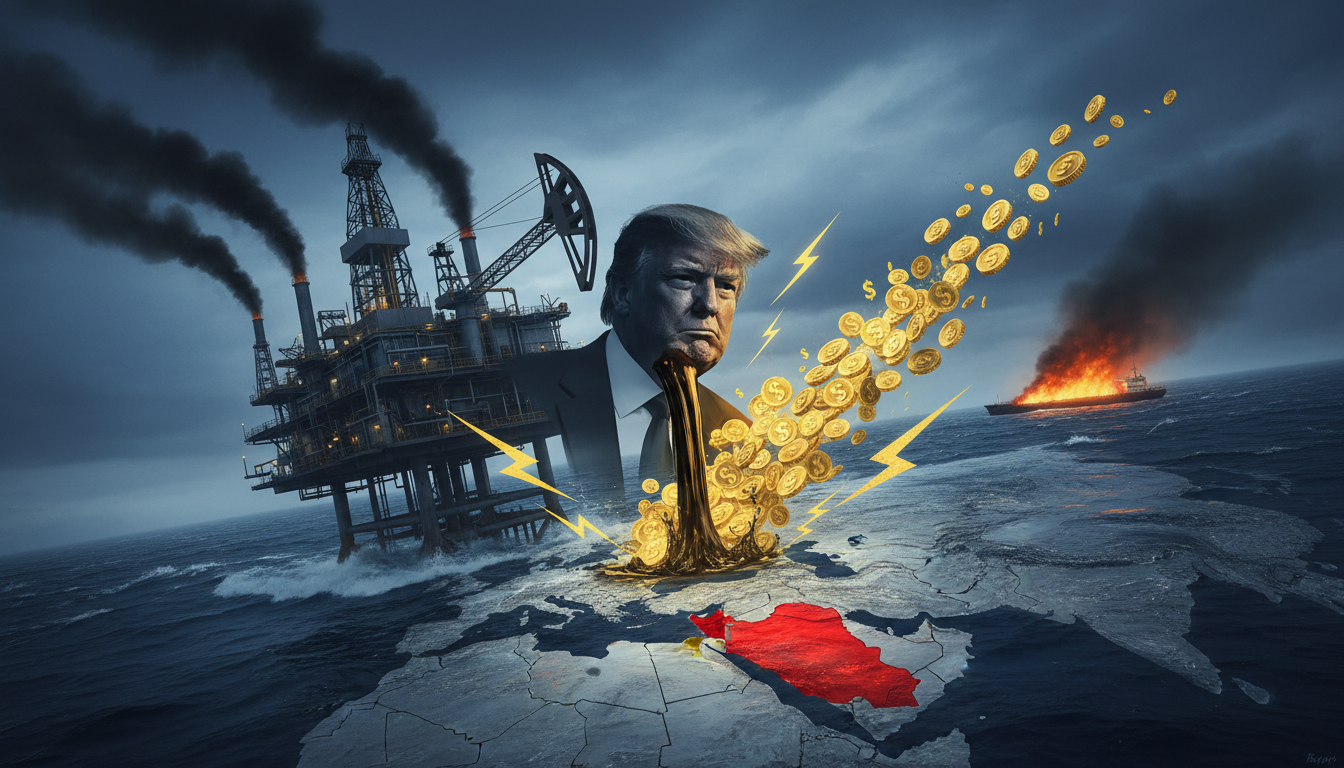
Crude Markets Ignite as Geopolitical Tensions Escalate; Brent Crosses $107
Global crude oil markets experienced a significant surge today, with prices rallying sharply upwards, building on an already volatile week. This robust ascent, marking an approximately 5% increase since Wednesday’s trading, was primarily catalyzed by definitive statements from the United States President, signaling a sustained and resolute military posture against Iran. Investors are now closely monitoring the evolving geopolitical landscape, positioning themselves for potential supply disruptions and sustained market volatility in the energy sector.
At the close of active trading, benchmark Brent crude futures soared to $107.49 per barrel, reflecting a gain of over 6% from its Wednesday settlement. West Texas Intermediate (WTI), the key U.S. crude benchmark, mirrored this upward momentum, trading at $105.25 per barrel, an increase exceeding 5% for the period. These dramatic price movements underscore the acute sensitivity of the oil market to heightened geopolitical risks, especially those emanating from the Middle East, a region critical for global oil supply and distribution.
The President’s address to the nation conveyed an unwavering commitment to ongoing military operations, asserting that U.S. forces were on the cusp of achieving their strategic objectives. His explicit declaration, “We are going to finish the job, and we’re going to finish it very fast. We’re getting very close,” resonated powerfully across trading floors. This firm stance left no ambiguity regarding the immediate trajectory of U.S. policy towards Iran, compelling oil market participants to re-evaluate their risk premiums and future price forecasts for crude oil.
This latest pronouncement marks a departure from a period characterized by a mosaic of contradictory declarations from the U.S. administration. In recent weeks, the President’s public discourse has oscillated wildly, featuring claims of productive negotiations with the Iranian government, consideration of an Iranian-requested ceasefire, and shifting positions on the necessity of international assistance to secure the strategically vital Strait of Hormuz. Furthermore, the prospect of a potential ground operation in Iran has been alternately hinted at and dismissed, creating a challenging environment for investors seeking clarity on the region’s geopolitical trajectory.
Historically, oil traders have demonstrated a propensity to interpret presidential remarks at their stated value, with market prices adjusting swiftly in response to each shift in rhetoric. However, the current market reaction appears particularly focused, driven by a notable omission in the latest address. According to Priyanka Sachdeva, a prominent analyst at Phillip Nova, the absence of any reference to diplomatic overtures or a potential ceasefire was a critical factor in today’s price action. Sachdeva noted that there was “no clear mention of ceasefire or diplomatic engagement,” a detail that fundamentally reshaped market expectations.
Sachdeva further elaborated on the potential ramifications for oil investors, warning that should the existing tensions escalate or maritime security risks intensify within key shipping lanes, crude oil prices could be poised to test fresh highs. This outlook reflects the market’s propensity to price in potential supply disruptions, particularly from a region responsible for a substantial portion of the world’s crude oil exports. The specter of impaired transit through critical chokepoints, such as the Strait of Hormuz, remains a significant concern for global energy security and, consequently, for the valuation of oil assets.
Adding another layer to this complex outlook, June Goh, an analyst with Sparta Commodities, offered a sobering assessment of the energy industry’s recovery timeline even if the conflict were to conclude imminently. Goh cautioned that a return to normalcy across the sector, encompassing everything from the restart of oil fields and the ramp-up of refinery operations to the resumption of full-scale petrochemicals production, could conservatively take anywhere from three to six months. This analysis implies a direct correlation between the duration of the conflict and the subsequent recovery period, suggesting that prolonged hostilities would inevitably lead to an even more protracted and challenging stabilization phase for the global energy supply chain.
For investors navigating the treacherous waters of today’s oil market, these insights are paramount. The confluence of assertive geopolitical posturing, the demonstrated market sensitivity to clear policy signals, and expert warnings about both immediate price upside and extended recovery periods paints a picture of sustained volatility. Strategic allocation and robust risk management will be essential as the energy sector grapples with the enduring implications of an increasingly turbulent Middle East. The premium on understanding nuanced geopolitical shifts and their direct impact on global supply and demand dynamics has never been higher for those invested in crude oil and associated energy assets.
