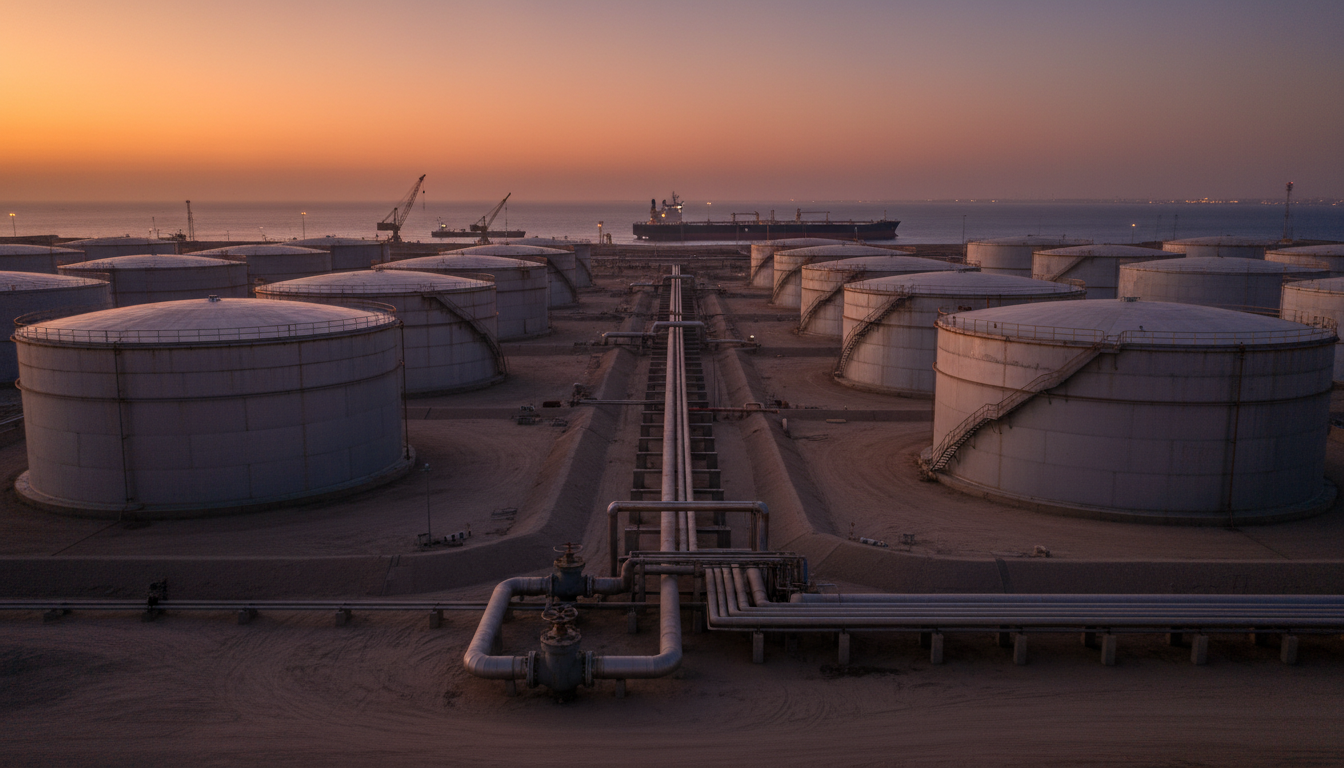
The global energy landscape remains a crucible of volatility, where crude oil prices are constantly recalibrated by the interplay of fundamental supply-demand dynamics and an ever-present geopolitical risk premium. For savvy investors, navigating this intricate environment demands not just a keen eye on technical indicators, but also a deep understanding of the catalysts looming on the horizon. As the market consolidates, the trajectory of oil prices appears poised for direction-setting movements, hinging on a series of upcoming events and the delicate balance of international relations. This analysis leverages our proprietary market data to dissect the current state of play and anticipate the forces that will shape energy investments in the coming weeks.
The Current Price Action: A Fight for Key Levels
As of today, Brent crude trades at $94.95 per barrel, marking a notable +5.06% gain within a day range that saw prices fluctuate between $94.06 and $97.81. This upward swing is mirrored in WTI crude, which stands at $87.27, up +5.67%, after touching an intra-day low of $86.46. These recent gains represent a significant rebound following a period of pronounced downward pressure. Our internal data indicates Brent crude had shed nearly 20% in just over two weeks, tumbling from $112.78 on March 30th to a low of $90.38 on April 17th. This sharp correction underscores the market’s sensitivity and the swift repricing that can occur. Gasoline prices reflect this broader trend, currently trading at $3.03 per gallon, a +3.41% increase today.
The psychological $100 per barrel threshold for Brent remains a critical battleground. While prices have fallen below it recently, a decisive breach above or below this level will likely dictate short-term investor sentiment. For buyers, a sustained move past $100 could signal renewed bullish momentum, driven by tightening supply or escalating risks. Conversely, a failure to reclaim this mark could lead to further consolidation or even a test of lower support levels, as the market grapples with demand concerns or an easing of geopolitical tensions.
Geopolitical Headwinds: The Unpredictable Risk Premium
The overriding factor influencing crude oil markets continues to be the persistent shadow of geopolitical volatility, particularly emanating from the Middle East. The market’s acute sensitivity to regional tensions means that conventional technical analysis, while useful, often plays a secondary role to breaking headlines. Events unfolding over a single weekend, especially from critical oil-producing regions, possess the power to instantaneously reprice oil futures upon market open, demanding constant vigilance from investors.
The potential for escalations involving key oil-producing nations remains a significant concern. Past actions, such as reported instances of targeting oil infrastructure or maritime vessels, serve as potent reminders of immediate supply risks. Any confirmed disruption in vital shipping lanes, like the Strait of Hormuz—a narrow maritime choke point through which a substantial portion of the world’s seaborne oil supply transits—would almost certainly trigger a sharp upward surge in crude prices. Such an event would immediately factor into the oil risk premium, reflecting heightened fears of supply scarcity and impacting the outlook for global energy security. Investors must therefore remain acutely aware of the delicate political balance in the region.
A Packed Calendar: Upcoming Catalysts for Price Action
The coming weeks are set to be particularly active, with a series of critical energy events poised to provide new catalysts for oil prices. Investors should mark their calendars for several key dates:
- On Monday, April 20th, the OPEC+ Joint Ministerial Monitoring Committee (JMMC) will convene. This meeting, followed by the full OPEC+ Ministerial Meeting on Saturday, April 25th, could signal shifts in production policy or reaffirm existing cuts. Any indication of changes in supply strategy, whether an extension of current cuts or a hint at future increases, will have an immediate impact on market sentiment and price expectations.
- Mid-week brings crucial U.S. inventory data. The American Petroleum Institute (API) will release its Weekly Crude Inventory report on Tuesday, April 21st, followed by the more comprehensive EIA Weekly Petroleum Status Report on Wednesday, April 22nd. These reports provide vital insights into U.S. supply and demand dynamics, including crude oil, gasoline, and distillate stockpiles, offering a granular view of market balances. These will be repeated the following week on April 28th and 29th, respectively.
- Further insights into U.S. production activity will come from the Baker Hughes Rig Count reports on Friday, April 24th, and again on May 1st. These reports, tracking active oil and gas rigs, are closely watched indicators of future drilling activity and potential supply growth from North America.
Each of these events carries the potential to introduce new information that could break the current market consolidation and establish a clearer directional trend for crude prices.
Addressing Investor Focus: Trajectory and Long-Term Outlook
Our proprietary reader intent data highlights that investors are keenly focused on immediate market trajectories, particularly asking about WTI’s direction. The recent upward movement in WTI, currently at $87.27, indicates a bullish short-term sentiment, but its sustainability remains tied to the broader geopolitical picture and the upcoming data releases. Should U.S. inventory reports show unexpected draws, or if OPEC+ maintains a hawkish stance on supply, WTI could continue its ascent. Conversely, signs of softening demand or increasing U.S. production could cap gains.
Beyond the immediate term, many investors are looking further ahead, seeking predictions for oil prices by the end of 2026. This longer-term outlook is inherently more complex, influenced by a multitude of evolving factors. While a decisive breach of the $100 level to the downside could signal a more sustained period of lower prices, driven by factors such as global economic slowdowns or accelerated energy transitions, geopolitical risks offer a strong counterbalance. The prospect of de-escalation in sensitive regions, potentially brokered through intermediaries like Oman engaging with Iran, could introduce a “peace dividend,” reducing the geopolitical risk premium and exerting downward pressure on prices. However, any renewed aggression or supply disruption could quickly push prices towards or even beyond previous highs. Ultimately, the 2026 outlook will be a dynamic interplay between global economic health, OPEC+ policy, U.S. shale responsiveness, and the unpredictable nature of geopolitics.


