

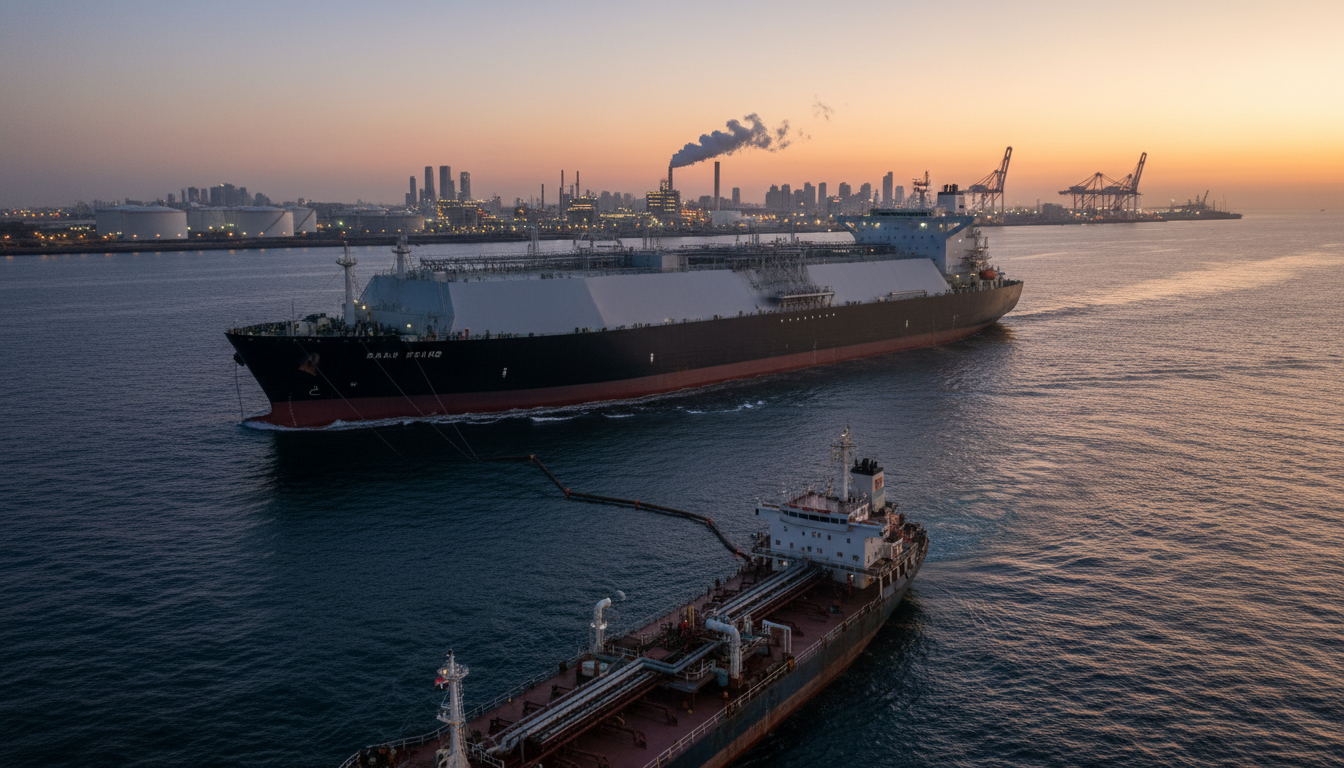
The global liquefied natural gas (LNG) market is undergoing a significant strategic shift, with China, traditionally a colossal importer, now emerging as a dominant reseller. This pivot, fueled by an interplay of geopolitical turmoil, robust domestic supply, and calculated inventory management, reshapes the competitive landscape for natural gas investors and energy traders worldwide. China’s proactive stance in offloading record volumes of LNG signals a sophisticated navigation of current market volatility, effectively insulating itself from escalating spot prices while capitalizing on regional demand.
China’s Strategic LNG Maneuver: A Deep Dive into Record Resales
Since the onset of the conflict in the Middle East, China has actively engaged in reselling substantial volumes of LNG to other Asian nations. This strategic move directly stems from a combination of subdued domestic demand and ample national gas supplies, creating a surplus that Beijing has leveraged for profit and regional influence. March of this year alone witnessed a historic peak in these resales, with China diverting up to ten LNG cargoes to eager buyers across the continent. This figure represents an unprecedented monthly high, underscoring the scale of China’s market intervention.
The year-to-date data further solidifies this trend, revealing an estimated 1.31 million tons of LNG resold by China. This volume marks another record high, surpassing the total volumes transacted by Chinese entities for the entirety of any previous year, including 2023. Key recipient nations for these shipments include South Korea, Thailand, Japan, India, and the Philippines, indicating a broad regional impact. For investors tracking global energy flows, China’s transformation from a primary demand driver to a significant re-exporter necessitates a re-evaluation of traditional market dynamics, highlighting the nation’s increasing energy flexibility and market savvy.
Geopolitical Shifts Fueling China’s Market Advantage
China’s strategic capacity to resell LNG at record rates is significantly bolstered by current geopolitical disruptions impacting global energy supply chains. Events such as the de facto closure or heightened risk in the Strait of Hormuz and a recent outage at Qatar’s crucial LNG complex, attributed to Iranian missile strikes, have dramatically tightened the global LNG market. These developments have not only curtailed supply from major producers but have also driven spot LNG prices to multi-year highs, surging by more than 80% since the commencement of the Middle East conflict.
While other nations scramble to secure increasingly expensive spot cargoes, China operates from a position of relative strength. Its robust energy reserves act as a critical buffer against the prevailing global LNG crunch. Industry analytics firm Kpler estimated China’s LNG storage levels at approximately 51% by the end of March. This substantial inventory allows Beijing to draw upon existing supplies rather than competing for high-priced spot market cargoes, granting it a crucial competitive edge in a volatile environment. For energy investors, this situation highlights the premium on energy security and diversified supply sources in a fractured global landscape.
Domestic Strength and Pipeline Reliance Bolster Beijing’s Position
Beyond strategic inventory management, China’s reduced reliance on the spot LNG market stems from deliberate policies aimed at strengthening its domestic energy independence. The nation has significantly ramped up its indigenous gas production, effectively boosting internal supply and mitigating the need for external purchases. Concurrently, China has expanded its pipeline gas imports from Russia, further diversifying its energy portfolio and providing a stable, often more cost-effective, alternative to seaborne LNG.
This dual approach—enhancing domestic output and securing long-term pipeline deals—has created a formidable energy supply base. It allows China to be selective about its LNG procurement, avoiding the exorbitant prices seen in the current spot market. Investors watching the interplay of national energy policies and global markets will recognize this as a masterclass in energy resilience, positioning China as a formidable force capable of influencing price discovery and supply availability for other regional players.
Soaring Spot Prices Deter Chinese Imports
The current astronomical levels of spot LNG prices have inevitably translated into a significant contraction of China’s import activities. The global market’s reaction to supply disruptions, particularly the reduced availability from key suppliers like Qatar and the UAE, has driven prices to a three-year high. Consequently, China has recorded its lowest monthly LNG imports in eight years, a clear indication of its refusal to participate in the high-stakes bidding war for expensive cargoes.
Data tracking tanker movements projected China to import approximately 3.7 million tons of LNG in March. This figure marks the lowest monthly import level for the world’s leading LNG importer since the spring of 2018. Furthermore, it represents a substantial 25% slump compared to the import volumes registered in March 2023. These reduced import figures are not a sign of economic weakness but rather a calculated withdrawal from a market deemed excessively priced. Analysts widely agree that with its sufficient buffer and diversified supply, China remains disinclined to engage with costly spot market offerings.
Investor Outlook: What This Means for the Global LNG Market
The current market dynamics paint a clear picture for energy investors: China is actively leveraging its energy security to optimize its position in the global LNG trade. As an ICIS analyst, Wang Yuanda, aptly articulated, “China will not enter the market and fight for cargoes with other countries at all.” This decisive stance has profound implications for the global LNG market, particularly for other Asian buyers who find themselves competing for a tighter pool of available cargoes at inflated prices.
For investors, China’s strategy highlights the growing importance of integrated energy policies that prioritize domestic supply, pipeline infrastructure, and strategic reserves. Companies involved in LNG liquefaction and export must adapt to a market where a major player is less reliant on spot purchases, potentially leading to more localized or bilateral trade agreements. Furthermore, the persistent geopolitical risks in key shipping lanes and production hubs will continue to place a premium on diverse supply sources and robust logistics. Understanding China’s calculated disengagement from the expensive spot market offers crucial insights into future price stability and supply chain resilience across the entire natural gas sector.
