

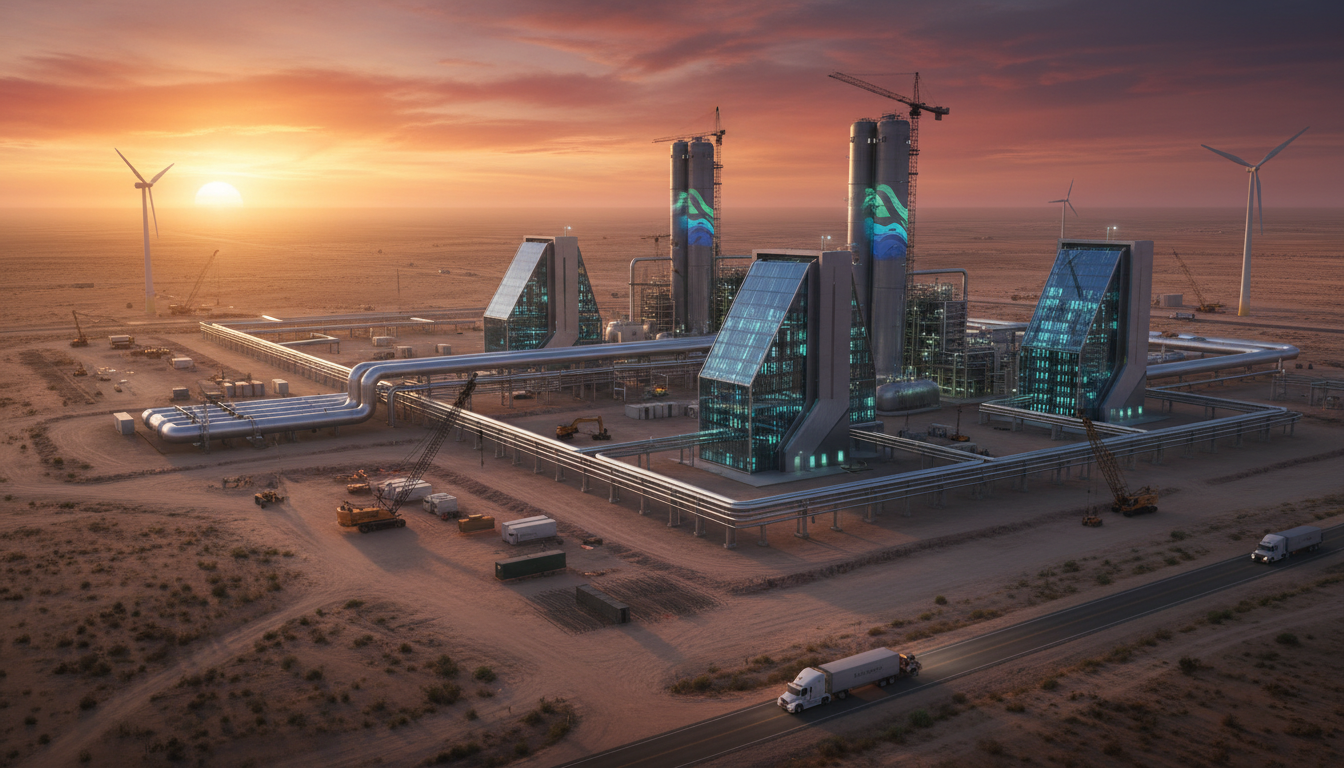
Oil & Gas Majors Powering AI: Chevron, Microsoft Eye $7 Billion West Texas Plant
A monumental energy infrastructure deal is taking shape in West Texas, signaling a powerful convergence of the oil and gas sector with the burgeoning demands of artificial intelligence. Industry titan Chevron, technology giant Microsoft, and activist investor Engine No. 1 are reportedly in advanced discussions to construct a multi-billion dollar power generation facility, specifically designed to fuel a sprawling data center campus. This potential collaboration underscores the critical role of conventional energy in powering the future of digital innovation and represents a significant investment opportunity for those tracking the evolving energy landscape.
West Texas Project: A New Benchmark for Gas-Fired Power
Sources indicate these influential entities have entered an exclusivity agreement concerning a significant power generation and electricity offtake arrangement. The proposed natural gas-fired power plant in the heart of West Texas could command an investment reaching an estimated $7 billion, with an impressive projected output of 2,500 megawatts (MW) of electricity. If realized, this formidable project would rank among the largest gas power plants in the United States, a testament to the scale of energy infrastructure required to support hyperscale AI operations and other data-intensive workloads.
This initiative highlights the intense capital expenditure now being directed towards energy solutions for the technology sector. While the negotiations are active and an exclusivity agreement is in place, companies caution that commercial terms remain unfinalized, and a definitive agreement is yet to be secured. This level of prudence is typical for such high-stakes, multi-party ventures that promise to reshape regional energy supply chains and significantly impact financial markets focusing on oil, gas, and technology integration.
Strategic Alliances: Building the Foundation for Digital Growth
This potential West Texas venture is not an isolated development but rather builds upon a strategic partnership forged earlier in 2025 between Chevron and Engine No. 1, alongside industrial powerhouse GE Vernova. Their established alliance aims to engineer scalable and robust power solutions tailored for U.S.-based data centers, with a firm commitment to leveraging abundant domestic natural gas resources. These prior initiatives envisioned deploying GE Vernova’s advanced gas turbines across various key U.S. regions, including the Southeast, Midwest, and West.
A distinctive aspect of their strategy, particularly for these co-located data center projects, is to design power generation facilities for direct data center integration. This approach intends to circumvent the existing transmission grid in their initial operational phase. By reducing reliance on the current grid infrastructure, the strategy seeks to mitigate potential strain on existing electricity networks and help stabilize consumer electricity prices, offering a more efficient and direct energy supply model for demanding digital infrastructure. For investors, this signals an innovative approach to energy delivery, potentially unlocking new efficiencies and revenue streams.
The Driving Force: Unprecedented U.S. Power Demand Surge
The United States is currently experiencing an unprecedented surge in electricity demand, marking the most significant growth trajectory since the 1990s. This dramatic increase is overwhelmingly driven by the insatiable energy appetites of AI infrastructure, the relentless expansion of data centers, and a robust revival in advanced manufacturing sectors. These critical technological advancements and industrial expansions require colossal amounts of reliable power, creating a substantial demand pull for new generation capacity.
For energy investors, this trend represents a monumental shift, creating substantial demand for reliable and scalable power sources. The relentless build-out of digital processing capabilities and the ongoing industrial renaissance demand consistent, high-capacity energy, positioning power generation assets, particularly those fueled by accessible resources, at the forefront of investment opportunities. Understanding this underlying demand is key to grasping the long-term investment thesis in power generation and its foundational energy sources.
Natural Gas: The Strategic Imperative for Powering the Future
In this evolving energy landscape, natural gas is emerging as the undisputed frontrunner to meet the surging power requirements. Analysts widely point to its inherent advantages: natural gas offers unparalleled flexibility, critical for the 24/7 uninterrupted supply demanded by data centers and AI operations. This “always-on” capability is non-negotiable for hyper-scale computing, where even momentary outages can lead to significant disruptions and financial losses.
Furthermore, as an abundant domestic resource, natural gas offers energy security and predictability, factors increasingly valued in today’s volatile global markets. Favorable policy environments, particularly those supporting fossil fuel infrastructure and recognizing the need for energy reliability, further bolster natural gas’s competitive edge. A recent report by Goldman Sachs underscored this perspective, highlighting natural gas’s pivotal role in capitalizing on rising electricity demand due to its superior flexibility and extensive domestic availability. For investors eyeing the intersection of energy and technology, the sustained and growing demand for natural gas in power generation represents a compelling long-term thesis.
Investment Implications and Future Outlook for Energy Investors
Investors focused on the oil and gas sector should closely monitor these developments, as they signal a significant strategic pivot and an area of robust capital deployment. The sheer scale of investment, potentially reaching $7 billion for a single power plant, illustrates the profound financial implications and the commitment of major players to this new energy frontier. This trend suggests a robust pipeline of infrastructure projects fueled directly by the digital economy’s exponential growth.
Companies with natural gas production, transport, and power generation capabilities stand to benefit significantly from this synergy. The strategic alliances forming between energy majors like Chevron, technology giants such as Microsoft, and influential investment firms like Engine No. 1, signal a clear recognition of natural gas as a cornerstone fuel for the future of digital innovation. These large-scale, co-located power solutions represent a new frontier for energy investment, promising stable, long-term revenue streams tied directly to the exponential growth of artificial intelligence and data processing. For forward-thinking portfolios, these integrated energy-tech plays offer compelling value propositions.
Conclusion: A New Era for Oil and Gas in the Digital Age
The collaborative efforts of Chevron, Microsoft, and Engine No. 1 on the proposed West Texas power plant exemplify a critical inflection point in energy investment and the broader industrial landscape. As AI and data centers continue their explosive expansion, the demand for reliable, domestic power sources will only intensify. Natural gas, with its inherent advantages of flexibility, reliability, and abundance, is strategically positioned to be a dominant force in powering this digital revolution, offering lucrative opportunities for sophisticated investors in the oil and gas space. This convergence marks a definitive shift, integrating traditional energy prowess with cutting-edge technological demand.
