

Navigating Middle East Geopolitics: EU’s Proactive Energy Stance
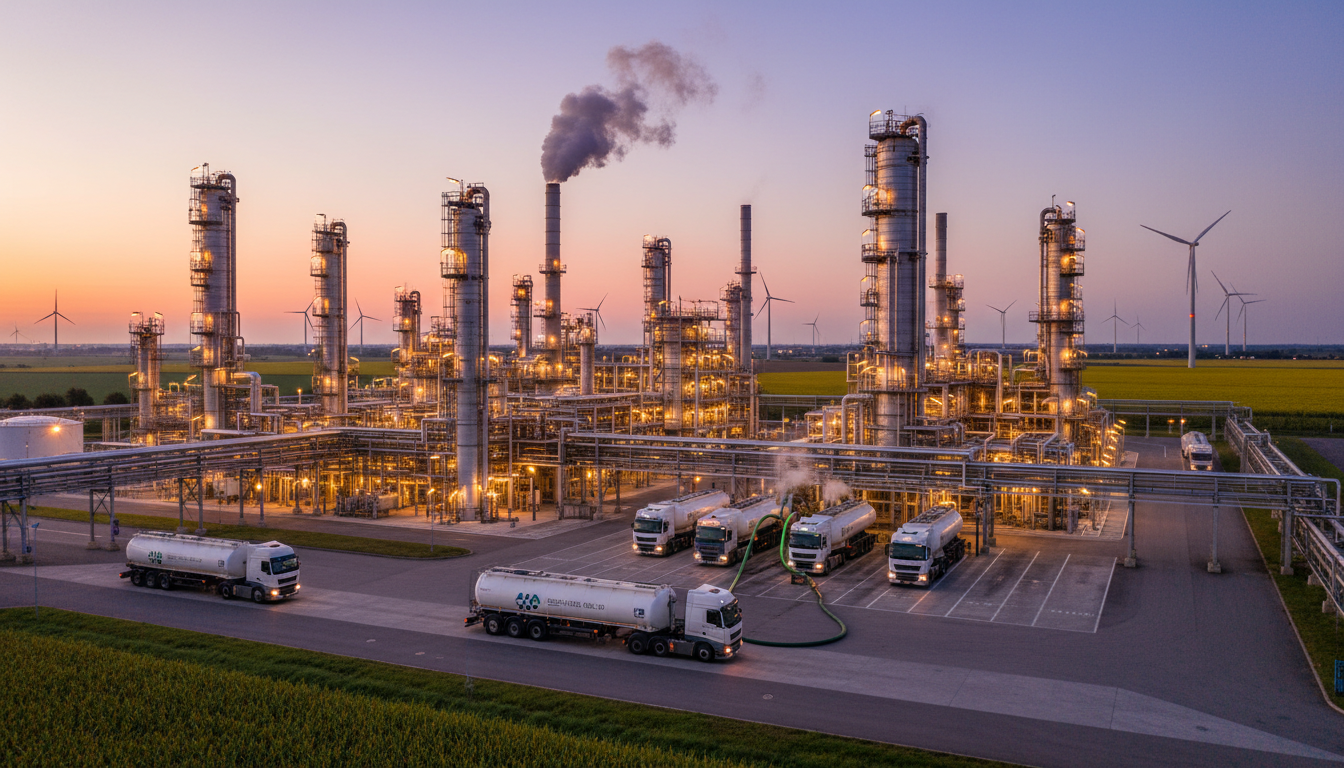
As geopolitical tensions in the Middle East continue to simmer, impacting global energy markets, the European Commission has issued clear directives to maintain stability within the European Union’s energy sector. The message to refinery operators across the bloc is unequivocal: defer non-emergency maintenance. This strategic appeal aims to maximize refining capacity and ensure a consistent flow of refined products, even as the Commission assures markets that the EU currently possesses adequate energy supplies.
Beyond operational adjustments, Brussels is actively promoting the increased adoption of biofuels. This initiative is designed to strategically reduce reliance on fossil petroleum products, thereby mitigating market pressures and enhancing overall energy security. The Commission underscores the critical need for member states to engage in timely and synchronized preparations to safeguard the supply of both crude oil and refined petroleum products, signaling a long-term readiness posture.
Strategic Refinery Operations and Biofuel Integration
The imperative to postpone non-urgent refinery maintenance highlights the EU’s focus on operational continuity in a volatile global landscape. For investors, this signals a policy environment prioritizing immediate supply resilience over routine operational downtime, potentially influencing short-term refinery utilization rates and product output. Concurrently, the push for greater biofuel uptake presents a dual opportunity: reducing fossil fuel dependency while fostering growth in the renewable fuels sector. This dynamic creates a compelling investment thesis for companies positioned within the biofuel value chain, as European policy actively seeks to integrate these alternatives into its energy mix to alleviate market strain.
European Commissioner for Energy and Housing, Dan Jørgensen, explicitly stated the EU’s commitment: “The European Union’s security of supply remains guaranteed but we must be ready for a potentially prolonged disruption of international energy trade.” This declaration underscores the proactive, rather than reactive, approach being adopted by the EU executive in navigating these challenging energy market dynamics.
Europe’s Emergency Stockpile Resilience
The bedrock of Europe’s immediate energy security lies in its mandatory oil stock obligations and robust contingency planning. EU regulations require member countries to maintain substantial oil reserves, a mechanism proving its worth in the current climate. Furthermore, the EU is playing a significant role in the broader global response to market disruptions. EU countries collectively contribute approximately 20 percent to the International Energy Agency’s coordinated release of over 400 million barrels of emergency oil stocks. Notably, data published by the IEA on March 19 revealed that the vast majority of these EU-contributed releases comprise refined products, directly addressing potential shortages in critical areas such as diesel and jet fuel.
This commitment to strategic reserves offers a level of market stability, reassuring investors that immediate supply shocks are buffered by substantial government-held inventories. The focus on refined products within these releases is particularly pertinent, as it directly impacts end-user markets and industrial operations across the continent, preventing potential cascading economic effects from product scarcity.
The Urgent Mandate for Gas Storage Refill
Beyond oil, gas storage remains a critical area of focus. Commissioner Jørgensen separately confirmed at an informal meeting of EU energy ministers that the Commission is actively coordinating efforts to replenish the bloc’s gas storage facilities. As of the latest assessment, EU gas storage facilities stood at 28.05 percent full, representing a volume of 320.49 terawatt hours (TWh), according to the Gas Infrastructure Europe’s Aggregated Gas Storage Inventory. This figure, while showing significant remaining capacity for refill, highlights the ongoing challenge of securing adequate natural gas supplies ahead of potential demand spikes.
This urgency is magnified by recent events, including a meeting on March 10 between European Commission Director-General for Energy, Ditte Juul-Jorgensen, and Qatar’s energy minister. The discussion focused on energy supply in the wake of Qatar declaring force majeure on its liquefied natural gas (LNG) production, following “military attacks” on its facilities. Qatar is a vital LNG supplier to the EU, making any disruption a significant concern for European energy security and gas market stability.
Market Volatility: The Escalating Cost of Conflict
The financial ramifications of the Middle East conflict are already palpable across European markets. Commissioner Jørgensen revealed that since the conflict’s inception, gas prices within the EU have surged by approximately 70 percent, while oil prices have climbed by 60 percent. This dramatic escalation has a tangible impact on the bloc’s finances; just 30 days of conflict have added a staggering EUR 14 billion, equivalent to $16.24 billion, to the Union’s fossil fuel import bill. This financial burden underscores the vulnerability inherent in external energy reliance.
Jørgensen emphasized the gravity of the situation: “As the crisis in the Middle East enters its second month, it is clear that we are facing a very serious situation.” While immediate oil and gas supply shortages are not observed, the market is experiencing tightening in specific product categories, particularly diesel and jet fuel. This, coupled with increasing constraints in the global gas market, is creating spill-over effects that are pushing electricity prices higher. Investors should brace for what Jørgensen warns will not be “short-lived” consequences for energy markets, necessitating a unified and coordinated EU response to avoid fragmented national actions and disruptive market signals.
Long-Term Vision: Europe’s Path to Energy Independence
Beyond managing immediate supply challenges, the Commission is concurrently developing a “toolbox of measures” to support member states in shielding families and businesses from the rising energy costs. This short-term relief is, however, firmly anchored within a broader, long-term strategic imperative. Commissioner Jørgensen reiterated that Europe’s fundamental vulnerability to external energy shocks stems directly from its dependence on imported fossil fuels.
The path forward, as articulated by the Commissioner, is unequivocally toward energy independence. This is presented as a strategic imperative not only for climate goals but also for economic stability and national security. The blueprint for this future involves a multi-pronged approach: prioritizing homegrown clean energy, accelerating electrification across sectors, modernizing interconnections to enhance grid resilience, and driving aggressive energy efficiency initiatives. For investors, this signifies a robust and sustained commitment to the energy transition, creating significant opportunities in renewables, energy storage, smart grid technologies, and efficiency solutions across the continent for decades to come.
