

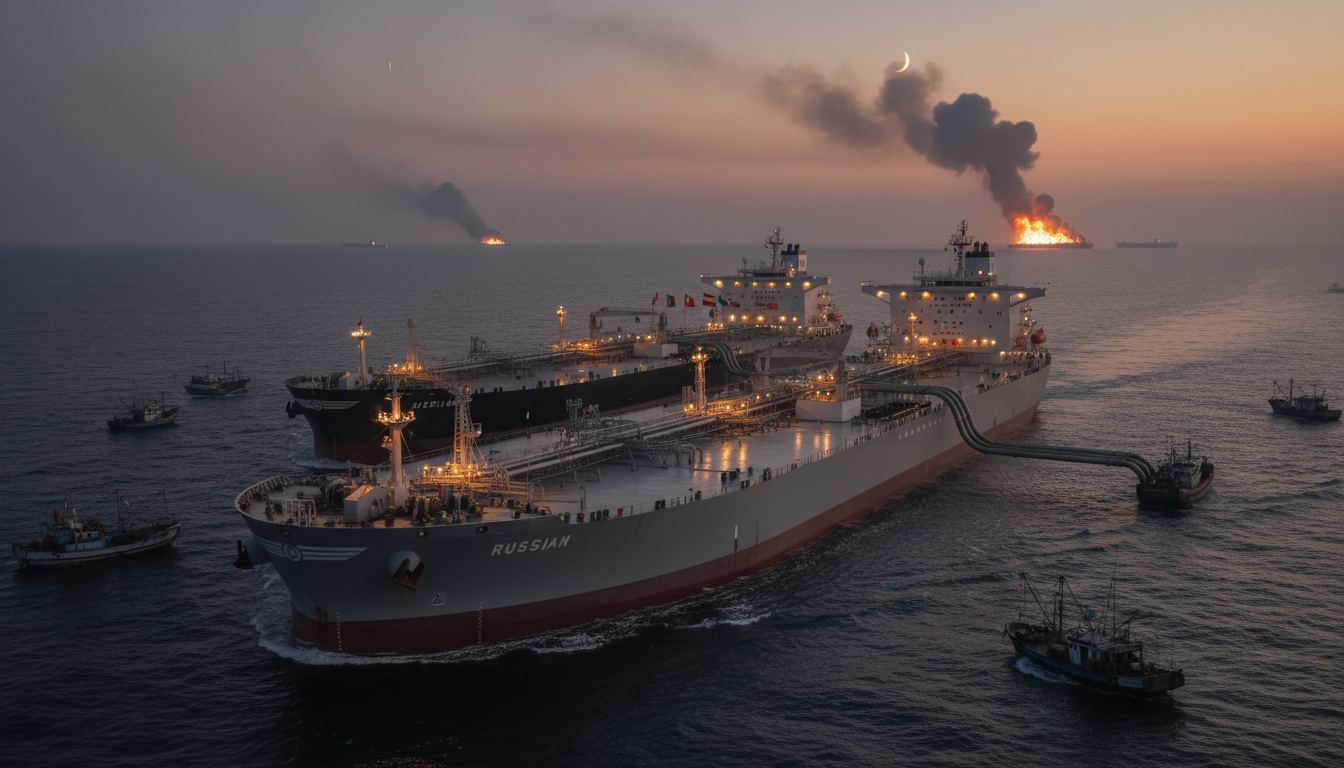
Asian Markets Pivot to Russian Crude Amid Middle East Turmoil and Strategic Waivers
Asia’s vast and energy-hungry markets are currently navigating an unprecedented supply crisis, largely a direct consequence of escalating geopolitical tensions in the Middle East. With the critical Strait of Hormuz bottlenecking a significant portion of global oil shipments, nations across the continent are aggressively recalibrating their sourcing strategies, with Russian crude emerging as a pivotal alternative. This market shift highlights the precarious balance between energy security and geopolitical alignments in the global oil trade.
The geopolitical crucible, simmering fiercely in the Middle East since late February, particularly involving the United States, Israel, and Iran, has dramatically redrawn established global energy trade routes. The near-total constriction of maritime traffic through the Strait of Hormuz, a vital artery for approximately one-fifth of the world’s total petroleum liquids consumption, has plunged Asian refiners into a desperate scramble for alternative feedstocks. This severe disruption has not only driven up insurance premiums for tankers but also introduced significant uncertainty into supply chains, forcing immediate and drastic measures from importers.
Key Asian Players Re-engage with Russian Supply
Concrete evidence of this significant market pivot is now readily apparent. The Philippines, for instance, has recently taken delivery of its first cargo of ESPO crude in nearly six years, signaling a clear strategic move to diversify its energy portfolio. Concurrently, South Korea has seen the arrival of its inaugural Russian naphtha shipment of the year at Daesan port, which is currently awaiting discharge. These initial deliveries underscore the urgent need for supply. Further indicative of this broader trend, other nations such as Sri Lanka are reportedly engaged in active discussions with Moscow to secure future energy consignments. As June Goh, a shrewd analyst at Sparta Commodities, succinctly puts it, for many refiners currently facing limited options, “there’s no other choice.” She further elaborated that “refineries lacking significant operational flexibility will inevitably prioritize Russian crude, given its comparative ease as a substitute for traditional Middle Eastern grades, both in terms of quality and logistics.”
The Strategic Imperative of US Sanction Waivers
The immediate enabler of this renewed Asian appetite for Russian oil stems from a specific set of temporary US sanction waivers. These exemptions strategically permit the trade of Russian oil cargoes that were loaded prior to March 12th. Washington’s declared objective behind this policy adjustment is to mitigate the upward pressure on global crude prices, a direct response to the market volatility ignited by the Middle East crisis. However, this move has attracted considerable criticism, with detractors arguing that it inadvertently provides a financial lifeline to Moscow, thereby bolstering Russia’s revenues amidst its ongoing conflict in Ukraine. Interestingly, a parallel US initiative aimed at releasing previously sanctioned Iranian barrels has thus far yielded considerably less impact, primarily due to lingering apprehension among potential buyers regarding the broader implications of engaging with Tehran.
Navigating Deadlines and Anticipating Future Supply Dynamics
The immediate horizon for these new supply arrangements presents a degree of uncertainty. In South Korea, the clarity around securing additional Russian crude and naphtha remains clouded by an impending deadline. Local broadcasters, citing officials from the Industry Ministry, have reported that the unloading and payment processes for existing shipments must be completed by April 11th, precisely when the current US waiver is slated to expire. The significance of naphtha as a crucial feedstock for plastics manufacturing and a key blending component for gasoline underscores the strategic importance of these imports for South Korea’s petrochemical and broader energy sectors. As the Middle East crisis shows no signs of abating, other major economic players like Japan might also be compelled to re-evaluate their long-term sourcing strategies. While Tokyo would undoubtedly need to meticulously weigh any potential diplomatic ramifications, the nation’s consistent and substantial demand for crude oil and petrochemical feedstocks, coupled with its existing reliance on Russian liquefied natural gas, suggests a potential pivot cannot be entirely dismissed.
India and China: Unwavering Pillars of Russian Oil Demand
Even prior to the recent waivers that broadened the market for Russian oil, the lion’s share of Moscow’s crude exports to Asia found eager buyers primarily within Indian processing facilities and among independent refiners in China. Other potential purchasers were largely deterred by the daunting prospect of risking access to the vital US financial system. These two economic behemoths continue to anchor demand for Russian oil. India, for example, is projected to import approximately 60 million barrels this month, maintaining its robust purchasing patterns. Concurrently, Russian crude has consistently accounted for an increasingly significant proportion of China’s overall crude import portfolio throughout the current year, solidifying their indispensable role as Moscow’s primary energy partners and providing a crucial floor for Russian export volumes.
Investment Implications and Market Outlook
For astute investors keenly monitoring the global energy landscape, these evolving dynamics signal a complex interplay of geopolitical risk, profound supply chain re-alignment, and shifting pricing structures. The temporary nature of the US waivers introduces an inherent element of uncertainty post-April 11th, potentially reintroducing market volatility or compelling Asian refiners to devise entirely new sourcing strategies. While the sustained demand from India and China provides a vital underpinning for Russian exports, the broader market will be closely scrutinizing any shifts in global crude benchmarks and the refining margins of Asian players. The overarching takeaway remains that energy security is paramount for national economies, driving nations to navigate intricate political currents to ensure uninterrupted supply. This creates a challenging yet opportunity-rich environment across the entire oil and gas value chain, demanding careful consideration of both immediate market responses and long-term strategic implications.
