

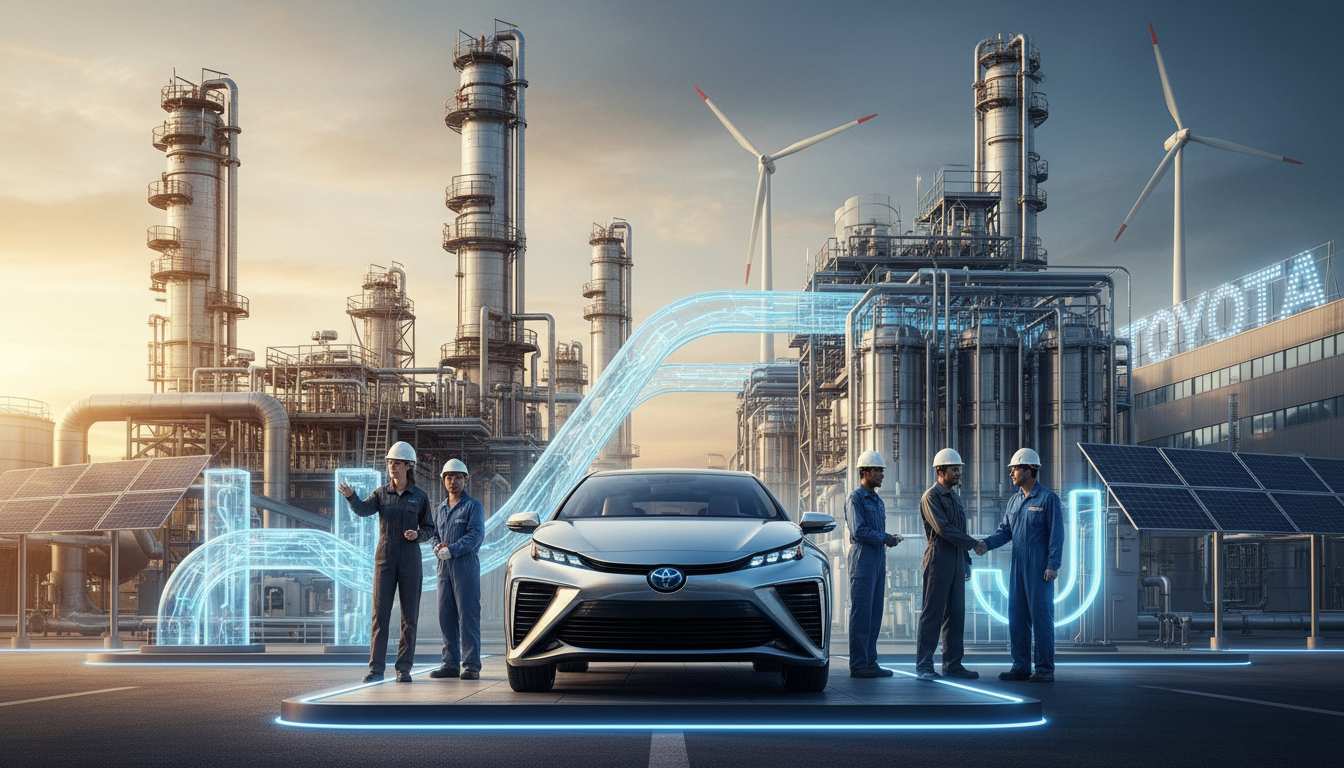
A formidable alliance is solidifying in the heavy-duty transport sector, signaling a pivotal acceleration towards hydrogen-powered mobility. Toyota Motor Corporation has formally entered a non-binding agreement to join cellcentric, the pioneering fuel cell joint venture initially forged by Volvo Group and Daimler Truck. This strategic move positions Toyota as an equal shareholder, consolidating an unparalleled blend of automotive engineering, commercial vehicle expertise, and advanced fuel cell technology aimed squarely at decarbonizing global logistics.
A Hydrogen Powerhouse Emerges
Launched in 2021 by two of the world’s commercial vehicle giants, cellcentric has rapidly ascended as a key player in developing sophisticated fuel cell systems. Its core mission revolves around crafting solutions specifically tailored for long-haul trucking and other strenuous heavy-duty applications. With Toyota now on board, cellcentric’s ambition to become a global manufacturer and a tier-1 supplier of fuel cell systems gains significant momentum and expanded resources.
The agreement outlines a collaborative framework where Toyota and cellcentric will jointly manage critical aspects of fuel cell development and production. This includes a keen focus on unit cells – the fundamental component of any fuel cell system – alongside their architectural design and control elements. The objective is clear: to engineer highly competitive products by seamlessly integrating the proprietary technologies and extensive know-how from all three industrial titans. For investors monitoring the energy transition, this collaboration represents a significant aggregation of capital and intellectual property directed at a high-growth, high-impact segment.
Strategic Imperative: Fueling Long-Haul Decarbonization
The imperative to decarbonize transport is undeniable, yet the path for heavy-duty applications differs significantly from passenger vehicles. While battery electric solutions prove effective for shorter routes and urban deliveries where charging infrastructure is readily available, the unique demands of long-haul logistics present distinct challenges. Fuel cell trucks, capable of generating their own electricity from onboard hydrogen, offer a compelling alternative. This self-sustaining energy generation capacity makes them particularly well-suited for extended journeys and operations in regions with nascent or limited battery charging infrastructure, such as remote or rural areas.
Leadership across all three corporations views hydrogen as a cornerstone for achieving net-zero emissions in the transport sector. Toyota’s President and CEO, Koji Sato, underscored the profound synergy this partnership creates. He highlighted cellcentric’s deep-seated expertise in commercial applications, perfectly complemented by Toyota’s three decades of pioneering fuel cell development in the passenger car segment. This fusion of capabilities, Sato noted, is poised to deliver a world-leading fuel cell system specifically designed for heavy commercial vehicles, reaffirming Toyota’s commitment to advancing a hydrogen society alongside strategic partners.
Investment Implications for the Energy Landscape
For investors keenly tracking the evolving energy landscape, this tri-party collaboration signals a robust commitment to hydrogen as a viable and scalable energy carrier. The entry of a global automotive powerhouse like Toyota into an existing heavy-duty hydrogen venture amplifies the credibility and long-term investment thesis for the broader hydrogen economy. This development has direct implications for sectors beyond vehicle manufacturing, including hydrogen production, storage, and distribution infrastructure. Oil and gas companies, in particular, face strategic decisions regarding their future energy portfolios, with growing opportunities in blue and green hydrogen production, pipeline development, and refueling station networks. This alliance underscores the accelerating shift in energy demand that will shape future capital allocation within the energy sector.
Martin Lundstedt, President and CEO of Volvo Group, emphasized the broader market signal this partnership sends to customers, suppliers, and the wider ecosystem. He stressed the unprecedented importance of large enterprises collaborating to accelerate the transformation towards net-zero transportation. Lundstedt asserted that welcoming Toyota to the fold marks a substantial leap forward in realizing the industry’s decarbonization goals.
Accelerating the Hydrogen Economy
The combined might of Volvo’s and Daimler Truck’s extensive commercial vehicle prowess, fused with Toyota’s unparalleled experience in fuel cell research, development, production technology, and advanced manufacturing, aims to create a formidable technological advantage for cellcentric. This synergy is designed not only to refine existing solutions but also to significantly expedite the large-scale deployment of hydrogen-based mobility solutions globally. The ambitious goal is to elevate hydrogen from a niche alternative to a mainstream energy source for the heavy-duty sector.
Karin Rådström, President and CEO of Daimler Truck, expressed profound pride in Toyota’s planned integration into cellcentric. She articulated the belief that this expansion will invigorate development efforts and dramatically scale hydrogen technology, which is seen as an indispensable complement to battery-electric drives in the overarching mission to decarbonize transport. This three-way partnership effectively consolidates leading intellectual capital and market reach, promising to accelerate the commercial viability and adoption of fuel cell electric trucks on an unprecedented scale.
Outlook: A New Era for Heavy Transport
This landmark agreement among Volvo, Daimler Truck, and Toyota marks a definitive turning point in the race to electrify heavy-duty transport. By pooling their immense resources and expertise, these industry leaders are not merely developing new technologies; they are actively shaping the future energy infrastructure for global logistics. Investors should view this as a powerful indicator of hydrogen’s growing role in the energy mix, paving the way for substantial growth opportunities across the entire hydrogen value chain and fundamentally reshaping the long-term investment outlook for the transport and energy sectors.
