

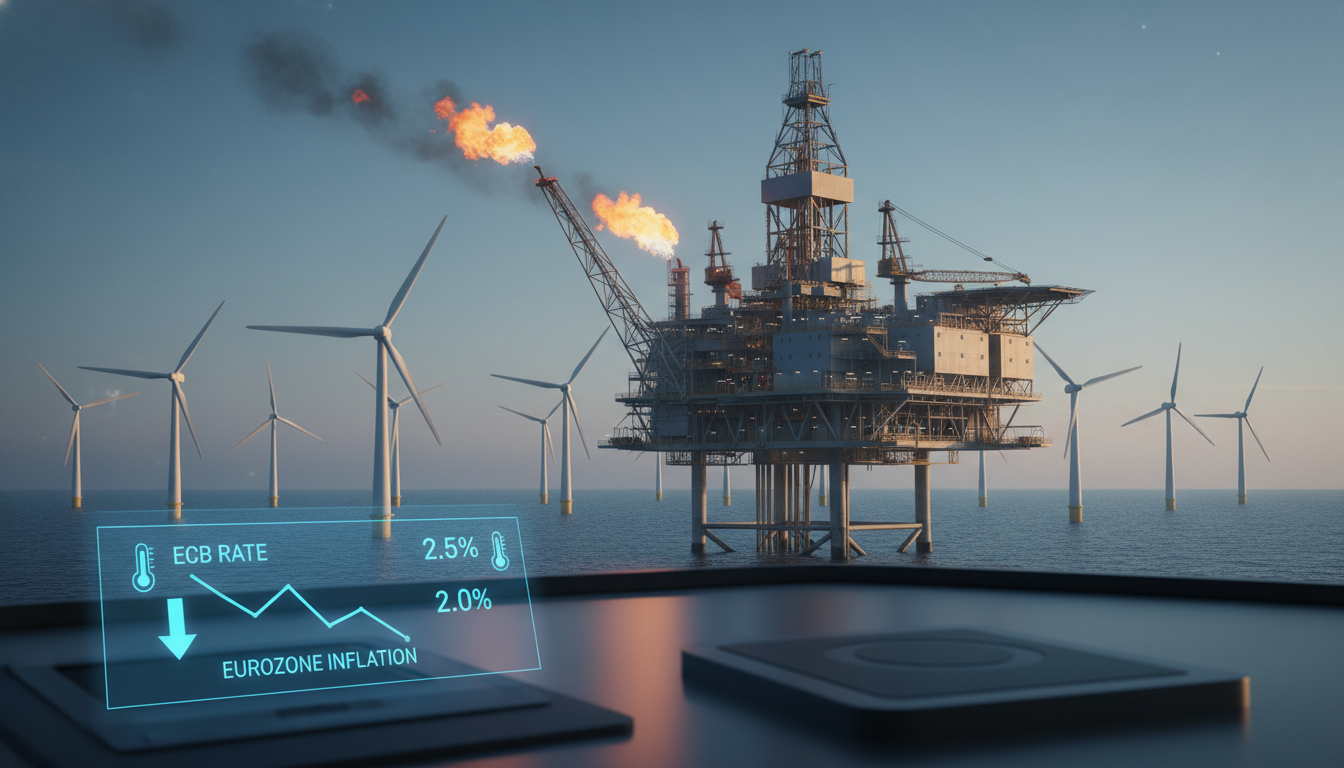
FRANKFURT — Europe’s economic landscape is undergoing a significant transformation, driven primarily by escalating geopolitical tensions that have sent energy prices soaring and propelled inflation to levels not seen in months. In a critical development for investors closely tracking global market dynamics, the Eurozone’s annual inflation rate climbed to 2.5% in March, marking a sharp increase from February’s 1.9%.
This surge, impacting the 21 nations utilizing the euro currency, is directly attributed to the severe disruption of oil and gas supplies emanating from the Persian Gulf, a consequence of the ongoing conflict involving Iran. The repercussions are palpable across the continent, signaling a new phase of monetary policy challenges for the European Central Bank (ECB) and presenting a complex environment for energy market participants.
Geopolitical Flashpoint Ignites Energy Markets
The core catalyst for this inflationary spiral is the dramatic shift in energy costs. According to Eurostat figures, energy prices within the Eurozone surged by an alarming 4.9% in March. This represents a stark reversal from February, which actually saw a 3.1% decline in energy costs. The sudden pivot underscores the extreme sensitivity of global energy markets to geopolitical instability, particularly when it threatens major supply routes.
At the heart of this crisis is Iran’s increasingly aggressive stance, which has led to blockades in the Strait of Hormuz. This critical maritime choke point is arguably the world’s most vital oil transit lane, with approximately 20% of the globe’s crude oil and liquefied natural gas (LNG) typically passing through its narrow waters. Any impediment to traffic in the Strait of Hormuz immediately tightens global fuel markets, triggering price spikes and creating significant uncertainty for the crude oil supply chain and natural gas markets.
Inflationary Pressure Cascades Through the Economy
The impact of escalating fuel prices extends far beyond the direct cost of energy, rippling through the entire supply chain and significantly influencing consumer prices. This is not merely an abstract economic concept but a tangible reality felt by businesses and households across Europe. For example, in Rome’s bustling Trionfale indoor market, vegetable stand owner Anna Caruso highlighted how the increased cost of diesel directly translates to higher prices for everyday produce like zucchini, eggplant, and various fruits. Transporting goods becomes more expensive, and these elevated operational costs are inevitably passed on to consumers.
Another market vendor, Paola Ianzi, corroborated this sentiment, noting that while seasonal factors play a role in certain price fluctuations, a substantial portion of the current increases stems directly from the geopolitical conflict. The necessity for transporters to compensate for higher diesel and fuel expenses is a significant inflationary driver. Beyond energy, food price inflation registered a relatively moderate 2.4% in March, while the services sector, a broad category encompassing everything from healthcare to personal grooming, saw a 3.2% increase, indicating a pervasive inflationary trend across the Eurozone economy.
ECB Confronts Mounting Pressure to Act
The persistent rise in inflation, now well above the ECB’s 2% target, places immense pressure on the central bank to implement decisive monetary policy adjustments. ECB President Christine Lagarde has previously acknowledged that businesses may be more inclined to raise prices quickly in the current environment, learning from the bitter experience of the last major inflationary episode in 2022. During that period, double-digit inflation became entrenched following Russia’s drastic cuts to natural gas supplies to Europe and surging crude oil prices, which sent energy costs through the roof.
To prevent current inflation from becoming ingrained in the Eurozone economy—a phenomenon where expectations of higher wages and goods prices perpetuate a cycle of rising costs—analysts are now largely predicting a series of interest rate hikes. Bill Diviney, head of macro research at ABM AMRO bank, specifically anticipates the ECB will initiate rate increases at both its April and June Governing Council meetings. This proactive stance, he suggests, aims to “pre-empt any de-anchoring of inflation expectations.” Similarly, economists at Oxford Economics also project at least two interest rate increases this year. The ECB’s Governing Council, at its last meeting on March 19, opted to keep its key rate unchanged at 2%, but this position is widely expected to shift as the central bank wields its primary tool against inflation.
Implications for Oil & Gas Investors
For investors focused on the oil and gas sector, these developments paint a picture of continued volatility and heightened risk, coupled with potential opportunities. The direct threat to crude oil supply from the Strait of Hormuz blockage translates into a higher geopolitical risk premium embedded in energy prices. This scenario suggests that crude oil and natural gas prices could remain elevated or even climb further in the coming weeks and months, potentially benefiting exploration and production companies.
However, the anticipated interest rate hikes by the ECB, designed to cool economic activity, could eventually temper demand for energy. A tightening monetary policy environment across Europe could slow economic growth, potentially impacting industrial energy consumption and consumer spending on fuel. Investors must carefully weigh the immediate benefits of supply-side disruptions against the longer-term implications of aggressive central bank actions. Monitoring the ECB’s decisions and the evolving situation in the Persian Gulf will be paramount for navigating the complex interplay between geopolitical risk, energy markets, and the broader Eurozone economy. The current landscape necessitates a robust investment strategy that accounts for both the inflationary pressures driven by energy and the potential for reduced demand in a higher interest rate environment.
