

Energy investors are closely monitoring an accelerating surge in crude oil prices, as geopolitical tensions in the Middle East escalate dramatically, igniting fears of significant global supply disruptions. On Tuesday, benchmark Brent crude futures soared past the $110 per barrel threshold, while U.S. West Texas Intermediate (WTI) crude decisively broke through the $100 mark. This sharp ascent reflects a market grappling with profound uncertainty over the stability of vital shipping lanes and regional output.
In early trading, Brent crude futures advanced by $2.26, registering an approximate 2 percent gain to settle at $115.04 a barrel. This marked a continuation of strong momentum, following its highest levels seen since mid-March during the prior session. Concurrently, U.S. WTI crude futures climbed by $3.10, representing a rise of about 3 percent, reaching $105.96 a barrel – a price point not witnessed since early March. These daily gains underscore a broader, explosive trend this month, with Brent crude rocketing nearly 59 percent higher in March, and WTI crude experiencing a staggering 58 percent jump, representing its most substantial monthly increase since May 2020.
Geopolitical Flashpoints Fueling Price Spikes
The primary catalyst for this aggressive price action is a rapidly deteriorating security situation across key Middle Eastern maritime chokepoints. Concerns are particularly focused on the potential for Iran to effectively close the Strait of Hormuz, a critical waterway through which approximately one-fifth of the world’s crude oil supply and a significant volume of liquefied natural gas (LNG) shipments transit daily. Such a closure, even partial, would send immediate shockwaves through global energy markets, severely restricting crude flows to major consuming nations.
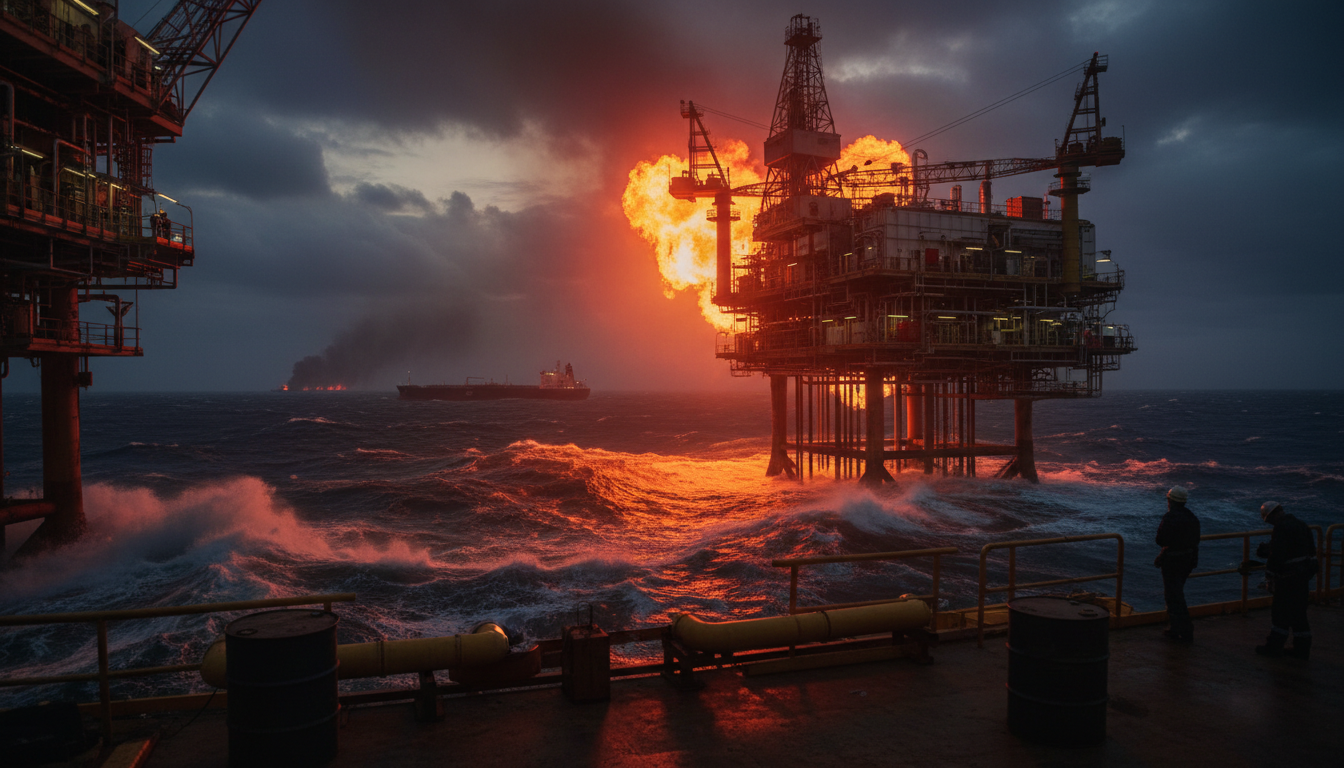
Adding a concrete layer of alarm to these geopolitical fears, reports emerged that the Kuwait Petroleum Corp’s fully loaded crude tanker, the Al Salmi, which has a capacity to transport up to 2 million barrels of crude, was reportedly struck during an Iranian attack near the port of Dubai. This incident immediately raised the specter of direct threats to maritime commerce in the region, prompting warnings from authorities regarding potential oil spills, which would compound environmental and logistical challenges alongside direct supply disruptions. Investors are now keenly assessing the increased operational risks and rising insurance premiums for tankers navigating these volatile waters.
The Twin Chokepoint Nightmare: Bab el-Mandeb Under Pressure
Further exacerbating the supply outlook, Iran-aligned Houthi forces in Yemen launched missile strikes targeting Israel over the weekend. These actions reignited fears of renewed disruptions in the Bab el-Mandeb strait, another pivotal maritime artery. This strait connects the Red Sea and the Gulf of Aden, serving as an essential conduit for global trade between Asian and European markets. A sustained disruption here would significantly impact shipping routes, forcing vessels to take longer, costlier detours around Africa.
Financial analysts are voicing strong warnings about the devastating implications should both the Strait of Hormuz and the Bab el-Mandeb experience simultaneous, significant disruptions. Market strategists highlight that if Houthi forces successfully manage to re-establish a blockade or serious threat to the Bab al-Mandab Strait, then two of the world’s most critical energy transit arteries would come under intense, concurrent pressure. This “twin chokepoint” crisis represents a severe nightmare scenario for the integrity of global supply chains and portends unprecedented volatility for energy prices.
Strategic Diversions and Diplomatic Deadlock
In response to these escalating risks, major regional producers are undertaking strategic adjustments to their export routes. Notably, Saudi Arabia has significantly rerouted a substantial portion of its crude oil exports through the Red Sea. Recent data from Kpler indicates a dramatic surge in shipments to the Saudi Red Sea port of Yanbu, which last week soared to 4.658 million barrels per day. This marks a sharp increase from an average of just 770,000 barrels per day recorded across January and February, illustrating the kingdom’s proactive efforts to mitigate transit risks.
Meanwhile, the international diplomatic landscape remains fraught with tension. U.S. President Donald Trump has issued a stern warning, indicating that Washington could target Iran’s energy infrastructure directly if Tehran does not reopen the Strait of Hormuz. Despite the White House’s assertion that talks between the two sides are ongoing, Iran has publicly dismissed U.S. peace proposals as fundamentally unrealistic. Market participants are observing these developments with considerable wariness, as analysts point to a significant lack of clarity regarding any potential resolution. This persistent diplomatic impasse, characterized by a wide divergence in demands from both sides, continues to foster a deeply cautious investment environment, overriding any optimistic rhetoric from political leaders.
Investor Outlook: Navigating Unprecedented Volatility
For investors in the oil and gas sector, the current geopolitical climate necessitates an extremely vigilant approach. The convergence of threats to critical maritime chokepoints, coupled with a lack of diplomatic progress, suggests that elevated oil prices and significant market volatility are likely to persist. Companies with diversified supply chains or exposure to regions less directly impacted by Middle Eastern instability may offer some resilience. Conversely, firms heavily reliant on transit through the Strait of Hormuz or the Bab el-Mandeb could face increased operational costs and logistical bottlenecks.
Maintaining a clear understanding of the evolving geopolitical landscape, monitoring regional military actions, and assessing the effectiveness of alternative shipping routes are paramount for informed decision-making. The current scenario underscores the enduring sensitivity of global energy markets to political risk, reminding investors that the price of crude oil is not merely a reflection of supply and demand fundamentals, but also a barometer of international stability.
