The Middle East’s volatile geopolitical landscape continues to send ripples through global commodity markets, with a critical aluminum smelter reporting a targeted attack and escalating tensions driving crude oil prices to multi-year highs. Investors are bracing for sustained supply disruptions as the regional conflict widens, directly impacting everything from industrial metals to energy benchmarks.
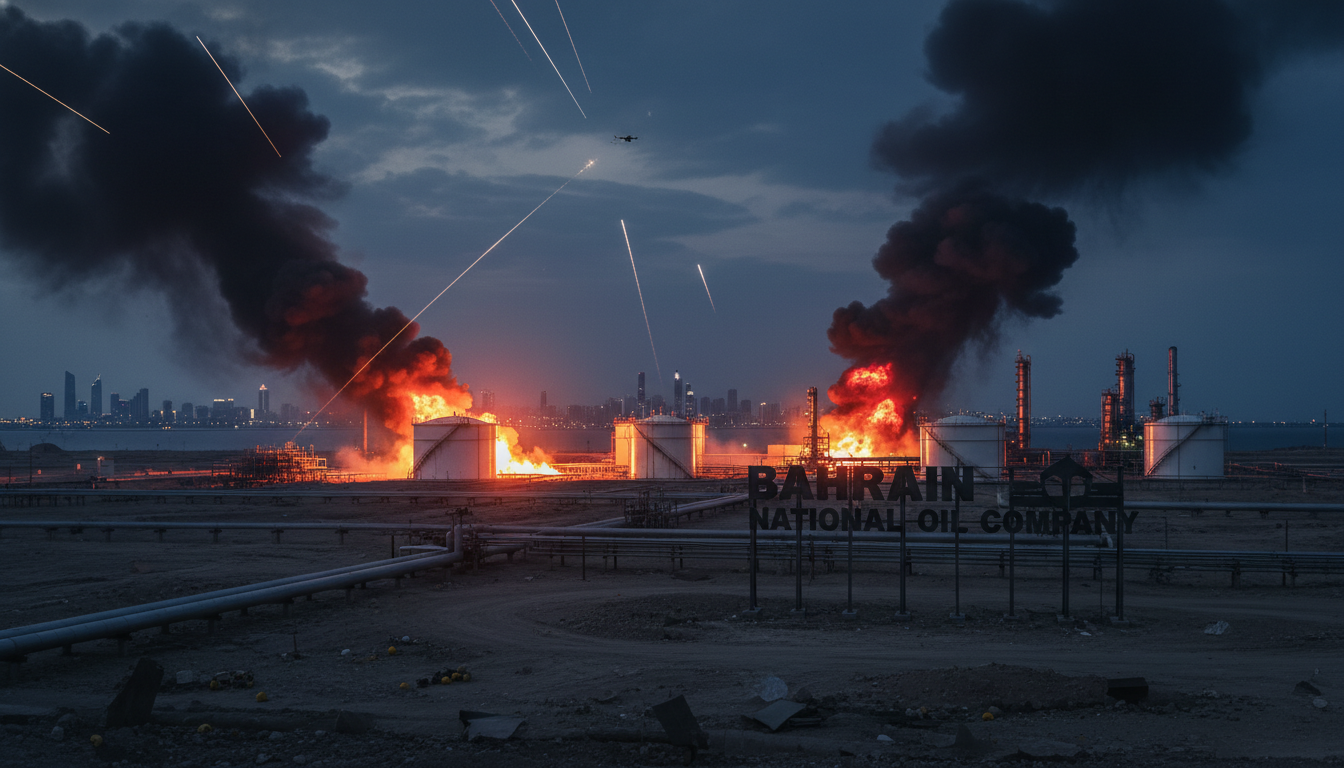
Aluminium Bahrain (Alba), one of the world’s largest aluminum producers, disclosed on Sunday that its massive smelting facility was subjected to an Iranian attack on Saturday. The company, a cornerstone of global aluminum supply, stated it is currently evaluating the extent of the damage to its infrastructure while prioritizing operational continuity and employee safety. This development compounds existing supply concerns for the vital industrial metal.
Just last month, on March 15, Alba had already announced a significant reduction in its operational capacity, cutting output by 19% of its annual 1.6 million-ton production. This proactive measure aimed to safeguard business continuity amidst mounting transit and supply challenges impacting the strategically crucial Strait of Hormuz. The combination of pre-emptive cuts and the recent attack fuels anxieties over a potential global shortage, propelling aluminum prices to four-year peaks earlier in the month. Though some gains have been pared, the metal remains 4.3% higher than its levels recorded on February 27.
Aluminum, while abundant, plays an indispensable role in the global economy. Its versatility makes it a critical material across diverse sectors, including electronics, transportation, and construction. Furthermore, it is essential for the burgeoning solar panel industry and various packaging applications, underscoring the broad economic implications of any disruption to its supply chain.
Deepening Regional Instability Threatens Global Trade
The attack on Alba’s facility underscores a broadening conflict that began on February 28 following U.S. and Israeli actions. Iran has been actively retaliating, deploying missiles and drones against its regional neighbors. The United Arab Emirates reported on Sunday that its air defense systems successfully intercepted a recent barrage of incoming projectiles, highlighting the persistent and widespread nature of these engagements across the Gulf.
Houthis Enter the Fray, Maritime Routes Under Threat
A new and concerning dimension to the conflict emerged on Saturday with Iranian-backed Houthi fighters claiming responsibility for a missile strike against Israel. This marks the group’s first direct involvement in the escalating regional hostilities. Market analysts warn that the Houthis possess the capability to severely disrupt maritime traffic through the Bab el-Mandeb Strait, a narrow waterway separating the Arabian Peninsula from the Horn of Africa.
This choke point is a critical artery for global commerce, providing access to the Red Sea and, consequently, the Suez Canal. Such a disruption would significantly intensify pressure on international trade, adding to existing supply chain vulnerabilities. Data from the first half of 2023 estimated that the Bab el-Mandeb Strait accounted for approximately 12% of seaborne oil trade and 8% of global liquefied natural gas (LNG) trade, making it a pivotal conduit for energy flows.
Even before the current escalation, Iranian actions had already significantly impacted the Strait of Hormuz, the narrow passage between Iran and the Arabian Peninsula. This vital strait, through which an estimated 20% of the world’s oil supplies traversed prior to the war, is now considered effectively shut down by Iranian forces. The dual threat to these two critical maritime choke points has triggered an immediate and forceful reaction in energy markets.
Crude oil prices surged on Friday, closing at their highest levels in over three years. U.S. crude oil (WTI) climbed 5.46% to settle at $99.64 per barrel, while the international benchmark, Brent crude, gained 4.22% to reach $112.57. These sharp increases reflect profound market anxieties regarding the potential for massive supply disruptions emanating from the Middle East. President Donald Trump’s attempts to initiate negotiations with Iran and provide a 10-day extension to secure the Strait of Hormuz, pausing attacks on Iran’s energy infrastructure through April 6, failed to assuage market fears, with Iran denying any engagement in such talks.
Diplomatic Efforts Amid Rising Military Presence
The far-reaching economic ramifications of the widening conflict necessitate urgent diplomatic intervention. President Trump faces increasing pressure to alleviate Iran’s strategic leverage over the Strait of Hormuz. Meanwhile, a growing U.S. military footprint in the Gulf region raises concerns among investors about the potential for a prolonged ground conflict, further extending global economic uncertainty.
The U.S. Central Command confirmed on March 27 the arrival of the 31st Marine Expeditionary Unit, comprising approximately 3,500 Sailors and Marines aboard the USS Tripoli (LHA 7), in the Middle East. This substantial military deployment underscores the heightened alert level in the region. Concurrently, Iran has escalated its rhetoric, threatening to target U.S. and Israeli educational institutions unless condemnation is issued for alleged attacks on Iranian universities, citing damage to the University of Science and Technology in Tehran blamed on U.S. actions.
Amidst this backdrop of military posturing and threats, diplomatic channels remain active. Pakistan announced on Saturday that top diplomats from Saudi Arabia, Turkey, and Egypt would converge in Islamabad for discussions aimed at de-escalating the conflict. Pakistan’s Foreign Minister Ishaq Dar recently met with his Turkish counterpart, Hakan Fidan, to deliberate on the Iranian conflict and other pressing regional issues, signaling a concerted effort to find a peaceful resolution before market volatility becomes entrenched.
For energy investors, the confluence of targeted industrial attacks, maritime choke point threats, and escalating regional military presence creates an exceptionally challenging environment. The sustained rally in crude oil and aluminum prices is a clear indicator of market sentiment pricing in significant supply risks. Close monitoring of geopolitical developments and their direct impact on global energy and commodity supply chains will be paramount for navigating this period of profound uncertainty.