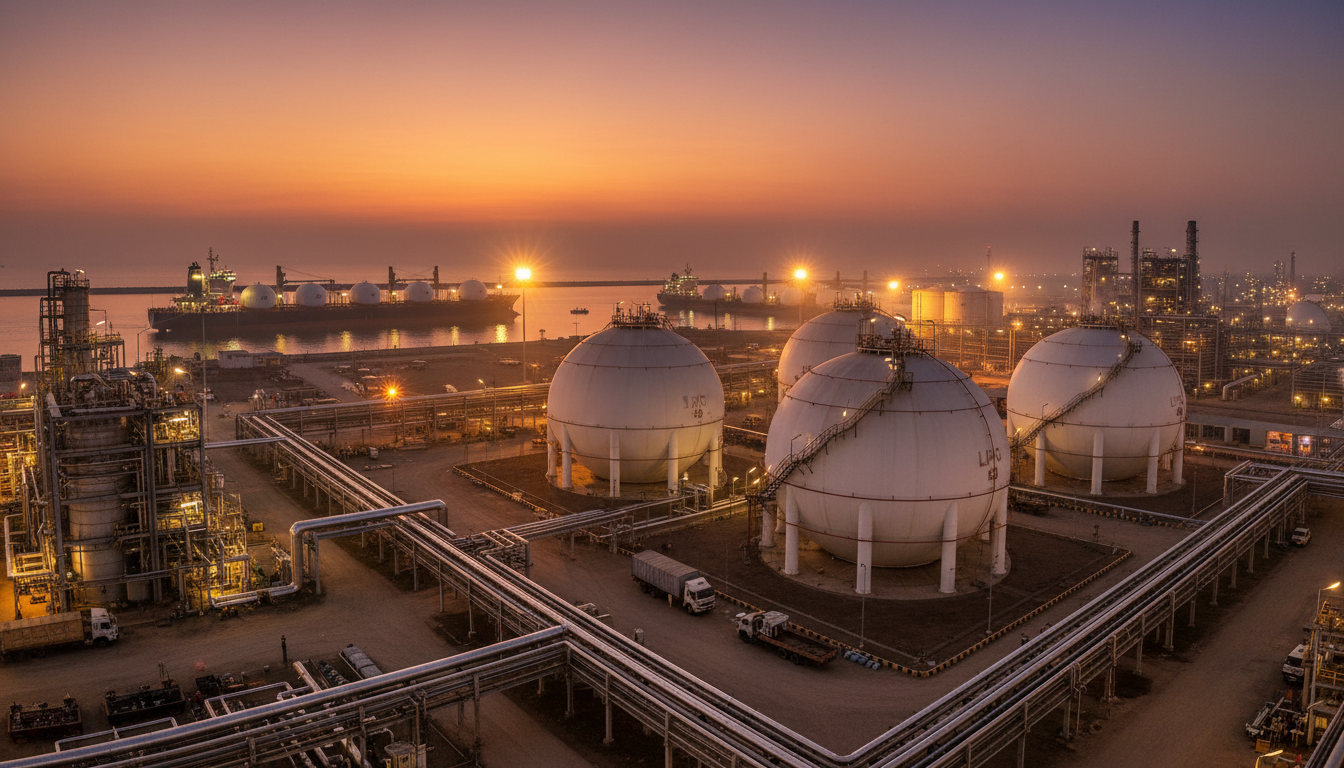
India’s critical energy supply lines are experiencing a flurry of activity, signaling both the nation’s robust demand for hydrocarbons and its strategic adaptability amidst complex global maritime challenges. Recent weeks have seen key energy cargoes, including liquefied petroleum gas (LPG) and crude oil, successfully reach Indian shores, providing crucial relief to domestic fuel markets and underscoring the resilience of its energy import infrastructure.
LPG Inflows Bolster Domestic Supply Amidst Geopolitical Tensions
The arrival of the LPG carrier Jag Vasant at Gujarat’s Vadinar port on Saturday marked a significant boost to India’s energy reserves. This vessel, having successfully navigated the sensitive Strait of Hormuz, commenced the intricate process of unloading its substantial cargo of approximately 47,000 metric tonnes of liquefied petroleum gas. The operation, executed via an efficient ship-to-ship (STS) transfer at anchorage, saw the valuable fuel moving to a daughter vessel, Rose Gas, for onward distribution. This logistical maneuver highlights the sophisticated capabilities employed to ensure timely delivery and mitigate potential bottlenecks in critical supply chains.
This recent arrival follows closely on the heels of another strategic LPG delivery earlier in the week. The Pyxis Pioneer, carrying about 18,000 metric tonnes of LPG sourced from the United States, also docked at Vadinar. This particular shipment is noteworthy for its origin, underscoring India’s proactive efforts to diversify its energy sourcing. By tapping into non-traditional supply regions, India aims to enhance its energy security and reduce reliance on historically volatile corridors, a crucial consideration for investors monitoring global energy dynamics.
Crude Oil Logistics Underway for Major Refiners
Beyond LPG, India’s crude oil import activities remain robust, catering to the country’s vast refining capacity. The crude oil tanker Desh Bhakt is currently positioned at anchorage in Vadinar, holding a substantial cargo of 50,741 metric tonnes of crude oil destined for Indian Oil Corporation (IOC). This ongoing activity demonstrates the continuous flow of feedstock required to power India’s industrial and economic engines.
Looking ahead, the port of Vadinar is preparing for a further influx of crude. At least three additional vessels are anticipated to arrive within the coming days, collectively carrying nearly 300,000 metric tonnes of crude. These significant shipments are designated for two of India’s prominent energy players: Nayara Energy and Indian Oil Corporation Limited (IOCL). Such large-scale movements affirm the sustained demand from India’s refining sector and its pivotal role in the global oil market. Investors should track these arrivals as indicators of refining throughput and future product availability.
Navigating Geopolitical Headwinds: The Hormuz Challenge
The strategic importance and inherent risks of global shipping lanes, particularly the Strait of Hormuz, were starkly highlighted just weeks prior. In mid-March, a challenging situation emerged when nearly 300,000 tonnes of LPG, distributed across six Indian-flagged vessels, faced delays in the Strait of Hormuz. This incident underscored the tangible impact of geopolitical tensions in West Asia on vital energy supply routes. Such disruptions can introduce volatility into commodity markets and necessitate heightened vigilance from maritime operators and energy importers.
Fortunately, these challenges were ultimately overcome. One of the affected ships, the Shivalik, subsequently reached Mundra port, carrying approximately 46,000 tonnes of LPG, which had been sourced by Indian Oil Corporation. Of this cargo, 20,000 tonnes were successfully offloaded at Mundra, with the remaining volume slated for discharge at Mangalore, demonstrating IOC’s strategic distribution across its terminal network. Close behind, another LPG carrier, Nanda Devi, safely docked at Vadinar port last week, delivering 46,500 metric tonnes of gas, having also successfully transited the Strait amidst the prevailing regional tensions. The Shivalik was the first of these two crucial vessels to arrive, followed by the Nanda Devi, marking a successful resolution to the earlier transit complications.
Strategic Sourcing and Investment Implications for India’s Energy Sector
The collective events of the past few weeks paint a clear picture for investors: India’s energy sector is demonstrating remarkable adaptability and strategic foresight. The diversification of LPG sources, exemplified by the US shipment via Pyxis Pioneer, is a deliberate move to de-risk supply chains from over-reliance on a single region or route. This strategy is critical in an era where geopolitical uncertainties can rapidly impact global commodity flows.
For investors focused on the oil and gas sector, these developments highlight several key takeaways. Firstly, India’s unwavering demand for hydrocarbons continues to drive significant import volumes, supporting global commodity markets. Secondly, the emphasis on robust logistics and infrastructure, as evidenced by efficient STS transfers and port capabilities, is crucial for maintaining energy security. Finally, the proactive approach to supply chain diversification and risk mitigation by major Indian energy companies like IOC and Nayara Energy positions them favorably to navigate future market volatility. Their ability to manage complex maritime operations, from navigating choke points like the Strait of Hormuz to optimizing domestic distribution, is a testament to the sector’s operational strength and its vital role in the nation’s economic growth trajectory. Investing in companies with strong logistical capabilities and diversified sourcing strategies remains a prudent approach in the dynamic global energy landscape.


