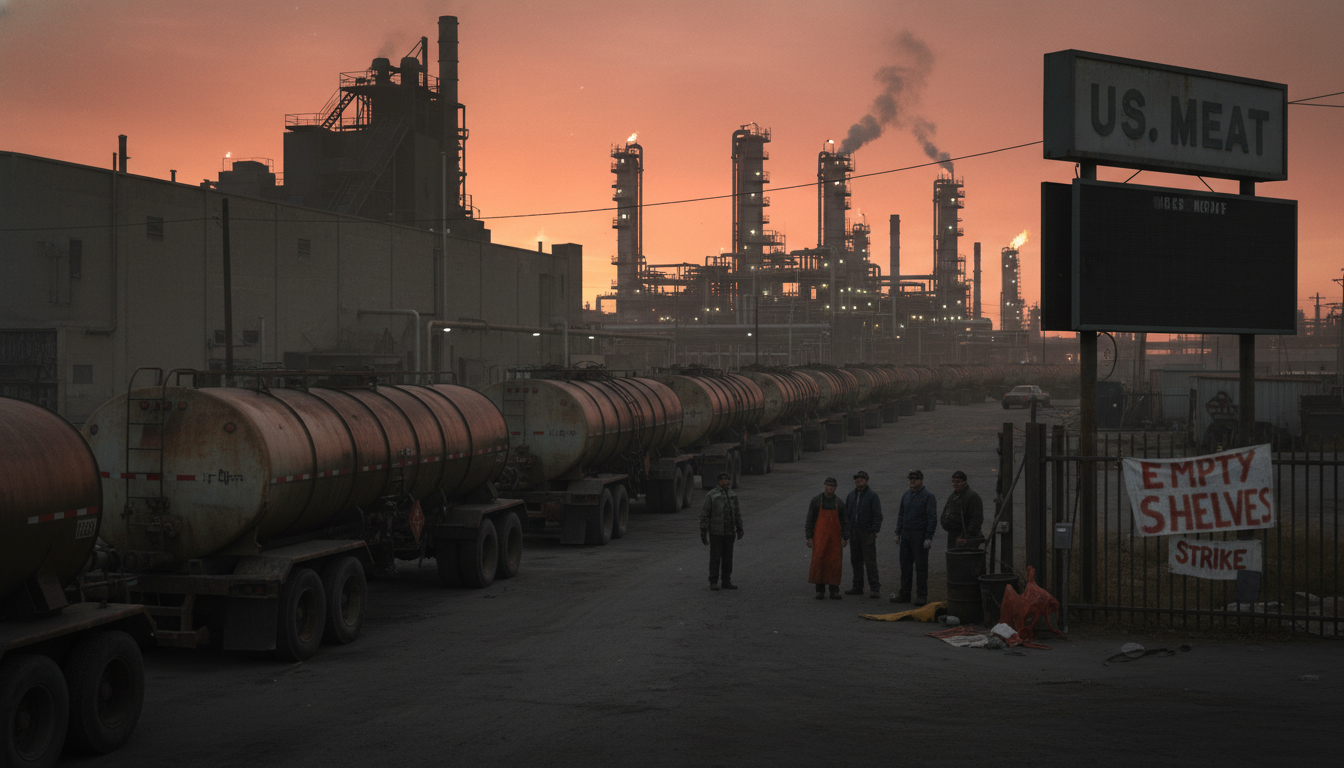
DENVER, Colorado — A significant labor dispute unfolding at one of the nation’s largest meatpacking facilities is extending into its third week, prompting investors and industry analysts to closely monitor its implications for broader industrial supply chains and operational profitability. The ongoing walkout at Swift Beef Co.’s Greeley, Colorado, plant, a critical asset owned by global protein behemoth JBS USA, underscores the evolving dynamics between labor demands and corporate balance sheets in a fluctuating commodity market.
The strike, initiated on March 16, sees thousands of employees pushing for enhanced compensation and more comprehensive health benefits. Union representatives contend that the company’s proposed 2% wage increment fails to keep pace with prevailing inflation rates, eroding workers’ purchasing power. Kim Cordova, President of United Food and Commercial Union Local 7, stated the union’s readiness to negotiate, asserting workers’ resolve to continue their fight until JBS addresses their grievances. The overwhelming support, with 99% of the plant’s 3,800 union members backing the action, has ensured a strong presence on the picket lines throughout the initial two weeks of the stoppage.
Industrial Output and Market Stability Under Scrutiny
While the immediate impact on consumer beef prices remains speculative, industry experts are already assessing the deeper financial ramifications for the sector. JBS USA, a formidable player with a global market capitalization of $17 billion, has confirmed that the Greeley facility is operating at a significantly reduced capacity. The company is actively redirecting beef production to other operational sites to mitigate disruptions and meet customer commitments. JBS spokesperson Nikki Richardson emphasized the company’s focus on maintaining supply and supporting the long-term stability of the beef supply chain, underscoring efforts to minimize market turbulence for producers, customers, and end consumers.
Jennifer Martin of Colorado State University’s animal sciences department highlights a critical pivot in the industry’s financial landscape. Historically, the meatpacking sector has contended with excess slaughter capacity, a factor that often compresses profit margins. However, current trends, including the Greeley strike and other substantial capacity reductions—such as the shuttering of a major Tyson Foods’ plant in Nebraska—are now inadvertently bolstering profitability across the industry. This shift places JBS and its competitors in a comparatively stronger financial position, even amidst the labor unrest. Martin observes that the temporary reduction in processing capacity might, paradoxically, benefit the wider industry by enabling improved margin capture rather than favoring employee demands in the short term.
Labor Dynamics and Shareholder Value
The current dispute marks the first strike at a U.S. slaughterhouse since a protracted and often violent walkout at a Hormel plant in Minnesota in 1985, which extended over a year. This historical context provides a stark reminder of the potential for prolonged industrial actions to disrupt operations and impact financial performance. For investors, the duration and resolution of such labor disputes are key indicators of a company’s operational resilience and its ability to manage human capital effectively, factors that directly influence long-term shareholder value.
JBS, the world’s largest meatpacking enterprise, serves as a cornerstone employer in Greeley, a city of approximately 114,000 residents situated 50 miles (80 kilometers) northeast of Denver. The company’s ability to navigate this labor challenge effectively will be closely watched, not only by its peers but also by investors keen on understanding how a diversified, global commodity producer manages localized operational friction.
Navigating Regulatory Headwinds and Global Expansion
Beyond the immediate labor dispute, JBS’s corporate history presents a complex picture for investors evaluating its long-term viability and risk profile. Last May, the company received approval for trading on the New York Stock Exchange, a milestone achieved despite notable environmental opposition and an ongoing federal investigation. This probe ultimately led to JBS pleading guilty to charges of bribing Brazilian officials to secure financing critical for its aggressive U.S. expansion strategy.
Such regulatory challenges underscore the importance of robust corporate governance and ethical oversight for major industrial players. For an investor-focused platform like OilMarketCap.com, an analysis of JBS transcends mere operational metrics; it encompasses a holistic assessment of leadership integrity, compliance frameworks, and environmental, social, and governance (ESG) factors that increasingly influence capital allocation decisions across all sectors, including the energy industry. The confluence of labor unrest, capacity rationalization, and past regulatory entanglements paints a nuanced landscape for an enterprise of JBS’s scale, offering critical insights into the multifaceted risks and opportunities inherent in global commodity markets.