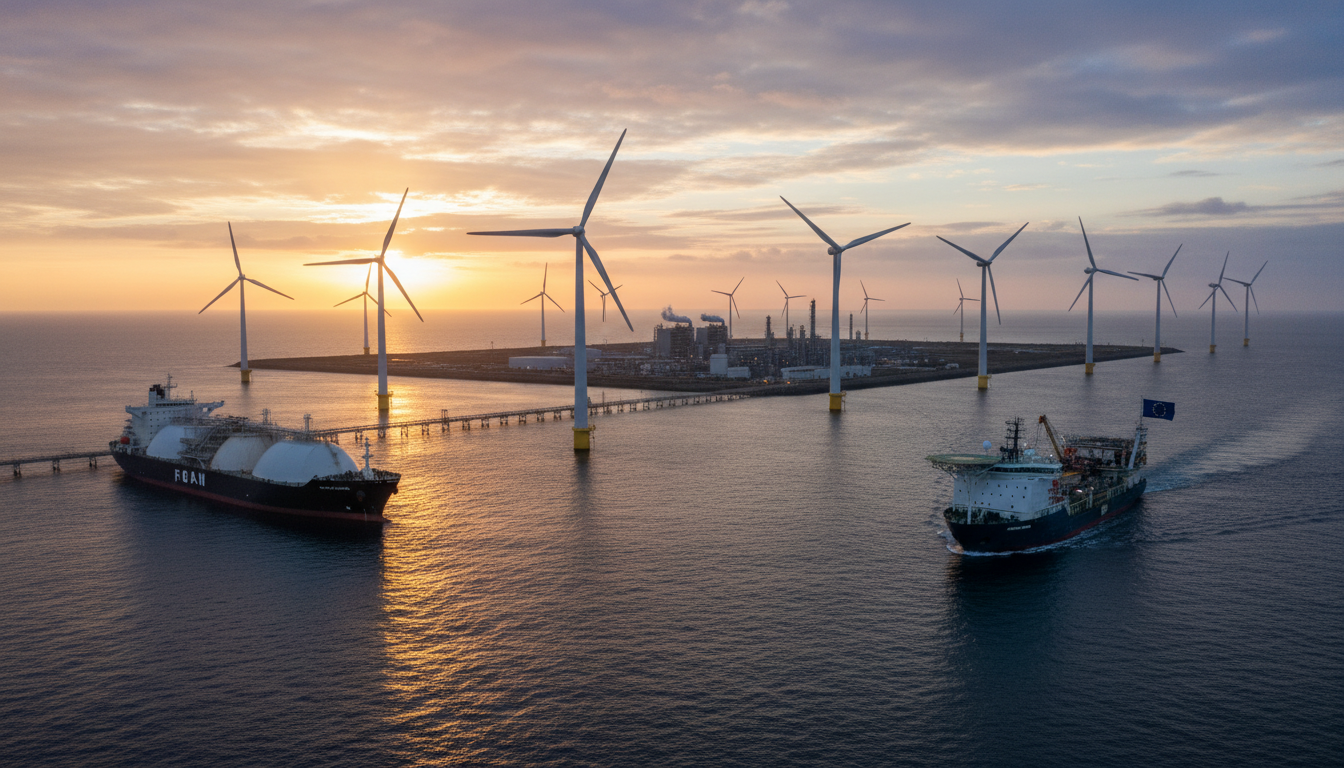
The global energy landscape is undergoing a profound transformation, driven not only by climate imperatives but increasingly by strategic geopolitical considerations. In a significant development for international energy markets and capital flows, the European Union and Japan have committed to an intensified partnership, aiming to synchronize their climate policies, financial strategies, and industrial decarbonization efforts. This deepened collaboration transcends traditional environmental concerns, positioning the clean energy transition as a cornerstone of national security, economic resilience, and global competitiveness, particularly against a backdrop of heightened instability in key energy-producing regions.
For investors navigating the complexities of the modern energy market, this alliance signals a potent force shaping future regulations, technological advancements, and capital allocation. The two economic powerhouses, representing a substantial portion of global GDP and energy demand, are effectively creating a blueprint for how major economies can integrate climate action with strategic interests, influencing everything from commodity prices to the viability of long-term infrastructure projects.
The Strategic Imperative: Bridging Climate Action and Energy Security
The renewed emphasis on cooperation between the EU and Japan emerges from a recognition that the clean energy transition is not merely an environmental endeavor but a critical component of national security. Senior officials from both blocs explicitly framed the partnership as a strategic response to mounting geopolitical risks, notably citing instability in the Gulf region. This perspective elevates energy independence and economic competitiveness to the forefront of climate discussions, underscoring a pragmatic shift in global policy.
For the oil and gas sector, this strategic alignment carries significant implications. As major consuming nations like Japan and EU member states pivot towards diversified, low-carbon energy sources, the long-term demand outlook for fossil fuels will continue to face downward pressure. Investment decisions in new exploration and production projects will increasingly factor in the accelerated timelines and strengthened policy frameworks driven by such partnerships. Conversely, companies actively involved in renewable energy development, energy storage, and grid modernization stand to benefit from the enhanced policy certainty and coordinated investment strategies emerging from this alliance.
Both parties unequivocally stated that “the importance of the clean energy transition contributes not only to climate neutrality but also their respective security, independence and competitiveness.” This pronouncement serves as a clear signal to investors that the transition is now fundamentally intertwined with national interest, rather than being a standalone environmental initiative. This will likely translate into more robust government support, subsidies, and regulatory frameworks designed to fast-track clean energy deployment and industrial decarbonization.
Policy Synchronization and the Road to COP31
At the heart of this deepened collaboration is a shared commitment to multilateral climate governance and an accelerated push for emissions reductions. The dialogue, led by key climate negotiators, reaffirmed unwavering support for the Paris Agreement and stressed the urgency of scaling up climate action within this decade to keep the global warming limit of 1.5°C within reach by the century’s end. This united stance by two major economies sends a powerful message to the international community regarding the enduring relevance of global climate frameworks.
A central focus of the recent discussions involved the practical implementation of climate targets. The EU and Japan reviewed progress on their respective 2030 Nationally Determined Contributions (NDCs), while Japan also provided insight into its forward planning for its 2035 and 2040 targets. This detailed exchange highlights a proactive approach to long-term climate policy, providing greater predictability for investors in sectors impacted by decarbonization pathways.
Crucially, both blocs have committed to close coordination ahead of COP31 in Antalya. Their shared objective is to amplify global ambition and ensure more consistent delivery of climate pledges across countries. This joint push for stronger international cooperation on NDCs and Biennial Transparency Reports (BTRs) signifies an increased emphasis on accountability and measurable progress. For investors, this means that greenwashing will face intensified scrutiny, and companies will be pressured to demonstrate robust, verifiable transition plans and transparent reporting on their environmental performance.
Expanding the EU-Japan Green Alliance: Investment Horizons
This reinforced partnership builds upon the foundations of the EU-Japan Green Alliance, initially launched in 2021, which has quickly become one of the most comprehensive bilateral climate frameworks globally. Looking ahead to 2026 and beyond, the alliance has outlined an expansive cooperation agenda designed to tackle key transition levers across various sectors.
Key areas of focus include:
- Industrial Decarbonization: This represents a colossal investment opportunity and a significant challenge for heavy industries. Joint efforts are expected to accelerate innovation and deployment of low-carbon solutions in sectors such as steel, chemicals, cement, and manufacturing. This could drive significant demand for green hydrogen, sustainable industrial processes, and electrification technologies, creating new markets for specialized service providers and technology developers.
- Carbon Pricing and Carbon Markets: Greater cooperation in these areas could lead to improved market interoperability, reducing fragmentation risks for multinational corporations and potentially establishing clearer price signals for carbon emissions. This has direct implications for the profitability of carbon-intensive assets and the financial viability of emissions reduction projects. Investors should anticipate an evolving landscape where carbon costs become an increasingly material factor in corporate valuations.
- Carbon Capture, Utilization, and Storage (CCUS): A critical technology for hard-to-abate sectors, CCUS is a direct area of interest for many traditional oil and gas companies due to their expertise in subsurface geology and large-scale project management. Enhanced cooperation here could accelerate the development and deployment of CCUS infrastructure, presenting substantial investment opportunities for those capable of delivering these complex projects.
- Sustainable Finance: A central pillar of the alliance, this focus aims to align capital flows with climate targets. Investors can expect continued tightening of capital allocation frameworks, with increasing pressure on companies across all sectors to demonstrate credible transition pathways and robust ESG performance. This will further accelerate the shift of institutional capital towards green bonds, sustainable equity funds, and climate-aligned infrastructure.
- Climate Adaptation: As climate impacts intensify, investments in resilience infrastructure and adaptive technologies will grow. This creates opportunities in areas like water management, resilient urban planning, and sustainable agriculture.
- Sub-national Climate Action: Recognizing that national targets depend on local execution, the partnership will also prioritize regional and city-level initiatives. This opens up localized investment opportunities and complex regulatory landscapes that require granular analysis from investors.
The Investor’s Lens: Navigating the New Energy Landscape
For corporate leaders and investors in the energy sector, the strengthened EU-Japan partnership underscores a profound reshaping of the global investment landscape. The deeper policy alignment across these two major economic blocs, which collectively set global standards and influence technological trajectories, cannot be overstated.
Firstly, the drive for enhanced interoperability in carbon markets could lead to greater pricing consistency and reduced regulatory arbitrage, benefiting companies with robust decarbonization strategies but posing challenges for those heavily reliant on high-emission operations. Secondly, the joint focus on industrial decarbonization is poised to accelerate innovation and technology adoption. This signals a fertile ground for venture capital and private equity investment in nascent clean technologies, as well as significant procurement opportunities for companies providing solutions in hydrogen, advanced materials, and electrification.
The pronounced emphasis on sustainable finance will continue to redirect vast sums of capital. Financial institutions will face heightened pressure to demonstrate how their portfolios align with climate goals, influencing lending practices, investment decisions, and insurance underwriting across the board. Companies failing to articulate clear, credible transition pathways risk diminished access to capital and higher borrowing costs. Conversely, those embracing the transition will find a more receptive and liquid capital market.
This partnership signals that the energy transition is moving beyond aspirational targets to concrete implementation plans, supported by policy alignment and significant financial commitment. For oil and gas investors, this translates into a heightened urgency to diversify portfolios, invest in decarbonization technologies such as CCUS, hydrogen production, and renewable energy, and strategically divest from high-emission, long-lifecycle assets that may become stranded in a rapidly evolving market. The ability to innovate and adapt to these new policy and market realities will be paramount for long-term value creation.
A Pragmatic Pivot for Global Energy Governance
In an era marked by increasing geopolitical tensions and a fragmented global response to climate change, the EU and Japan are deliberately positioning themselves as anchors of rules-based climate governance. By intrinsically linking climate action with core national interests like energy security and economic resilience, this partnership signals a more pragmatic and strategic phase of the global energy transition. Climate policy is no longer perceived solely as an environmental obligation but as an indispensable component of national and economic strategy.
As preparations intensify for COP31, the ability of major economies like the EU and Japan to coordinate on policy implementation, financial mobilization, and transparency will critically determine whether global climate goals remain within reach. For investors, this alliance provides a clear roadmap of the direction of travel for two of the world’s most sophisticated economies, highlighting both the risks to traditional energy assets and the substantial opportunities emerging in the burgeoning clean energy and decarbonization sectors. Prudent portfolio management will require a deep understanding of these shifting dynamics and a proactive approach to capitalizing on the opportunities presented by this strategic realignment.


