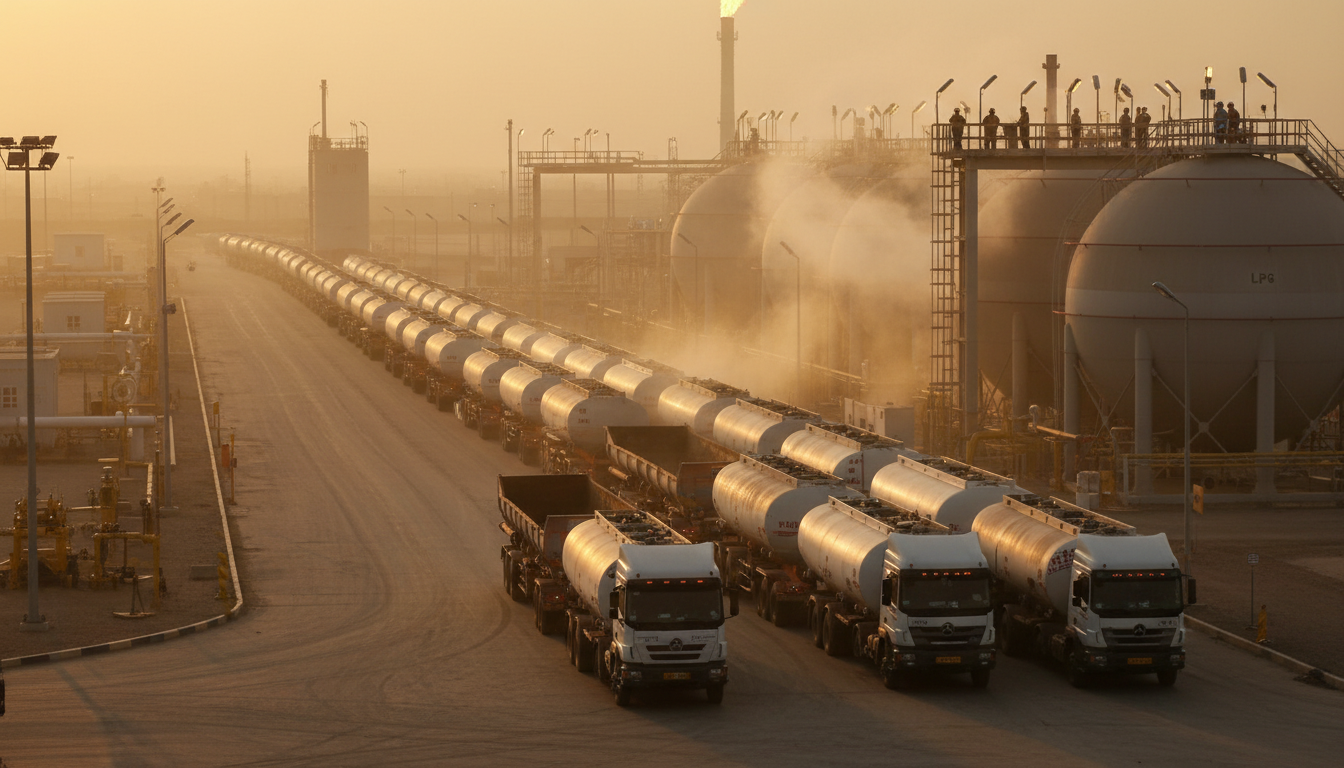
In a significant move underscoring both energy security and social welfare priorities, the Uttar Pradesh government has greenlit the release of over ₹193 crore to continue its program of providing free LPG cylinder refills to beneficiaries under the Pradhan Mantri Ujjwala Yojana (PMUY). This substantial allocation comes amidst heightened global concerns regarding potential disruptions to the LPG supply chain, partly fueled by the ongoing geopolitical tensions, particularly those emanating from the US-Iran conflict. For investors monitoring the Indian energy landscape, this development highlights the government’s proactive stance in stabilizing essential commodity access and its profound influence on domestic demand dynamics.
The approval, formally issued by the state’s food and civil supplies department on March 25, paves the way for the second phase of free LPG refills intended for eligible households during the 2025-26 fiscal year. This forward-looking approach indicates a firm commitment to the subsidy program, providing a degree of long-term demand predictability for Oil Marketing Companies (OMCs) operating within the region. The financial scale of this initiative is noteworthy; the latest ₹193.21 crore forms part of a larger budget provision totalling ₹1,500 crore earmarked for the scheme. Previously, ₹1,039.01 crore had already been sanctioned, making this recent approval an ongoing commitment for the current financial year’s continued operation of the program.
Uttar Pradesh stands as a critical market within India’s vast energy consumption matrix, boasting an impressive 1.8 crore PMUY beneficiaries. This figure is the highest nationwide, cementing the state’s position as a focal point for LPG distribution and consumption. The PMUY initiative, designed to extend free LPG connections to women from households below the poverty line, fundamentally reshapes the energy access landscape for millions. For investors, this translates into a massive, government-supported consumer base, ensuring a substantial, albeit subsidized, demand pool for LPG in the region. Understanding the scale and longevity of such social schemes is crucial for forecasting revenues and operational strategies for entities involved in the upstream, midstream, and downstream sectors of the Indian oil and gas industry.
Despite assurances from the oil industry regarding the stable and adequate availability of LPG across the state, the government’s decision to release these funds signals a proactive effort to preemptively mitigate any potential distress among vulnerable sections of the populace. This divergence between industry operational confidence and governmental policy underscores the priority placed on social stability, especially concerning essential commodities like cooking fuel. From an investment perspective, it highlights the potential for government intervention to buffer consumers from market volatility, which can both stabilize demand for OMCs and, conversely, introduce complexities regarding market-driven price realization.
Industry analysts interpret this allocation as a strategic move reflecting the state government’s sustained commitment to an established welfare scheme, rather than an emergency response. The program carries significant electoral resonance, given that cooking fuel is a daily necessity directly impacting household budgets and, consequently, women voters. This political dimension suggests a high probability of policy continuity surrounding such subsidy programs, offering investors a degree of predictability regarding the long-term demand for LPG, even if margins in the retail segment remain influenced by government policy. Companies with significant exposure to India’s retail fuel distribution network should closely monitor these political economy factors.
Officials have outlined stringent financial controls for the disbursement of these funds, emphasizing transparency and efficiency. The funds are slated for advance release, with clear directives that they must not be parked in bank accounts but utilized strictly as per requirement. Furthermore, authorities are mandated to ensure that the allocated amounts are used solely for their intended purpose, explicitly preventing any duplication with other existing schemes. These measures point towards a concerted effort to enhance fiscal discipline and maximize the impact of every rupee spent.
A cornerstone of this renewed disbursement strategy is the prioritization of beneficiaries whose data has been verified through India’s Aadhaar digital identity system. Payments will be meticulously aligned with authenticated records provided by oil marketing companies. This data-driven targeting mechanism is a crucial advancement, designed to curtail leakages, eliminate beneficiary duplication, and alleviate end-of-year fund utilization pressures. For investors, the reliance on Aadhaar verification signifies a commitment to more efficient subsidy administration, reducing potential fraud and ensuring that funds reach legitimate recipients. This enhances the overall fiscal health of such programs and provides OMCs with clear, audited channels for reimbursement, thus de-risking their participation in government welfare initiatives.
The government has also mandated that all expenditures be fully accounted for and reconciled before the close of the financial year. Any unspent funds from the preceding year that might be held by oil companies will also be re-utilized, further demonstrating a commitment to fiscal prudence and efficient resource management. This holistic approach to fund utilization and oversight provides a reassuring signal to the market regarding the responsible deployment of public funds in critical sectors. For investors in the Indian oil and gas sector, these policy decisions in Uttar Pradesh offer valuable insights into the interplay of social welfare, energy security, and market dynamics, shaping the investment landscape for years to come.


