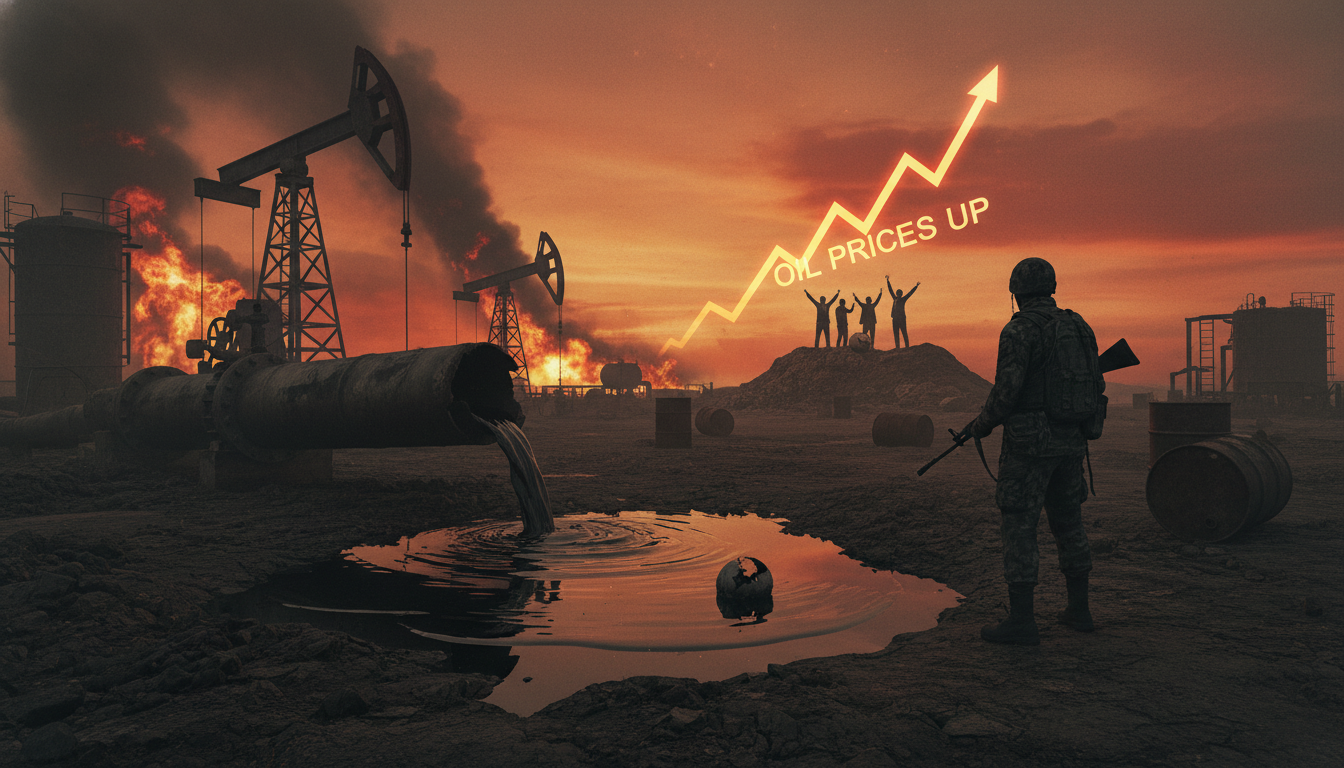
Investors navigating the turbulent waters of the global energy market must brace for a potentially seismic shift, as the ongoing blockage of the Strait of Hormuz threatens to propel crude prices significantly higher. As March draws to a close, the critical choke point for Middle Eastern oil remains largely inaccessible, setting the stage for an acute supply crunch with far-reaching implications for global energy security and crude valuations.
The Growing Disconnect: Paper Markets vs. Physical Reality
While the physical oil market reels from unprecedented supply disruptions, the futures market often exhibits a baffling degree of complacency. Speculators and traders, accustomed to the inherent volatility of crude contracts, appear to hang on every pronouncement from global leaders. For instance, recent days have seen prices swing wildly, with a notable 10% slump between Monday and Wednesday, fueled by hopes of diplomatic breakthroughs or ongoing negotiations. However, these speculative movements belie a rapidly deteriorating fundamental picture.
The stark reality is that millions of barrels per day of crucial crude supply are effectively trapped within the Middle East. Producers face an agonizing choice: reduce output or accumulate unsellable inventory, as the primary maritime artery remains choked. This curtailment has already sent shockwaves through energy-hungry Asia, forcing nations to ration fuel, prohibit exports, and pay exorbitant premiums for any available alternative crude, particularly for the sour grades traditionally sourced from the Gulf.
A Widening Divide: Brent’s Surge and WTI’s Lag
The impact of this disruption is not uniform across global benchmarks. The U.S. domestic market, buffered by robust shale production, is experiencing the supply crunch later than other regions. Consequently, the discount of West Texas Intermediate (WTI) crude to the international benchmark, Brent Crude, has expanded to over $10 per barrel – a spread not witnessed in years. This widening gap stems from a fundamental mismatch: Asian refineries, historically reliant on the region’s heavier, sour grades, find the light sweet crude from U.S. shale fields less efficient or unsuitable for their existing infrastructure.
Astute investors must recognize that as the Strait of Hormuz remains effectively closed, the upward pressure on Brent and other Middle Eastern crude benchmarks will intensify. The inability of Asian refiners to process plentiful U.S. light sweet crude efficiently means they are locked in a desperate bidding war for dwindling supplies of the specific grades they need. This dynamic guarantees continued divergence, with Brent prices poised for substantial appreciation while WTI struggles to keep pace.
Mounting Supply Deficit and Alarming Forecasts
The scale of the supply loss is staggering and accelerating. By March 20, over 130 million barrels of crude were already lost from Middle Eastern producers. Projections from leading energy intelligence firms like Kpler indicate that cumulative disruptions could exceed 250 million barrels by the end of March. Should the situation persist, this deficit could balloon to 400 million barrels by mid-April and a staggering 600 million barrels by the end of April. These figures underscore a rapidly escalating crisis.
Production cuts are already significant, with Middle Eastern oil producers having shut in an estimated 10.7 million barrels per day (bpd) by March 20. Kpler anticipates this could escalate to 11.5 million bpd by late March and maintain that level throughout April if the Strait’s status does not improve. These cuts are not solely due to export constraints; several regional refineries, including those in Saudi Arabia and Bahrain, have been impacted and forced to reduce or cease operations, compounding the supply problem.
Experts are sounding the alarm. Amrita Sen, founder of Energy Aspects, notes that Asia is “absolutely fighting for every barrel.” She predicts that Brent Crude prices will inevitably catch up with the surge in physical crude from the Middle East. Perhaps most starkly, Kpler analysts warn that crude oil prices could soar to $150 per barrel or even higher if the regional conflict continues unresolved until the end of March. Amena Bakr, Kpler’s Head of Middle East and OPEC+ Insights, emphasizes that it is “just a matter of time where prices really catch up with the fundamentals here and we just see how bad things are.”
Global Ripple Effects: Asia’s Scramble and Europe’s Looming Crisis
The consequences of this prolonged disruption are palpable across Asia. Refiners are already reducing processing rates due to a lack of feedstock, causing fuel prices to skyrocket. Governments are responding with drastic measures to conserve energy, including implementing four-day work weeks, promoting work-from-home policies, and extending national holidays. Many Asian nations are also banning fuel exports, sending ripples through global fuel supply chains, particularly impacting jet and diesel markets.
The crisis is also making its way westward. Shell CEO Wael Sawan, speaking at the CERAWeek conference in Houston, warned that Europe could experience significant energy shortages before the end of April. He observed the progression of the crisis: “South Asia was first to get that brunt. That’s moved to Southeast Asia, Northeast Asia and then more so into Europe as we get into April.” This underscores the global interconnectedness of energy markets and the inevitable spread of regional supply shocks.
Short-term interventions, such as Strategic Petroleum Reserve (SPR) releases or sanctions relief, are seen by Kpler analysts as mere temporary palliatives that “can only delay, not offset, the growing structural deficit.” As the end of March approaches with no clear resolution to the conflict, the Strait of Hormuz remains shut to most commercial tanker traffic, with exceptions only for “friendly” nations like China and a few other Asian countries.
The Unyielding Geopolitical Leverage
For investors, it is crucial to understand the enduring geopolitical leverage held by regional actors. As Ole Hansen, Head of Commodity Strategy at Saxo Bank, recently stated, the narratives around potential peace deals ultimately matter little. The unfortunate reality is that “Iran holds the strategic leverage through its control of the Strait of Hormuz, allowing it to maintain economic pressure on both the US and the global economy.”
This situation presents a critical challenge for global energy markets and highlights the profound risks associated with geopolitical instability in major oil-producing regions. Investors should meticulously assess their exposure to the energy sector, considering the significant upward pressure on international crude benchmarks and the potential for sustained volatility.