The global oil and gas investment landscape is once again grappling with acute geopolitical uncertainty following a dramatic escalation of tensions in the Middle East. Recent high-profile military actions targeting key Iranian commanders have sent ripples through energy markets, amplifying concerns over the stability of critical shipping lanes and future supply disruptions. While the immediate market reaction shows a perplexing calm, the underlying risks to global crude oil and natural gas flows, particularly through the indispensable Strait of Hormuz, are profoundly elevated. Investors must now recalibrate their risk assessments and portfolio strategies in anticipation of potential retaliatory actions and sustained volatility.
Geopolitical Flashpoint: Commanders Eliminated, Tensions Soar
The region has been thrust into a heightened state of alert after reports confirmed the targeted elimination of Alireza Tangsiri, a prominent Iranian naval commander, during a precision operation in the strategic port city of Bandar Abbas. The Israel Defense Forces (IDF) claimed responsibility for the strike, accusing Tangsiri of orchestrating efforts to disrupt navigation through the critical Strait of Hormuz and directing “maritime terrorism” against various nations. These claims were subsequently corroborated by U.S. Central Command (CENTCOM), with Admiral Brad Cooper asserting that Tangsiri’s demise contributes to a safer region and signaling continued military actions against the Iranian navy. Adding to the gravity, the IDF also claimed responsibility for the killing of Behnam Rezaei, identified as the head of the Islamic Revolutionary Guard Corps’s (IRGC) Navy Intelligence Directorate, in a simultaneous operation. The Iranian government has yet to release any official statement regarding the reported deaths, a silence that only deepens the layers of uncertainty surrounding potential retaliatory measures and their wide-ranging implications for global energy security.
The Hormuz Bottleneck: Unpacking the Supply Chain Threat
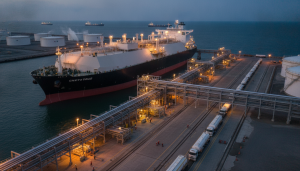
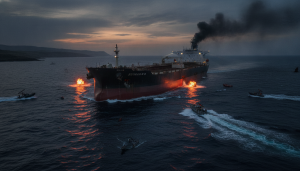
The strategic importance of the Strait of Hormuz cannot be overstated, functioning as the world’s most critical chokepoint for energy supplies. This narrow waterway facilitates the passage of approximately 20% of the world’s total petroleum liquids consumption and a significant portion of its liquefied natural gas (LNG) trade. Any disruption to traffic through this conduit directly translates to substantial spikes in crude oil and natural gas prices, with severe ramifications for economies reliant on these energy exports and imports. The recent eliminations occur against a backdrop of already severely constrained maritime traffic. Since February 28, following a series of U.S. and Israeli airstrikes on Iranian targets, shipping operations in the waterway have reportedly come to a virtual standstill. Iran, in response, has allegedly targeted vessels attempting to traverse the strait, with multiple incidents reported in recent weeks, causing significant apprehension among shipping companies and insurance providers. For energy investors, the confluence of escalating geopolitical tensions and existing operational constraints means the risks associated with supply chain disruptions and surging freight costs are now paramount, necessitating a urgent re-evaluation of portfolio exposures to Middle Eastern crude production and tanker stocks.
Market Disconnect? Crude Prices Hold Steady Amid Rising Risk
Despite the dramatic escalation of geopolitical risk, the immediate reaction in crude oil markets presents a notable disconnect. As of today, Brent crude trades at $92.95 per barrel, reflecting a modest decline of 0.31% within a day range of $91.39 to $94.21. Similarly, WTI crude is priced at $89.14 per barrel, down 0.59% for the day, trading between $87.64 and $90.71. Gasoline prices also mirrored this trend, standing at $3.11, down 0.32%. This relatively muted response, with prices actually dipping slightly, might seem counterintuitive given the magnitude of the news. However, it reflects a broader trend over the past two weeks, where Brent crude has retreated from $101.16 on April 1st to $94.09 on April 21st, marking a 7% decline. This suggests that while geopolitical tensions remain a core concern, other market fundamentals, such as potential demand concerns or profit-taking after recent highs, may be exerting a stronger gravitational pull on prices in the short term. Investors are seemingly adopting a “wait-and-see” approach, aware that the lack of official Iranian response leaves room for various outcomes, from measured diplomatic reactions to more aggressive military or economic countermeasures. The current pricing environment does not yet fully reflect the potential for severe supply-side shocks that could emerge from a protracted escalation.
Navigating Uncertainty: Key Data Points and Investor Outlook
In this volatile environment, investors are keenly asking fundamental questions: “Is WTI going up or down?” and “What do you predict the price of oil per barrel will be by the end of 2026?” While direct predictions are challenging given the fluidity of geopolitical events, understanding upcoming data releases is critical for interpreting market signals. Over the next two weeks, key energy events will normally guide market sentiment, but now they will be scrutinized through the lens of heightened Mideast risk. The EIA Weekly Petroleum Status Reports, scheduled for April 29th and May 6th, will provide crucial insights into U.S. crude oil and product inventories, refining activity, and demand indicators. Similarly, the API Weekly Crude Inventory reports on April 28th and May 5th will offer an early look at these trends. The Baker Hughes Rig Counts on April 24th and May 1st will shed light on North American drilling activity, hinting at future supply. However, the most significant forward-looking analysis will come from the EIA Short-Term Energy Outlook (STEO) on May 2nd. This report provides a comprehensive forecast for global and domestic energy markets, and investors will be dissecting its projections for any adjustments related to geopolitical supply risks or shifts in demand. Any unexpected drawdowns in inventories or revisions to supply forecasts, when combined with Mideast tensions, could trigger a sharp upward correction in prices.
Investment Implications: Re-evaluating Portfolio Exposure
For discerning investors, the current environment necessitates a thorough re-evaluation of portfolio exposures. Companies with significant production assets in the Middle East, or those heavily reliant on the Strait of Hormuz for transport, face elevated operational and insurance costs, alongside potential disruptions. Tanker stocks, which often benefit from increased freight rates during periods of supply chain uncertainty, could see short-term gains, but these must be weighed against the genuine risks of vessel targeting and insurance premium spikes. Diversification remains a cornerstone of prudent investment strategy. Exploring opportunities in regions less susceptible to Mideast geopolitical influence, or considering investments in renewable energy and energy transition technologies, could offer a hedge against traditional fossil fuel volatility. Furthermore, companies with robust balance sheets and strong cash flows, capable of weathering periods of price uncertainty and operational challenges, will likely prove more resilient. Active portfolio management, characterized by continuous monitoring of geopolitical developments, market data, and forthcoming energy reports, is paramount. The current calm in crude prices is fragile; investors must remain vigilant for any signs that the market is beginning to price in the true cost of escalating Mideast tensions.