Mounting Climate Liabilities: Trillions in Economic Damage Reshape Energy Investment Landscape
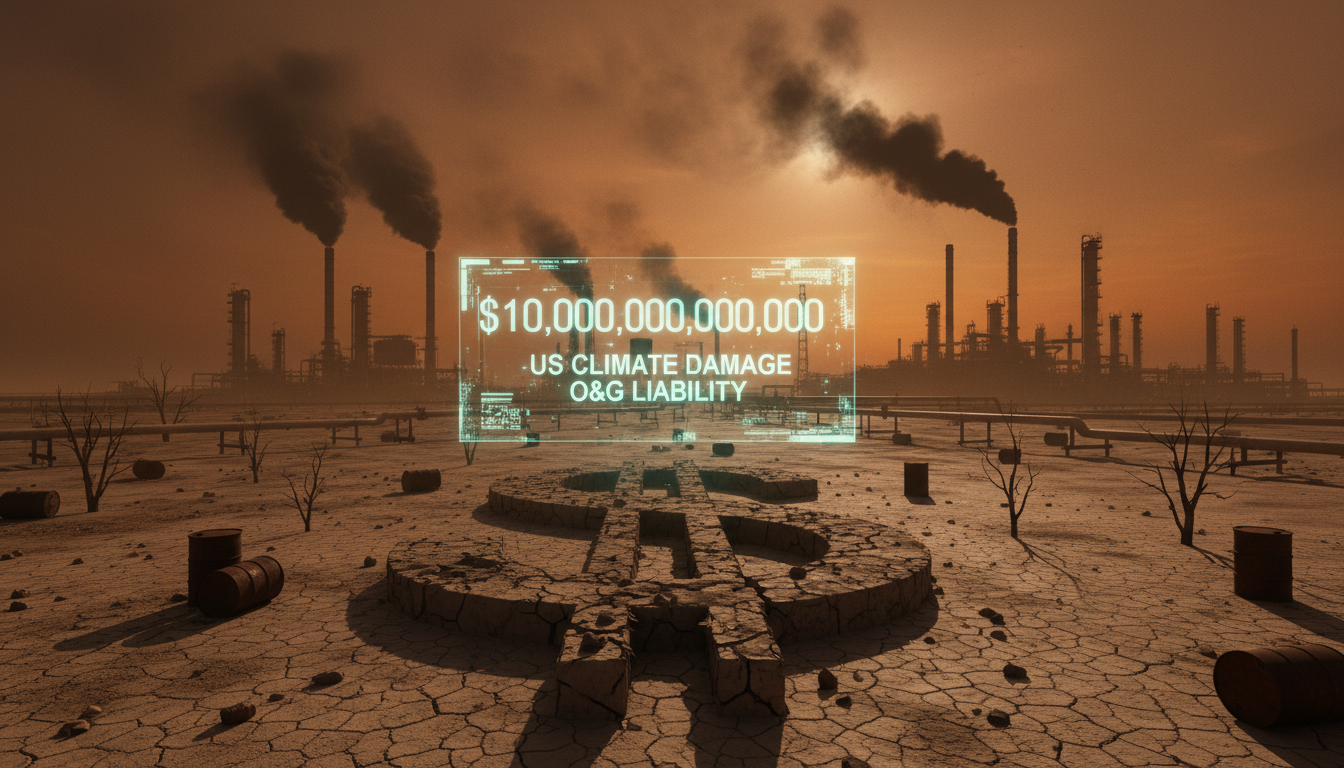
A recent comprehensive analysis has revealed a staggering $10 trillion in global economic losses attributable to the United States’ greenhouse gas emissions over the past three decades. This colossal figure underscores a profound and rapidly escalating financial liability that will increasingly influence capital markets and investment strategies within the global energy sector, particularly for those involved in oil and gas production.
The groundbreaking research, published in a leading scientific journal, identifies the U.S. as the largest historical contributor to cumulative carbon output, imposing greater economic harm globally than any other nation. This places America ahead of China, currently the world’s top emitter, which is linked to an estimated $9 trillion in GDP reduction since 1990. These figures are not mere environmental statistics; they represent tangible economic headwinds and potential future financial obligations that astute investors must carefully consider.
Notably, approximately a quarter of this total economic impairment, roughly $2.5 trillion, has manifested within the U.S. domestic economy itself. However, the study highlights an inequitable distribution of these climate-related costs, with the most severe impacts disproportionately borne by the world’s developing nations. For instance, since 1990, American emissions have reportedly caused an estimated $500 billion in economic detriment to India and $330 billion to Brazil. Such substantial externalized costs could fuel international policy shifts and demands for financial redress, impacting the geopolitical and economic stability crucial for long-term energy projects.
Quantifying Climate Risk: A New Metric for Investor Due Diligence
The study marks a significant effort to assign monetary values to what is broadly termed “loss and damage” – the societal and economic consequences arising from dangerously rising global temperatures, fundamentally driven by the combustion of fossil fuels. Marshall Burke, an environmental scientist who spearheaded this new research, commented on the gravity of these figures, emphasizing the substantial responsibility of past U.S. emissions for widespread global damage.
This analytical framework calculates how heat-induced constraints have dampened national GDP figures, subsequently apportioning responsibility to countries based on their emissions since 1990. While not encompassing every aspect of climate change’s ramifications, the metric effectively illustrates how elevated temperatures can hinder economic activity by reducing worker productivity and straining public health infrastructure. For energy investors, understanding these mechanisms is vital, as they directly impact economic growth forecasts, energy demand projections, and the operational resilience of industries tied to a stable climate.
As Burke articulated, even marginal increases in temperature over extended periods can cumulatively suppress economic expansion. He likened the effect to “death by a thousand cuts,” stressing the inherent unfairness when populations not responsible for the emissions bear the brunt of the economic fallout. This concept of accumulated damage poses a material financial risk, as nations experiencing these effects increasingly seek accountability and compensation, potentially through mechanisms that could directly or indirectly impact fossil fuel producers.
The Evolving Landscape of Climate Liability and Energy Policy
The findings resonate deeply with the long-standing pleas from developing countries. These nations advocate for financial assistance from wealthier, historically high-emitting countries to help them manage the severe “loss and damage” resulting from intensifying heatwaves, floods, droughts, and agricultural failures aggravated by a warming planet. This escalating global conversation around climate reparations and support presents a critical consideration for oil and gas firms navigating environmental, social, and governance (ESG) pressures.
Historically, the U.S. has shown reluctance towards accepting legal accountability for its contribution to climate change, a stance that has allowed global climatic conditions to shift into unprecedented territory within human civilization. Under certain administrations, this position saw a hardening, exemplified by withdrawal from international climate funds designed to aid vulnerable countries and a broader disengagement from global climate accords. Policies promoting aggressive domestic oil and gas extraction, coupled with efforts to impede clean energy initiatives, highlight a tension between energy independence goals and the mounting global economic costs of carbon emissions.
Gernot Wagner, a climate economist, succinctly captured the essence of the challenge, stating that “past emissions accumulate rapidly, and the damages from those emissions compound even faster.” He advocates for internalizing the “full social cost of carbon” for future emissions, asserting that such an approach would yield significant economic benefits. For investors in fossil fuel companies, this signals the growing likelihood of future carbon pricing, taxes, or other regulatory mechanisms designed to account for these societal costs, potentially impacting profitability and market valuation.
Investment Implications and Future Outlook for Energy Sector
While the study’s precise impact on immediate policy shifts remains to be seen, its robust quantification of climate-related economic damages strengthens the argument for a more proactive approach to climate finance and energy transition. As Burke noted, these numbers certainly provide compelling evidence for renewed engagement in discussions around “loss and damage” frameworks.
Frances Moore, an expert on the social dimensions of the climate crisis, acknowledges the study’s utility but also points to potential areas for even deeper analysis. Moore suggests that the research may not fully capture the disproportionate impact on poorer nations, arguing that the welfare consequences of a dollar of economic loss are far greater for individuals in impoverished regions than for those in affluent ones. This implies that the true human and economic toll on vulnerable populations might be even more severe than currently quantified, strengthening the moral and ethical imperative for action, which, in turn, translates into greater pressure on high-emitting industries.
For investors in the oil and gas sector, these findings are a clear signal of the intensifying financial and regulatory risks associated with carbon-intensive operations. The increasing clarity around the economic cost of emissions suggests a future where carbon will be increasingly priced, and producers may face greater scrutiny and potential liabilities. Understanding these evolving dynamics, from international climate finance negotiations to national policy shifts and the ever-present demand for ESG accountability, is paramount for strategically positioning portfolios within the energy landscape of tomorrow. The long-term viability and growth prospects of energy companies will increasingly depend on their ability to adapt to a world where the multi-trillion-dollar bill for past emissions is being calculated and presented.


