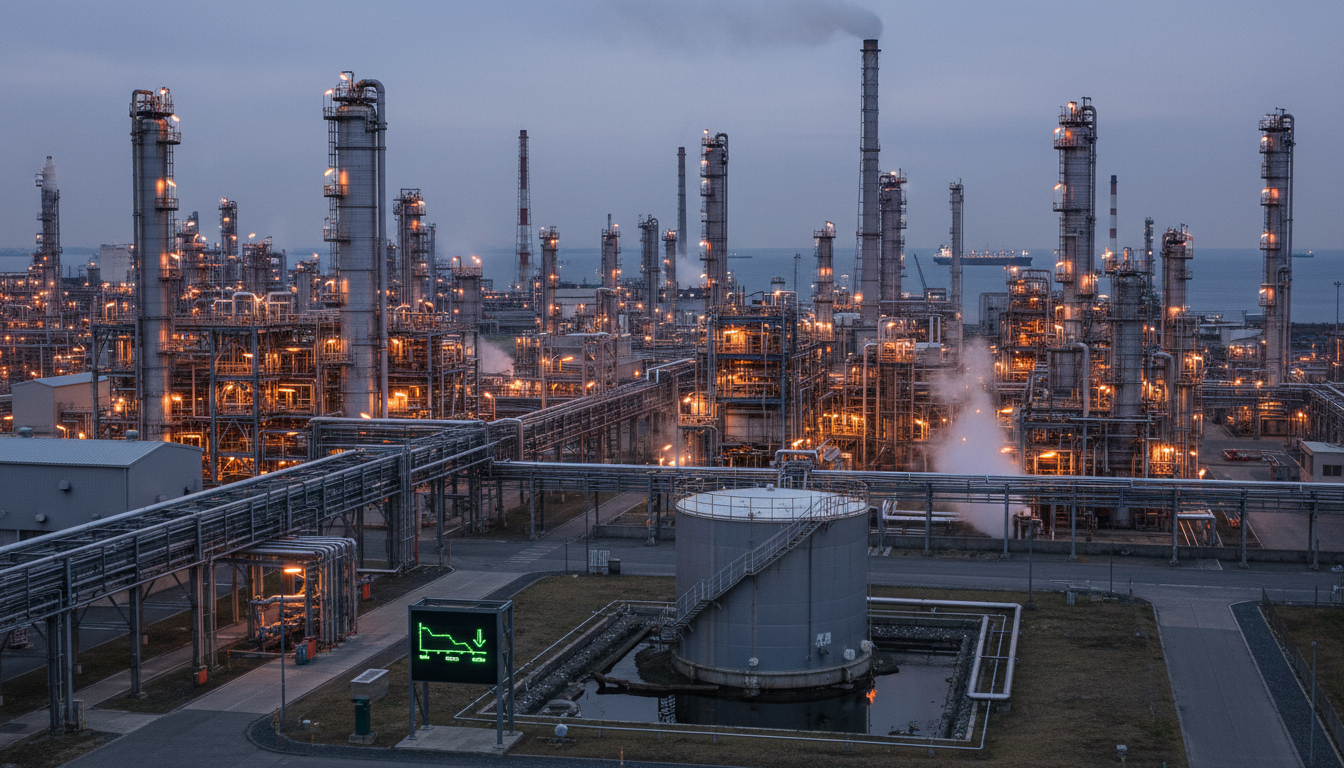
The intricate dynamics of global energy markets are once again in sharp focus, with geopolitical tensions in the Middle East casting a long shadow over supply chains. For energy investors, understanding the nuanced impact on key demand centers is paramount. While Japan, the world’s second-largest importer of Liquefied Natural Gas (LNG), appears largely insulated from direct LNG supply disruptions originating from the Strait of Hormuz, its vast industrial sector faces a significant indirect threat through constrained petrochemical feedstocks, posing potential headwinds for domestic natural gas providers.
Japan’s LNG Security: A Fortress Against Direct Supply Shocks
Despite being a major energy consumer highly dependent on imports, Japan has strategically positioned itself to weather potential disruptions to LNG flows through the Strait of Hormuz. Analysis from energy intelligence firms indicates that Japan relies on this critical maritime chokepoint for a mere 5% of its total LNG imports. This low exposure is a testament to years of proactive energy diversification and robust supply contracting.
Executives from leading Japanese gas utilities have reinforced this reassuring outlook. Masataka Fujiwara, President of Osaka Gas, recently confirmed that the vast majority of the company’s LNG procurement is secured through long-term contracts. Crucially, he emphasized that none of these existing long-term agreements for LNG currently necessitate transit through the Strait of Hormuz. This strategic foresight provides a substantial buffer against regional volatility, ensuring stable LNG supply for power generation and residential consumption.
Furthermore, Japan’s energy infrastructure offers flexibility. Should any minor Qatari LNG shortfalls arise, Japanese importers possess the capacity to pivot towards alternative energy sources, such as coal, or optimize their extensive gas and LNG portfolios to maintain supply integrity. This inherent resilience in its primary natural gas supply chain positions Japan favorably compared to other nations with higher reliance on Hormuz for LNG.
Petrochemicals: The Unseen Vulnerability
While Japan’s LNG imports remain secure, a more insidious threat emerges from the supply chain of crucial petrochemical feedstocks. The broader Asian petrochemical industry, encompassing major players in South Korea and Japan, is critically dependent on naphtha, liquefied petroleum gas (LPG), and methanol originating from the Persian Gulf. This reliance makes the region profoundly susceptible to any disruptions emanating from Middle East conflicts.
Industry observers and trade credit insurers highlight a precarious operational reality within Asian petrochemicals. Producers in Japan and South Korea typically maintain remarkably lean inventories of naphtha and LPG, often sufficient for only a few weeks of production. This “just-in-time” approach, while cost-efficient in stable times, renders them highly vulnerable to sudden supply interruptions. The ongoing regional tensions are now leading to a rapid depletion of these already slender naphtha stockpiles, compelling producers to consider or implement output reductions.
The Strait of Hormuz serves as a vital artery for these essential raw materials. Experts estimate that an astounding 60% to 70% of Asian naphtha transits through this narrow passage. Joe Douaihy, a sector economist, underscores the gravity of the situation, suggesting that “a prolonged disruption could redefine flows, costs and, perhaps, the very geography of the global petrochemical industry.” Such a fundamental shift would carry profound implications for the competitiveness and profitability of Asian petrochemical giants and, by extension, the industries they supply.
Ripple Effect on Japan’s Industrial Gas Demand
The potential for constrained naphtha supplies to cripple petrochemical production carries a direct, albeit indirect, consequence for Japan’s domestic natural gas market. Petrochemical plants are significant industrial consumers of natural gas, utilizing it both as a fuel for their energy-intensive processes and as a feedstock for certain chemical reactions.
Shinichi Sasayama, President of Tokyo Gas, a major utility, voiced these concerns, noting that “as we have a number of customers who use naphtha or other petroleum products in their manufacturing operations, any move to scale back their activities or operations could have an impact on our gas sales.” This sentiment was echoed by Osaka Gas President Masataka Fujiwara, who also signaled that the company’s industrial gas sales would inevitably fall if petrochemical facilities are forced to curb their output due due to shortages of petroleum-derived feedstocks.
For investors monitoring Japan’s energy sector, this presents a nuanced challenge. While direct LNG import stability provides a baseline of security, the vulnerability of the industrial segment to upstream supply chain issues in petrochemicals could translate into reduced demand for natural gas from major commercial and industrial clients. This scenario suggests a potential decoupling of Japan’s energy security (in terms of LNG availability) from the economic health and gas consumption patterns of its manufacturing base.
Investor Outlook: Navigating Indirect Exposures
The current landscape in Japan highlights a critical distinction for energy investors: direct versus indirect exposure to geopolitical risks. Companies with robust, diversified LNG procurement strategies appear resilient. However, firms heavily reliant on industrial gas sales, particularly those serving the petrochemical sector, face a tangible risk of demand contraction due to external feedstock constraints.
Investors should closely monitor naphtha inventory levels in Asia, the duration and intensity of Middle East supply disruptions, and the declarations of major petrochemical producers regarding output adjustments. While Japan’s direct LNG supply remains largely unaffected, the ripple effects on its industrial gas demand underscore the interconnectedness of global energy and commodity markets. Evaluating the diversification of customer portfolios for Japanese gas utilities and the adaptability of their industrial clients to potential feedstock challenges will be key in assessing future financial performance in this complex energy environment.


