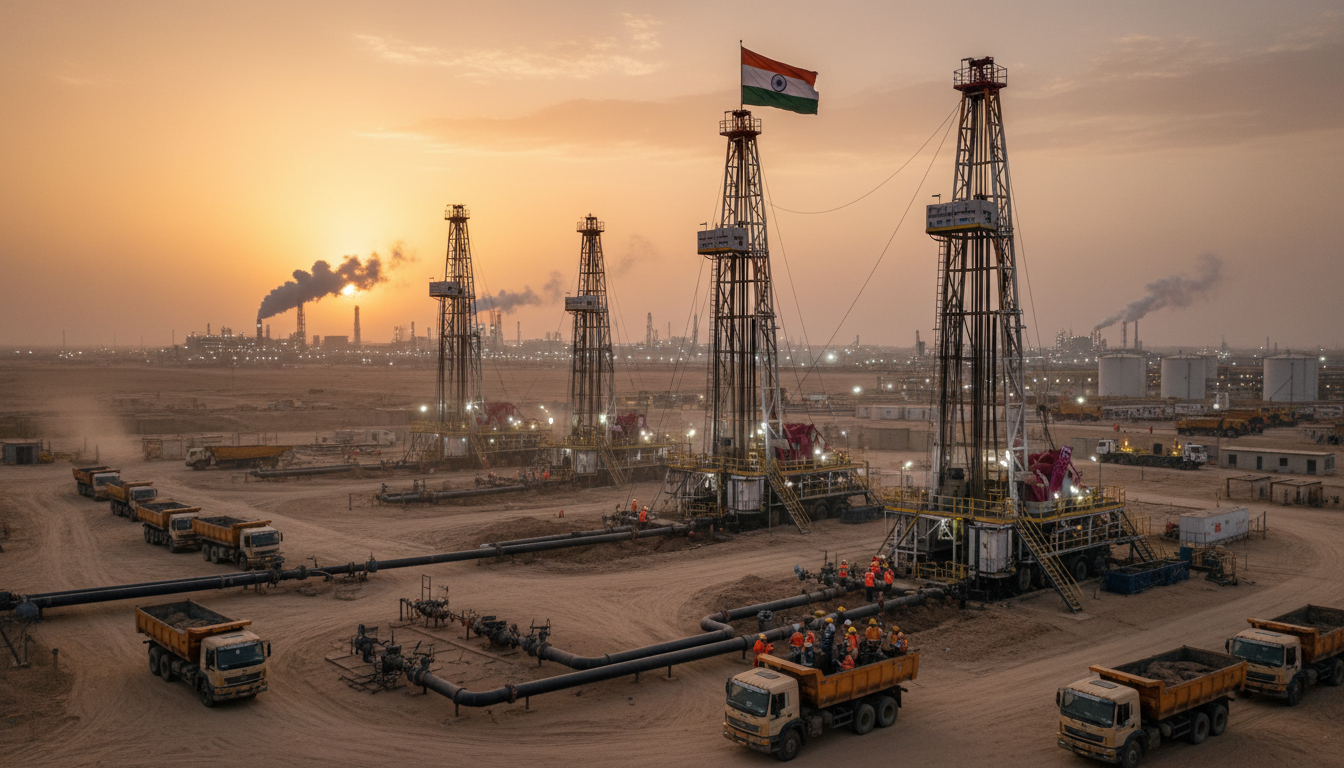
India’s premier state-owned energy explorer, Oil and Natural Gas Corporation (ONGC), is preparing for an unprecedented investment push, earmarking a staggering $18 billion to $20 billion for new oil and gas drilling initiatives. This colossal capital allocation underscores a strategic imperative to fortify India’s energy security and significantly curb its heavy reliance on imported hydrocarbons, presenting a compelling narrative for investors watching the global upstream sector.
Industry sources indicate that this substantial funding is primarily directed towards securing a vast fleet of drilling rigs, signaling what many describe as the most ambitious drilling campaign in the nation’s history. Tenders for these critical assets were reportedly issued last month, with ONGC seeking to contract a diverse range of equipment, including high-capacity drillships and robust submersible rigs, for extended periods of up to five years. This long-term commitment highlights the scale and strategic depth of the envisioned exploration and production efforts.
Driving India’s Energy Autonomy
The impetus behind this monumental investment is deeply rooted in India’s national energy strategy. The Indian government has consistently championed efforts to amplify domestic oil and gas output, aiming to alleviate the nation’s pronounced dependence on foreign energy supplies. Currently, India imports over 80% of its crude oil, making it particularly vulnerable to global price volatility and supply chain disruptions. The situation for natural gas is similar, with approximately 50% of its consumption met by imports. This persistent reliance on external sources creates both economic fragility and geopolitical exposure.
Recognizing these vulnerabilities, Prime Minister Narendra Modi last August formally launched a comprehensive national deepwater exploration campaign. At the time, he emphasized India’s commitment to “harness its deepwater energy resources,” explicitly stating the goal of bolstering energy self-reliance and diminishing the nation’s dependence on foreign fuel imports. Such high-level governmental backing provides a strong policy foundation for ONGC’s aggressive expansion plans, reassuring investors about the sustained commitment to the sector.
Deepwater Promises and Recent Successes
The strategic focus on deepwater exploration has already begun to yield promising results. Just a month after the Prime Minister’s announcement, Oil India, another key public sector undertaking, reported its maiden gas discovery in the Andaman Sea. This marked the first-ever hydrocarbon find within that basin. While the precise commercial scale of the discovery is still under assessment, initial analysis revealed a high methane content of 87%. Industry analysts, including Rystad Energy, have been quick to highlight the transformative potential of such discoveries for India’s natural gas self-sufficiency.
ONGC itself has voiced strong conviction regarding the untapped hydrocarbon potential lying beneath India’s eastern offshore regions. This positive outlook, coupled with concrete discoveries, serves as a powerful de-risking factor for the substantial capital being deployed. For investors, these early successes in frontier basins offer tangible evidence that the targeted deepwater assets could indeed deliver significant future production growth.
Geopolitical Urgency and Market Implications
Recent global geopolitical tensions, particularly those emanating from conflicts involving key energy-producing regions like the Middle East, have underscored the critical urgency of India’s drive for energy independence. As the world’s third-largest importer of crude, with approximately 85% of its oil demand met by overseas purchases, India remains acutely susceptible to international oil price swings and rally events. This inherent vulnerability has historically forced India to adopt diverse procurement strategies, including becoming a significant recipient of deeply discounted Russian oil following Western sanctions, a move designed to mitigate the impact of soaring global prices on its economy.
ONGC’s ambitious investment program, therefore, is not merely an economic decision but a crucial component of national strategic resilience. By substantially increasing domestic production capacity, India aims to buffer itself against the volatility of the global energy markets and reduce the economic drain of large import bills. For investors, this translates into a stable, government-backed growth trajectory for India’s upstream sector, with significant opportunities for drilling contractors, oilfield service providers, and technology companies. The long-term implications point towards a more diversified and secure energy future for India, potentially reshaping global energy trade flows and offering attractive returns for those positioned in the expanding Indian oil and gas landscape.


