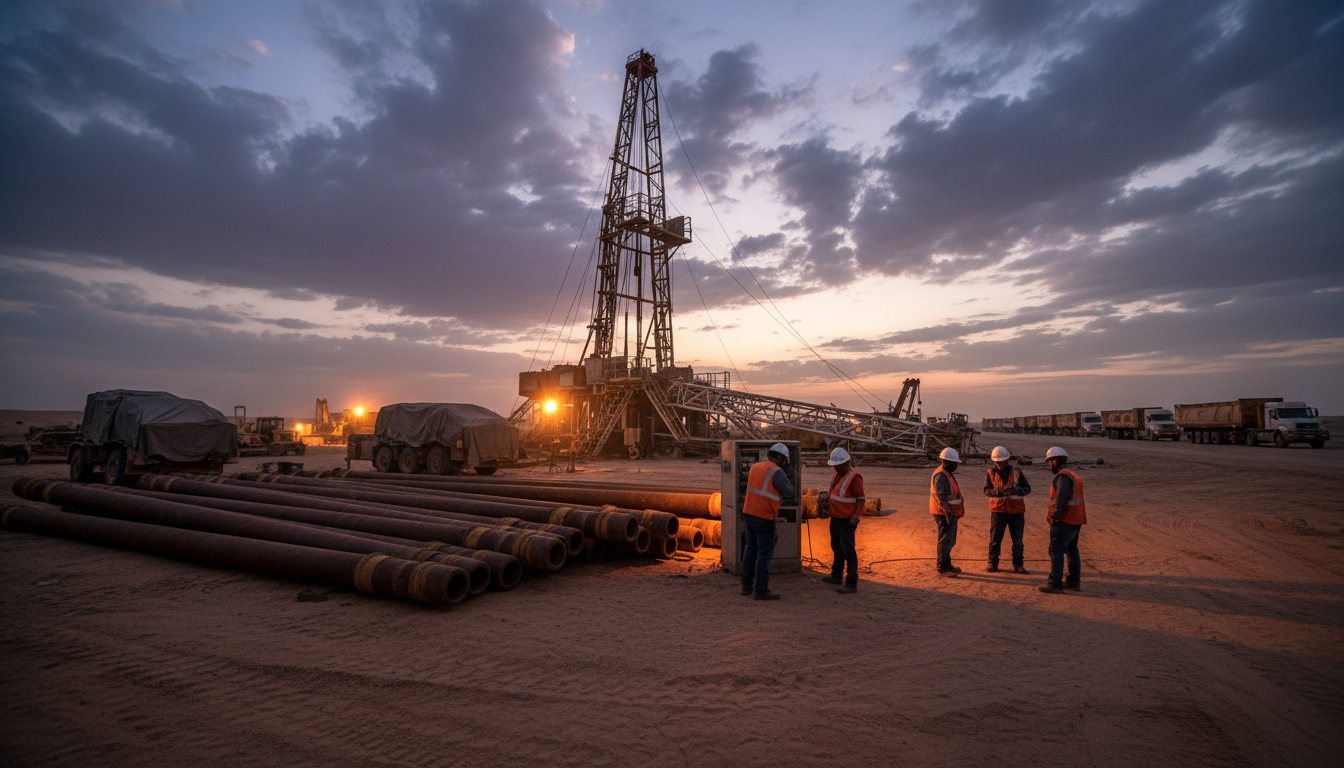
The North American energy sector is signaling a notable shift in exploration and production strategies, as the latest industry data reveals a sharp contraction in drilling activity. The continent’s total rotary rig count plummeted by 21 units last week, settling at 729 active rigs as of March 20. This significant reduction underscores a cautious pivot by E&P firms, prompting investors to closely scrutinize the underlying dynamics. While the overall decline suggests a potential slowdown in future output, a deeper dive into regional and commodity-specific trends reveals a nuanced landscape, with targeted investment continuing in key crude-producing areas even as natural gas drilling retreats. Understanding these intricate movements is crucial for investors positioning themselves in a volatile energy market.
North American Rig Count Contraction: A Closer Look at Regional Divergence
The headline figure of a 21-rig drop across North America to 729 units masks a crucial regional divergence that demands investor attention. The brunt of this decline was borne by Canada, which shed a substantial 20 rigs in a single week, bringing its active fleet down to 177. This sharp retraction in Canadian drilling activity could presage a more pronounced slowdown in that nation’s production growth trajectory, potentially impacting future supply expectations from the region. In stark contrast, the United States demonstrated remarkable resilience, experiencing only a modest single-rig dip, with its total count settling at 552 units. This stability in U.S. operations suggests a more robust underlying investment thesis, even as broader continental activity pulls back. Such disparity in drilling commitment highlights different economic and regulatory environments, as well as distinct commodity price sensitivities, that E&P operators are navigating. This cautious approach to capital allocation comes even as crude benchmarks maintain relatively high levels, with Brent Crude trading at $92.37 today, down 0.93% within its daily range of $91.39-$94.21, and WTI Crude at $88.75, showing a similar 1.03% daily dip. These current prices, while strong, are off their recent highs; Brent has seen a 7% decline over the past two weeks, falling from $101.16 on April 1 to $94.09 on April 21, indicating a potential softening of market conviction that could be influencing drilling decisions.
U.S. Resilience and Strategic Commodity Shifts Amidst Investor Scrutiny
Despite the broader North American slowdown, the U.S. rig count’s relative stability at 552 active units provides a key insight into operator strategy. A closer examination of the U.S. data reveals a strategic pivot towards crude oil production. Surprisingly, the oil rig count actually edged up by two units last week, reaching 414. This increase underscores a continued focus on crude extraction, reflecting operators’ confidence in oil price economics even as the overall rig count saw a minor reduction. Conversely, natural gas drilling faced a pullback, with two gas rigs taken offline, bringing the total to 131. This shift is particularly telling in light of investor sentiment, as our proprietary reader intent data shows significant interest in the future direction of crude prices, with questions like “is WTI going up or down?” and “what do you predict the price of oil per barrel will be by end of 2026?” frequently surfacing. The current drilling data suggests that E&P firms, despite the recent 7% drop in Brent prices over the last fortnight, are still allocating capital towards oil-rich plays, indicating an expectation of sustained profitability for crude. The continued dominance of horizontal drilling, which increased by two rigs to 487, further reinforces the industry’s commitment to unconventional resource development, maximizing recovery efficiency from existing assets and high-potential new wells.
Localized Hotspots and Pullbacks: Where Capital is Flowing
For discerning investors, understanding the localized shifts within major U.S. producing regions offers critical insight into capital allocation and future production trends. Last week’s data highlighted several key areas attracting increased drilling activity, even as others saw retrenchment. North Dakota, home to the Bakken Shale, notably bucked the national trend by adding three rigs, indicative of renewed investment and confidence in this prolific crude basin. Oklahoma also saw a positive uptick, bringing two additional rigs online, while New Mexico added one, further solidifying its integral role within the Permian Basin’s output expansion. These targeted increases signal that operators are focusing on areas with proven reserves, favorable economics, and efficient infrastructure. However, this growth was not universal. Several states experienced pullbacks, with Utah, Colorado, and Wyoming each idling two rigs, reflecting a more cautious stance in their respective operating environments. Even Texas, a perennial powerhouse of oil and gas production, saw a slight contraction with one rig taken out of service. On the basin front, the Williston Basin mirrored North Dakota’s expansion with three new rigs. The highly prolific Permian Basin and the Cana Woodford Basin each gained two rigs, confirming their status as priority investment areas for maximizing returns. These localized trends are vital for investors tracking individual E&P performance and regional supply dynamics.
Forward Outlook: Navigating Upcoming Catalysts and Production Trajectories
As investors digest the implications of the latest rig count data, their attention inevitably shifts to the upcoming catalysts that will further shape market sentiment and future production expectations. The coming weeks are packed with critical data releases that will provide additional clarity on inventory levels, demand trends, and the ongoing commitment of E&P firms. We anticipate the next Baker Hughes Rig Count reports on April 24 and May 1 to be closely watched, offering immediate updates on drilling activity following this week’s significant decline. These reports will either confirm a sustained cautious approach or signal a potential rebound in drilling. Furthermore, the EIA Weekly Petroleum Status Reports on April 22, April 29, and May 6 will be crucial for assessing crude oil, gasoline, and distillate inventories, providing insights into the supply-demand balance. With gasoline currently trading at $3.10, down 0.96% today, these inventory reports could significantly influence refined product prices and, in turn, crude demand. Perhaps the most comprehensive forward-looking analysis will come from the EIA Short-Term Energy Outlook (STEO) due on May 2. This report will offer updated forecasts for U.S. and global production, consumption, and prices, providing a macro-level perspective that can inform long-term investment strategies. Investors are asking about the trajectory of oil prices into the end of 2026, and the STEO will be a key input for those longer-term models. Collectively, these upcoming events will be instrumental in refining our understanding of North American output potential and the broader investment landscape in the energy sector.


