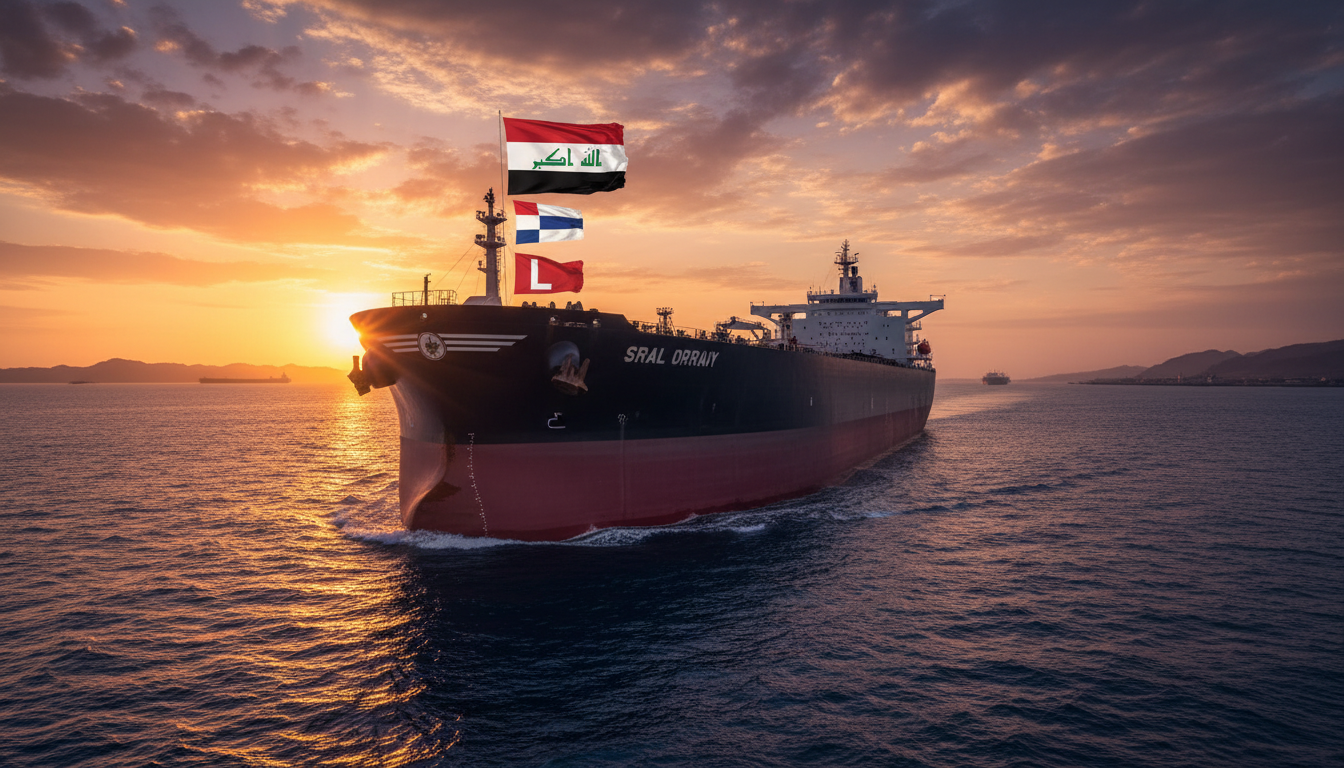
The global energy landscape continues to be defined by a complex interplay of supply, demand, and increasingly, geopolitical risk. For investors navigating this volatile environment, the Strait of Hormuz remains a perennial flashpoint, capable of injecting significant uncertainty into commodity markets. A recent incident involving the oil supertanker, Omega Trader, vividly illustrates the profound challenges in obtaining accurate maritime intelligence and underscores the heightened supply risk emanating from this critical chokepoint. This saga, where a colossal vessel laden with Iraqi crude reportedly disappeared from conventional tracking, only for its technical manager to deny any transit, plunges its movements into a realm of digital mystery that has direct implications for oil prices, shipping rates, and broader energy sector valuations.
The Omega Trader Enigma: When Digital Signals Deceive
The recent disappearance and reappearance, or lack thereof, of the Omega Trader highlights a disturbing trend in maritime intelligence: the increasing prevalence of signal jamming and deliberate obfuscation in strategic waterways. Tanker tracking data had initially indicated the Omega Trader, under the technical management of Japan’s Mitsui OSK Lines Ltd (MOL), registered a signal placing it in Mumbai. This followed a previous signal from inside the Persian Gulf, more than ten days prior. However, MOL, an entity listed by the Equasis database as a technical manager for the ship, issued a direct contradiction, stating unequivocally that none of its vessels had made the perilous crossing. The company confirmed it is actively monitoring the situation around the clock, diligently gathering information to ascertain the vessel’s true status.
Several inconsistencies immediately raise red flags for keen market observers. The reported destination in Mumbai, for instance, does not house an oil-importing terminal capable of handling a Very Large Crude Carrier (VLCC) of the Omega Trader’s magnitude. Furthermore, the speed last signaled for the vessel appeared improbably swift for such a massive oil tanker. These anomalies, combined with the general environment of signal interference plaguing transits in and around Hormuz, cast significant doubt on the veracity of the tracking data. For investors, this creates an intolerable level of opacity. The ability to verify the movement of millions of barrels of crude oil is fundamental to assessing global supply, and when that capability is compromised, the market is left vulnerable to speculation and sudden price shocks. The Omega Trader’s “ghost ship” status is a stark reminder of how easily crucial supply chain visibility can be lost, directly impacting risk premiums across the energy complex.
Market Response to Elevated Supply Opacity
While the immediate impact of the Omega Trader incident on daily trading might seem subtle, its broader implications for market sentiment are undeniable. As of today, Brent crude trades at $92.37, down 0.93% for the day, while WTI crude sits at $88.75, having declined 1.03%. This daily pullback follows a more significant trend over the past two weeks, where Brent has fallen from $101.16 on April 1st to $94.09 on April 21st, representing a 7% decline. Despite this recent softening, the underlying vulnerability exposed by the Omega Trader saga means that any further escalation in Hormuz could swiftly reverse these trends, pushing prices higher.
The persistent risk premium associated with the Strait of Hormuz is a constant factor in oil & gas investing. Incidents like the `Omega Trader` do not merely represent technical glitches; they are significant informational gaps that can directly impact commodity prices, shipping rates, and broader energy sector valuations. Even as prices reflect a slight easing of immediate concerns, the potential for sudden supply disruptions from the region remains a potent bullish catalyst. The market’s inability to definitively track a VLCC carrying Iraqi crude underscores how quickly physical supply, and thus price stability, can become a question mark. Investors need to recognize that daily price fluctuations may mask this systemic risk, which could materialize rapidly with the next geopolitical headline.
Navigating Future Volatility: Upcoming Catalysts and Hormuz Risk
The uncertainty surrounding vessels like the Omega Trader adds a layer of complexity to interpreting upcoming market data. Investors must brace for continued volatility, especially with several key data points on the horizon that will provide fresh insights into supply and demand dynamics. This week, the EIA Weekly Petroleum Status Report (April 22nd and April 29th) will offer crucial updates on U.S. crude oil inventories, refinery activity, and product supplied. These reports, alongside the API Weekly Crude Inventory data (April 28th and May 5th), will be scrutinized for any signs of demand softening or unexpected inventory builds, which could weigh on prices.
Furthermore, the Baker Hughes Rig Count on April 24th and May 1st will indicate North American production trends, while the EIA Short-Term Energy Outlook on May 2nd will provide revised forecasts for global supply and demand. In an environment where a significant portion of the world’s oil supply transits a chokepoint plagued by tracking anomalies and geopolitical tensions, these fundamental reports become even more critical. Any data suggesting tightening supply or stronger-than-expected demand will likely be amplified by the lingering risk premium associated with Hormuz, making the impact of events like the Omega Trader’s uncertain journey feel even more pronounced on investor sentiment and forward price curves.
Investor Sentiment and the End-of-Year Price Outlook
Our first-party data from reader intent signals that investors are keenly focused on the future trajectory of oil prices, asking questions like “is WTI going up or down?” and “what do you predict the price of oil per barrel will be by end of 2026?” This reflects a broader market anxiety that incidents like the Omega Trader’s disappearing act only exacerbate. While fundamental analysis often centers on supply-demand balances, geopolitical risk in critical regions like the Strait of Hormuz increasingly acts as a powerful, unpredictable variable that can override traditional models.
The inability to confidently track a major crude shipment injects a significant risk premium into price predictions. Even if global demand growth moderates, the potential for sudden supply shocks from key chokepoints makes downside predictions less certain. Investors are recognizing that the “known unknowns” are expanding, forcing them to price in higher volatility and potential supply disruptions. Our analysis suggests that while the current market might see minor pullbacks, the persistent threat of supply chain disruptions in the Middle East, coupled with the rising opaqueness of maritime movements, means that oil prices will likely maintain a floor, with significant upside potential if geopolitical tensions escalate. Investors should prepare for a market where geopolitical factors, more than ever, dictate price discovery, leading to potentially higher volatility and steeper premiums for future contracts as the year progresses.