Geopolitical Tensions Drive Gasoline Prices Skyward Ahead of Critical Midterms
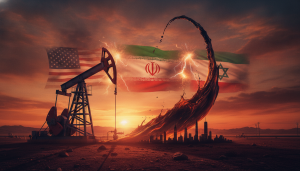
Investors are closely monitoring a volatile energy market as escalating geopolitical tensions in Iran send U.S. gasoline prices surging. As of March 18, 2026, the national average for a gallon of gasoline has climbed to $3.96, a significant increase from $2.94 just one month prior, according to data compiled by AAA. This sharp rise, primarily fueled by the ongoing conflict and the effective closure of the critical Strait of Hormuz, is reverberating through household budgets and has rapidly become a central battleground in the lead-up to the pivotal 2026 midterm elections.
The geopolitical flashpoint began on February 28, when President Donald Trump initiated military action in Iran. This conflict has immediately disrupted global oil flows, tightening supply and pushing crude benchmarks higher. While the administration has urged patience, emphasizing long-term strategic objectives, the short-term impact on energy costs has been undeniable and is now a dominant feature of the domestic political landscape.
Market Reacts to Shifting War Dynamics
The energy market remains highly sensitive to developments in the Persian Gulf. President Trump’s recent announcement on Monday via Truth Social, ordering a five-day halt to U.S. military strikes on Iranian power plants and energy infrastructure, prompted an immediate, albeit temporary, market response. Following this news, U.S. stock futures rallied, the dollar weakened against major currencies, and crude oil prices experienced a notable dip. This fleeting reprieve, however, did little to alleviate the persistent upward pressure on retail gasoline prices, largely due to the continued strategic closure of the Strait of Hormuz.
The Strait of Hormuz is a choke point of immense global significance, through which a substantial portion of the world’s seaborne oil supply transits daily. Its closure creates an immediate and severe bottleneck for crude exports from the Middle East, forcing crude prices higher and directly impacting refining costs and subsequently, pump prices worldwide. Investors in global shipping, refining, and exploration and production (E&P) sectors are keenly aware of the logistical and financial ramifications of this constrained trade route.
Political Blame Game Intensifies Over Affordability
With gasoline prices reaching multi-year highs, affordability has catapulted to the forefront of the political discourse. The Democratic Congressional Campaign Committee (DCCC) has launched an aggressive digital advertising campaign, explicitly targeting President Trump and congressional Republicans for the spiraling fuel costs. These six-second ads, shared across Meta platforms like Facebook and Instagram, depict rising gas pump prices culminating in the message: “D.C. Republicans Did That!” The DCCC’s strategy involves geotargeting these ads to appear when viewers are at or near gas stations in 44 key “Districts in Play” across 23 states.
DCCC Communications Director Courtney Rice articulated the party’s stance, stating that voters filling their tanks would be reminded that “D.C. Republicans are squarely to blame for the price of gas, and everything else, being too damn high.” House Minority Leader Hakeem Jeffries (D-N.Y.) echoed this sentiment, posting on X that Republicans’ policies, including the “reckless war,” have made America “less affordable and significantly more dangerous.” This unified Democratic message seeks to capitalize on consumer frustration, painting the current economic hardships, particularly fuel costs, as a direct consequence of Republican governance and the ongoing military engagement in Iran.
Republican Defense and Long-Term Energy Outlook
Republicans, who currently hold narrow majorities in Congress and are fighting to defend them in the upcoming 2026 midterms, are urging patience from the American public. U.S. Energy Secretary Chris Wright addressed the issue during an interview, acknowledging the current “short-term period of disruption” but emphasizing the long-term benefits of confronting what he described as “47 years of threats from Iran, which have artificially raised energy prices for decades.”
Secretary Wright’s comments suggest an administration committed to its strategic objectives in the Middle East, viewing the current market volatility as a necessary, albeit painful, step towards greater energy security and potentially lower long-term prices, once the conflict is resolved. For energy investors, this signals a commitment to a particular geopolitical strategy that could continue to introduce volatility into commodity markets in the near term but might reshape regional energy dynamics over a longer horizon. The lack of a clear end-point for the conflict, and President Trump’s prior unwillingness to consider a ceasefire (though he ordered a five-day halt to strikes on energy infrastructure), contributes to continued market uncertainty.
Regional Disparities and Investment Considerations
The impact of rising gasoline prices is not uniform across the nation, presenting varied challenges and opportunities for regional markets and related industries. In California, for example, pump prices are approaching $6 per gallon, while states like Alaska and Arizona are seeing averages above $4.50 per gallon. These disparities often stem from a combination of factors including state and local taxes, differing refining specifications, logistical costs, and regional supply-demand balances.
For investors, understanding these regional dynamics is crucial. Higher prices in specific states can impact consumer discretionary spending, retail sales, and the profitability of businesses heavily reliant on transportation. Companies in the logistics, automotive, and retail sectors operating in these high-cost regions may face greater headwinds. Conversely, refining companies located in areas with favorable logistical access and strong demand, or those capable of processing a diverse crude slate, might see altered profit margins. The broader picture for oil and gas investors remains centered on the interplay between persistent geopolitical risk, evolving energy policy, and consumer response to sustained high prices, all against the backdrop of a highly competitive and consequential election cycle.