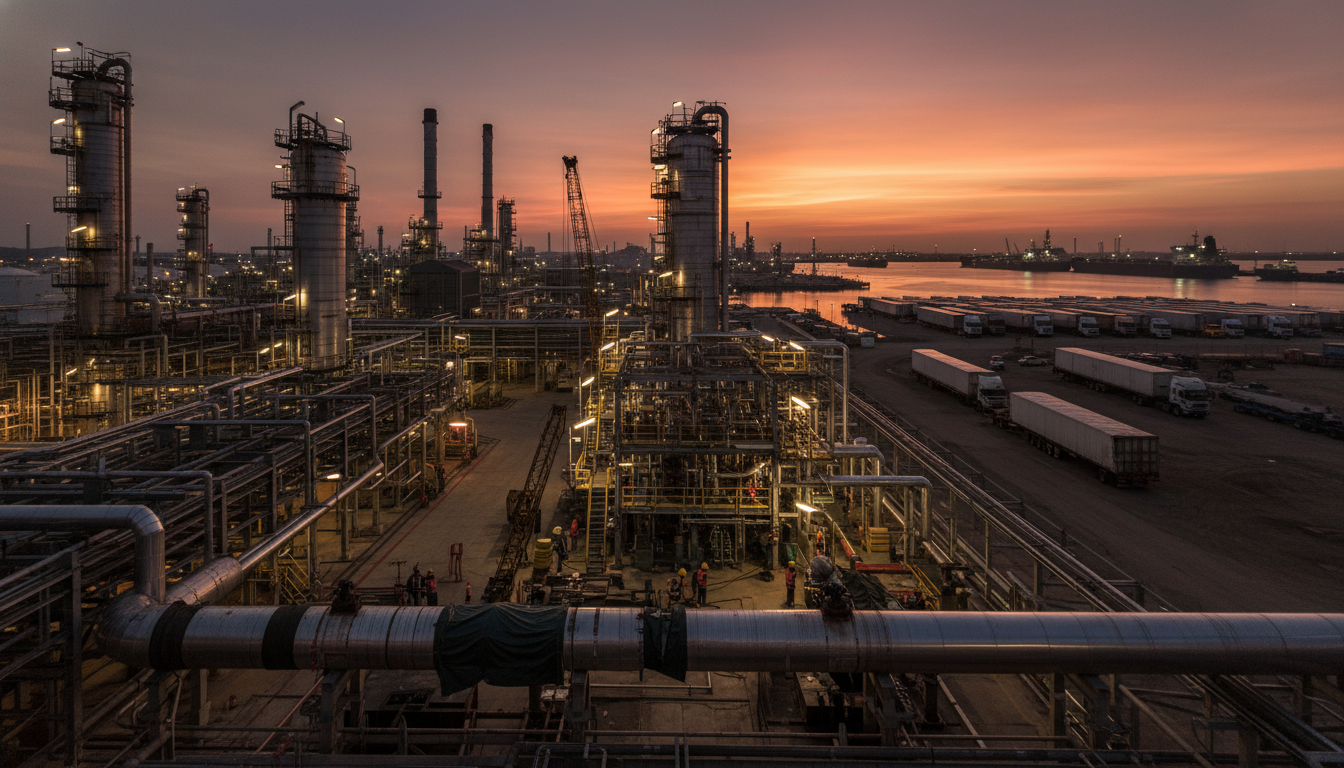
The sudden shutdown of Valero’s Port Arthur refinery, a critical hub for U.S. fuel production, following a recent incident, immediately sends ripples through the energy markets. With a substantial daily processing capacity of 380,000 barrels, this facility is a cornerstone of the nation’s downstream infrastructure. While the full extent and duration of the outage are still being assessed, initial reports pinpoint the diesel hydrotreater, responsible for processing 47,000 barrels per day, as the unit affected. For discerning oil and gas investors, this event is not merely a localized disruption but a potent signal demanding a nuanced understanding of its implications for refined product prices, particularly diesel, and the broader energy supply chain dynamics.
Refined Product Supply Shock: Diesel Under Pressure
The temporary incapacitation of such a significant refining asset, especially one with a crucial diesel processing unit, directly impacts the supply side of the refined products market. The 47,000 barrels per day of lost diesel hydrotreating capacity from Valero’s Port Arthur facility represents a meaningful reduction in immediate supply. Diesel, often referred to as the lifeblood of the global economy, powers everything from commercial trucking and marine shipping to heavy machinery in the agricultural and industrial sectors. This disruption comes at a particularly sensitive time, with the northern hemisphere’s planting season commencing, where farmers heavily rely on diesel for tractors and harvesting equipment. Increased operational costs for agriculture due to elevated diesel prices will inevitably translate into higher food prices, creating a broader inflationary ripple effect across the economy. Investors should monitor refined product crack spreads closely, as the margin for diesel producers could expand in the short to medium term.
Navigating Current Market Crosscurrents and Price Signals
This localized supply shock unfolds against a backdrop of complex and sometimes contradictory market signals. As of today, Brent crude trades at $92.54 per barrel, reflecting a 0.75% decline for the day, while WTI crude sits at $88.78, down 0.99%. This immediate daily softening in crude prices provides an intriguing counterpoint to the refined product concerns stemming from the Valero outage. Looking at the broader trend, Brent crude has actually experienced a notable correction over the past fortnight, shedding 7% from $101.16 on April 1st to $94.09 yesterday. Similarly, gasoline prices are currently at $3.1 per gallon, down 0.64% today. This divergence suggests that while upstream crude markets may be easing due to other factors, the specific loss of refining capacity, particularly for critical products like diesel, can create upward pressure on refined product prices even as crude inputs soften. Investors seeking to capitalize on this dynamic may find opportunities in companies with robust downstream operations or those involved in fuel logistics that can adapt to supply shifts.
Forward Outlook: Key Data Points and Investor Questions
The immediate aftermath of this refinery incident will be heavily influenced by forthcoming market data. Investors are keenly seeking clarity on price trajectories, with common questions surfacing about the direction of WTI and broader oil prices by the end of 2026. These uncertainties underscore the importance of upcoming reports. The EIA Weekly Petroleum Status Report, scheduled for tomorrow, April 22nd, and again on April 29th, will be critical in assessing U.S. crude inventories, refinery utilization rates, and refined product stocks. Any further tightening in distillate inventories reported by the EIA would amplify the impact of the Valero shutdown. Additionally, the Baker Hughes Rig Count on April 24th and May 1st will offer vital insights into upstream drilling activity, providing a gauge of future crude supply. For longer-term price predictions, particularly concerning the trajectory of oil by the end of 2026, the EIA Short-Term Energy Outlook on May 2nd will be an indispensable resource. These scheduled events provide concrete opportunities for investors to refine their strategies based on emerging supply-demand fundamentals.
Broader Economic Impact and Investment Strategy
Beyond the immediate market mechanics, the Valero incident highlights the fragility of global energy supply chains and the ripple effect of refining disruptions on the broader economy. Elevated diesel prices, if sustained, exacerbate inflationary pressures, not just through higher agricultural costs but also by increasing transportation expenses for virtually all goods. This can weigh on consumer spending and corporate margins across various sectors. For investors, this scenario underscores the value of diversification within the energy sector, considering not just upstream crude producers but also midstream infrastructure plays that facilitate transportation and storage, as well as downstream companies that may benefit from wider crack spreads. Furthermore, given the geopolitical risks that often intertwine with energy supply, companies with diversified asset bases or those investing in energy transition technologies that offer some insulation from traditional fossil fuel volatility may present compelling long-term opportunities. Monitoring the speed of repairs at Port Arthur will be paramount, as a prolonged outage could significantly alter market expectations for refined product availability through the summer driving season and beyond.


