The International Energy Agency (IEA) has received oil release commitments that exceed the 400 million barrels agreed by members to mitigate market disruption from the Middle East war.
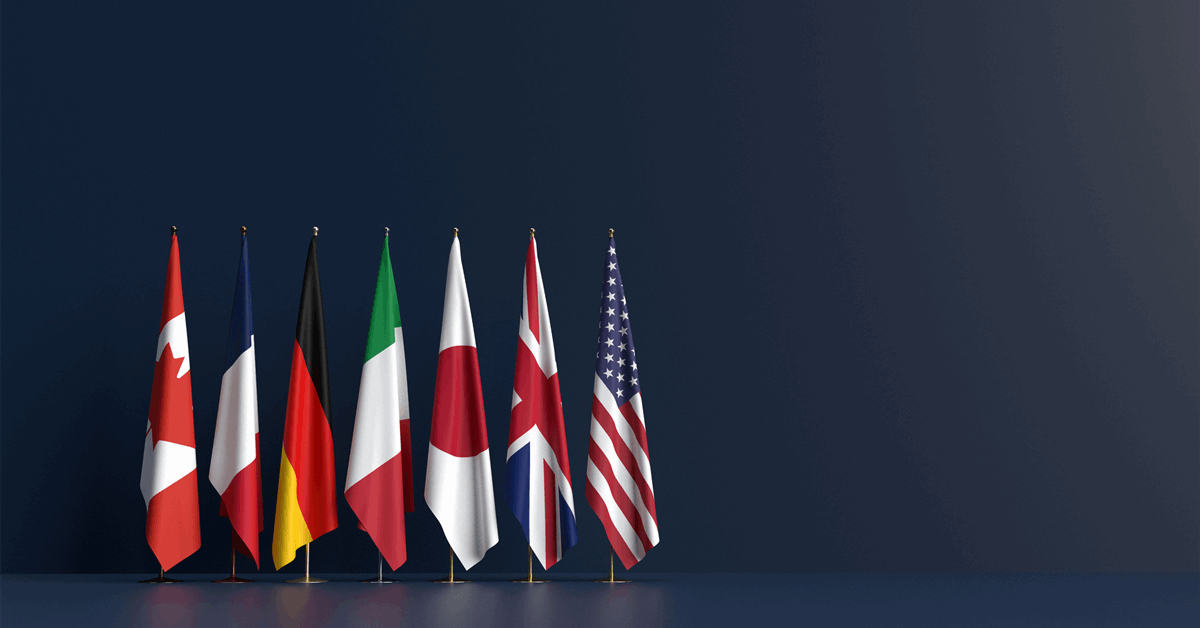
An online update by the Paris-based intergovernmental body on Thursday showed 426 million barrels of committed volumes, with members of the Group of Seven (G7) club of rich countries leading contributions.
The United States already pledged 172 million barrels on the same day, March 11, the IEA announced the agreement to make available to the global market 400 million barrels of oil from members’ reserves. Thursday’s update on the IEA website showed the U.S. volume to be 172.2 million barrels.
Japan has the second-biggest contribution at 79.8 million barrels, followed by Canada (23.6 million barrels).
All top three contributors are part of the G7, while non-G7 South Korea has the fourth-largest pledge at 22.5 million barrels.
Germany (19.5 million barrels) and France (14.6 million barrels), both G7 members, round up the top five.
“[I]nitial volumes of oil from the emergency reserves have already started to be made available”, IEA said in Thursday’s update.
Crude comprises 301 million barrels of the committed volumes, while 125 million barrels consist of oil products. In Europe, more oil products have been pledged than crude.
Public stocks account for 280 million barrels. Obligated industry stocks total 119 million barrels.
“The detailed split between crude oil and refined products, and volumes coming from public stocks or the lowering of obligations set on industry, remain subject to change as countries refine the specific details of their country’s contribution”, the IEA noted.
The IEA represents over 1.2 billion barrels in government reserves and a further 600 million barrels in industry-held volumes stored under government obligation, according to the March 11 announcement.
Noting the conflict has created the “largest supply disruption in the history of the global oil market”, the IEA reiterated in Thursday’s statement that the release of emergency stocks is only a “buffer” and the key to a return to stable flows is the resumption of regular shipping through the Strait of Hormuz.
“Adequate insurance mechanisms and physical protection for shipping are key to the resumption of flows”, the IEA said.
Separately on Thursday, the European Commission maintained that “oil supply remains stable for the moment” in the European Union.
That is ” thanks to the diversification efforts”, the Commission said in an online statement after another meeting of the Oil Coordination Group, while acknowledging the war has resulted in “fluctuations in global oil prices”.
“Member states are prepared, and oil stocks remain at a high level. In case of a prolonged disruption of energy flows through the Strait of Hormuz, the EU’s security of oil supply will be reassessed”, the statement said.
To contact the author, email [email protected]
What do you think? We’d love to hear from you, join the conversation on the
Rigzone Energy Network.
The Rigzone Energy Network is a new social experience created for you and all energy professionals to Speak Up about our industry, share knowledge, connect with peers and industry insiders and engage in a professional community that will empower your career in energy.
element
var scriptTag = document.createElement(‘script’);
scriptTag.src = url;
scriptTag.async = true;
scriptTag.onload = implementationCode;
scriptTag.onreadystatechange = implementationCode;
location.appendChild(scriptTag);
};
var div = document.getElementById(‘rigzonelogo’);
div.innerHTML += ” +
‘ ‘ +
‘ +
”;
var initJobSearch = function () {
////console.log(“call back”);
}
var addMetaPixel = function () {
if (-1 > -1 || -1 > -1) {
/*Meta Pixel Code*/
!function(f,b,e,v,n,t,s)
{if(f.fbq)return;n=f.fbq=function(){n.callMethod?
n.callMethod.apply(n,arguments):n.queue.push(arguments)};
if(!f._fbq)f._fbq=n;n.push=n;n.loaded=!0;n.version=’2.0′;
n.queue=[];t=b.createElement(e);t.async=!0;
t.src=v;s=b.getElementsByTagName(e)[0];
s.parentNode.insertBefore(t,s)}(window, document,’script’,
‘https://connect.facebook.net/en_US/fbevents.js’);
fbq(‘init’, ‘1517407191885185’);
fbq(‘track’, ‘PageView’);
/*End Meta Pixel Code*/
} else if (0 > -1 && 69 > -1)
{
/*Meta Pixel Code*/
!function(f,b,e,v,n,t,s)
{if(f.fbq)return;n=f.fbq=function(){n.callMethod?
n.callMethod.apply(n,arguments):n.queue.push(arguments)};
if(!f._fbq)f._fbq=n;n.push=n;n.loaded=!0;n.version=’2.0′;
n.queue=[];t=b.createElement(e);t.async=!0;
t.src=v;s=b.getElementsByTagName(e)[0];
s.parentNode.insertBefore(t,s)}(window, document,’script’,
‘https://connect.facebook.net/en_US/fbevents.js’);
fbq(‘init’, ‘1517407191885185’);
fbq(‘track’, ‘PageView’);
/*End Meta Pixel Code*/
}
}
// function gtmFunctionForLayout()
// {
//loadJS(“https://www.googletagmanager.com/gtag/js?id=G-K6ZDLWV6VX”, initJobSearch, document.body);
//}
// window.onload = (e => {
// setTimeout(
// function () {
// document.addEventListener(“DOMContentLoaded”, function () {
// // Select all anchor elements with class ‘ui-tabs-anchor’
// const anchors = document.querySelectorAll(‘a .ui-tabs-anchor’);
// // Loop through each anchor and remove the role attribute if it is set to “presentation”
// anchors.forEach(anchor => {
// if (anchor.getAttribute(‘role’) === ‘presentation’) {
// anchor.removeAttribute(‘role’);
// }
// });
// });
// }
// , 200);
//});


