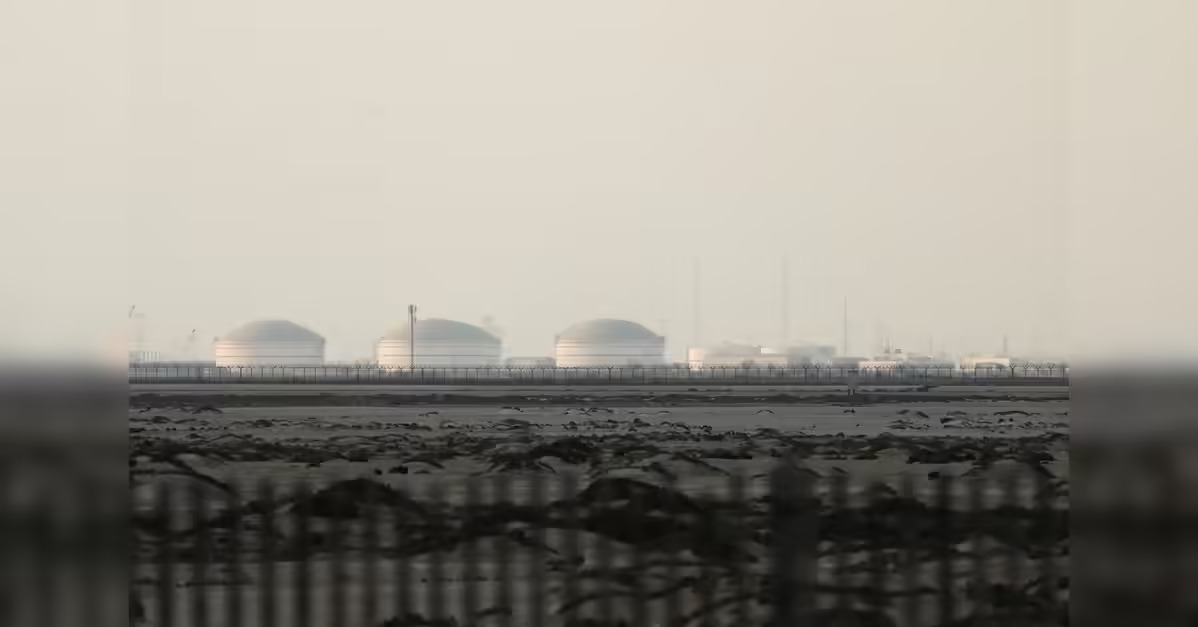
The global energy landscape remains on edge, with recent geopolitical events in the Middle East underscoring the inherent volatility of oil and natural gas markets. Investors have witnessed significant price swings, initially driven by direct attacks on critical infrastructure. While the immediate surge following these incidents has somewhat moderated, the underlying vulnerabilities in global supply chains persist, demanding a nuanced and data-driven approach for investors navigating this complex environment. Our proprietary market insights reveal a re-evaluation by investors, balancing immediate crisis response with longer-term fundamental shifts and forward-looking indicators.
Geopolitical Tensions Reshape Energy Supply Dynamics
Recent Iranian actions have demonstrably impacted energy flows, particularly an attack on the Ras Laffan terminal in Qatar, a facility responsible for shipping a substantial portion of the world’s liquefied natural gas (LNG). This terminal alone typically handles approximately 20% of global LNG consumption, making its disruption a major concern for energy security, especially for European markets. Simultaneously, two oil refineries in Kuwait also came under attack, further tightening refined product supply and exacerbating fears of broader regional instability. These incidents, coupled with the ongoing closure of the Strait of Hormuz to most tanker traffic – a critical choke point for a significant percentage of global oil shipments – have created a cascade of supply concerns. The immediate aftermath saw international benchmark Brent crude prices surge dramatically, reflecting the market’s heightened anxiety over potential long-term damage to production capacity and disrupted transit routes. This initial spike highlighted just how sensitive global energy markets are to geopolitical flashpoints in the Middle East.
Current Market Realities: A Snapshot of Volatility and Re-evaluation
While the initial panic-driven surge following the Iranian attacks was pronounced, our live market data indicates a recalibration of prices. As of today, Brent crude trades at $91.9 per barrel, reflecting a daily decline of 1.44%, with its trading range for the day spanning $91.39 to $94.21. Similarly, WTI crude is priced at $88.23 per barrel, down 1.61% for the day, having moved between $87.64 and $90.71. Gasoline prices have also seen a modest dip, currently at $3.09, down 0.96%. Looking at the broader trend, Brent crude has seen a notable decline over the past two weeks, moving from $101.16 on April 1st to $94.09 by April 21st, representing a 7% drop. This suggests that while geopolitical risks remain a significant factor, the market is currently digesting a multitude of inputs, possibly including inventory data, demand forecasts, and the perceived duration of the supply disruptions. The initial fear premium has partially unwound, but prices remain elevated compared to pre-crisis levels, indicating persistent underlying concerns about supply stability and the potential for renewed escalations. Investors are clearly weighing the immediate impact of supply disruptions against the broader global economic outlook and the resilience of existing supply chains.
Navigating the Forward Path: Key Indicators and Upcoming Events
For savvy investors, understanding the future trajectory of oil and gas markets hinges on closely monitoring upcoming data releases and industry events. The next two weeks are packed with crucial information that will undoubtedly shape market sentiment and price direction. This Wednesday, April 22nd, the EIA Weekly Petroleum Status Report will offer fresh insights into U.S. crude oil, gasoline, and distillate inventories, providing a critical barometer for domestic supply and demand balances. Just two days later, on Friday, April 24th, the Baker Hughes Rig Count will reveal the latest trends in North American drilling activity, an important leading indicator for future production capacity. As we move into the following week, the API Weekly Crude Inventory report on April 28th will provide an early look at inventory shifts, followed by another EIA Weekly Petroleum Status Report on April 29th. Perhaps most significantly, the EIA Short-Term Energy Outlook, due out on May 2nd, will offer updated forecasts for supply, demand, and prices across the energy complex, providing a valuable framework for longer-term investment strategies. These events, particularly the inventory reports and production forecasts, will be instrumental in determining whether current price levels are sustainable or if the market is poised for further adjustments based on fundamental supply-demand dynamics beyond immediate geopolitical shocks. Investors should pay close attention to any surprises in these reports, as they can trigger significant market movements.
Investor Sentiment: Addressing Core Market Questions
Our proprietary reader intent data reveals a clear anxiety among investors regarding market direction. The recurring question, “is WTI going up or down,” encapsulates the prevailing uncertainty and the urgent need for clear directional analysis. This sentiment extends to broader price predictions, with many asking, “what do you predict the price of oil per barrel will be by end of 2026?” These questions highlight investor concern over the sustained impact of current events and the factors that will drive long-term price stability or volatility. Beyond the immediate geopolitical risk, investors are grappling with the interplay of global economic growth, potential for increased supply from non-OPEC+ sources, and the pace of energy transition initiatives. The market is not simply reacting to news; it is attempting to model complex variables, including the duration of the Strait of Hormuz closure, the extent of damage to Qatari LNG facilities, and the willingness of major producers to offset any deficits. The current price levels, while lower than the immediate post-attack peak, still reflect a significant risk premium. Investors seeking to capitalize on or hedge against these movements must look beyond daily fluctuations and understand the structural shifts and upcoming data points that will define the market’s trajectory through the remainder of 2026.


