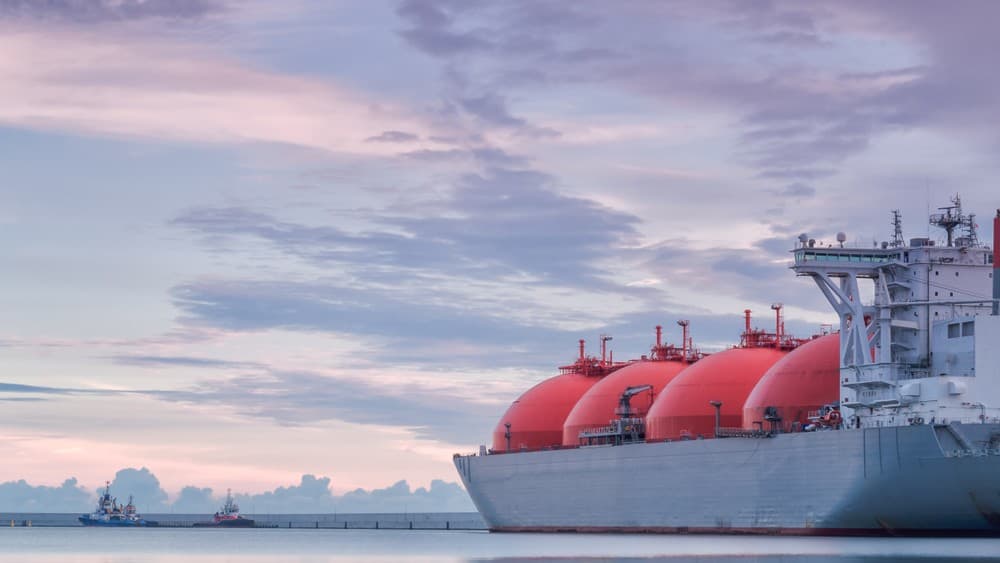
The global energy landscape is once again gripped by heightened volatility following recent attacks on critical energy infrastructure in Qatar. This escalation directly impacted the world’s largest LNG liquefaction complex at Ras Laffan Industrial City, sending immediate shockwaves through natural gas markets. Investors are now grappling with not only immediate supply disruptions but also the enduring implications for risk premiums across the entire energy complex. The incident underscores the fragility of global energy supply chains and the profound influence of geopolitical events on commodity prices, demanding a recalibration of investment strategies.
The Immediate Aftermath: A Jolt to Global Gas Markets
The repercussions of the attack on Qatar’s Ras Laffan facilities were swift and severe for natural gas prices. Europe’s benchmark Dutch TTF Natural Gas Futures for April 2026 saw an extraordinary surge, opening a staggering 35% higher on Thursday before settling slightly to a still significant 24% gain. This dramatic movement reflects deep market apprehension, especially given that the Ras Laffan complex is responsible for approximately 20% of global LNG flows. Prior to the onset of wider Middle East conflict on February 28, these futures contracts traded at just over $37 per megawatt-hour (32 euros). Today, all futures contracts through March 2027 are trading above $69 per megawatt-hour (60 euros), nearly doubling their value in a matter of weeks. The confirmation from QatarEnergy regarding “sizable fires and extensive further damage” to several LNG facilities at Ras Laffan means the market is now pricing in not just a temporary halt, but potentially prolonged repair work, adding a substantial, sticky risk premium to forward curves. This disruption comes at a particularly vulnerable time for Europe, with gas inventories at their lowest levels in years following the winter, intensifying the competition with Asia for available spot LNG supply ahead of the crucial 2026/2027 winter refilling season.
Crude’s Counter-Intuitive Trend Amidst Regional Instability
While natural gas prices have shot skyward, the crude oil market presents a more nuanced, and at times, counter-intuitive picture. As of today, Brent crude trades at $92.1 per barrel, marking a 1.22% decline, with its daily range fluctuating between $92 and $94.21. Similarly, WTI crude sits at $88.39, down 1.43%, after trading between $88.31 and $90.71. Gasoline prices have also seen a modest dip, currently at $3.09, down 1.28%. This current dip in crude prices comes after Brent crude has actually shed approximately 7% over the last 14 days, falling from $101.16 on April 1st to $94.09 yesterday. This broader market re-evaluation suggests that despite persistent geopolitical tensions in the Middle East, the crude market is currently weighing other factors more heavily. While the risk of supply disruption from the Strait of Hormuz remains a latent threat influencing crude’s floor, other elements such as global demand outlooks, strategic reserve releases, or even perceptions of oversupply in certain regions might be exerting downward pressure on prices. Investors are closely watching how this disconnect between natural gas and crude oil pricing evolves, as sustained instability in key producing regions typically translates to higher risk premiums across all hydrocarbons.
Investor Puzzles: Price Direction and Long-Term Outlook
The current market environment, characterized by sharp commodity price movements and geopolitical uncertainty, is naturally fueling a significant volume of investor queries. Our internal data indicates a strong focus on price direction, with many asking for clarity on whether WTI crude, for instance, is poised for gains or declines. Furthermore, a recurrent theme is the long-term outlook, with investors keenly seeking predictions for oil prices per barrel by the end of 2026. This reflects a desire to understand whether the current volatility is a short-term blip or indicative of a more fundamental shift. The Qatar LNG attack, and the broader Middle East conflict, inject immense complexity into such forecasts. The duration of repairs at Ras Laffan, the potential for further escalation, and the subsequent impact on global trade routes remain critical unknowns. For investors, this translates into a higher “risk premium” that must be factored into valuations for energy companies. Businesses with significant exposure to the region, or those heavily reliant on LNG imports, will face increased scrutiny regarding their supply chain resilience and hedging strategies. The answers to these investor questions hinge not just on economic fundamentals, but increasingly on political stability and the ability of global energy infrastructure to withstand persistent threats.
Anticipating Catalysts: Key Events in the Coming Weeks
For investors seeking clarity amidst the current turbulence, the next two weeks present several crucial data points that will further shape market sentiment and potentially offer insights into crude and natural gas trajectories beyond the immediate Qatar crisis. The EIA Weekly Petroleum Status Reports, scheduled for April 22nd, April 29th, and May 6th, will provide vital updates on U.S. crude oil, gasoline, and distillate inventories. These reports are essential for gauging the physical supply-demand balance in the world’s largest consumer market. Complementing these, the API Weekly Crude Inventory reports on April 28th and May 5th will offer earlier indications of inventory trends. On the supply side, the Baker Hughes Rig Count on April 24th and May 1st will shed light on North American drilling activity, a key indicator for future production. Perhaps most critically for long-term outlooks, the EIA Short-Term Energy Outlook (STEO) on May 2nd will provide updated projections for global oil and gas supply, demand, and prices. This report will be particularly scrutinized for how it incorporates the recent geopolitical developments and their potential impact on energy markets through the rest of 2026 and into 2027. Monitoring these upcoming events will be paramount for investors looking to refine their strategies and navigate the ongoing market uncertainty.


