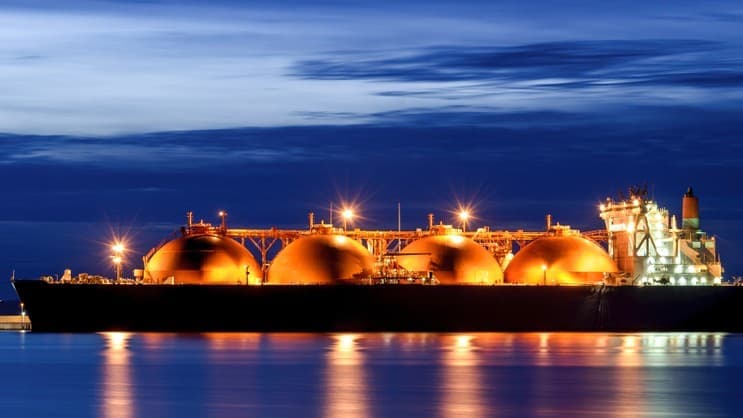
The global energy market is once again being reshaped by escalating geopolitical tensions, with recent events in the Middle East casting a long shadow over established liquefied natural gas (LNG) supply chains. As conflict intensifies and critical energy infrastructure becomes a target, the investment case for stable, secure LNG sources outside the Gulf region — particularly from the United States and Canada — has significantly strengthened. This isn’t merely a temporary market tremor; it represents a fundamental recalibration of risk and value, pushing major buyers to seek long-term stability in an increasingly volatile world. Investors with an eye on the future of energy security must recognize this evolving landscape, where North American LNG projects are poised to capture a substantial share of future demand previously assumed to be met by Middle Eastern suppliers.
Geopolitical Premium: Reshaping LNG Supply Dynamics
Recent developments underscore the fragility of Middle Eastern energy supplies, directly impacting LNG exports. Following earlier precautionary halts, state firm QatarEnergy confirmed significant damage to several of its LNG facilities due to missile attacks, resulting in sizable fires and extensive disruption. This incident, alongside the de facto closure of the Strait of Hormuz at times of heightened tension, signals a critical shift. As a senior executive from Jera, Japan’s largest LNG buyer, articulated, a prolonged conflict could effectively remove 90 million metric tons per annum (MTPA) from the global LNG market if Middle Eastern supply is choked. This is not just a theoretical risk; it’s a tangible threat already manifesting in infrastructure damage and potential delays to massive expansion projects, including Qatar’s world-leading LNG capacity build-out.
While the immediate implications are specific to LNG, the broader energy market reflects underlying anxieties. As of today, Brent crude trades at $92.1 per barrel, down 1.22% for the day, with a range between $92 and $94.21. WTI crude follows a similar trajectory, currently at $88.39, marking a 1.43% daily decline and trading between $88.31 and $90.71. Gasoline prices also reflect this slight daily retreat, standing at $3.09, down 1.28%. However, it’s crucial to contextualize these daily movements within a broader trend: Brent has actually seen a more significant decline of 7% over the past 14 days, falling from $101.16 on April 1st to $94.09 by April 21st. This suggests that while crude markets might be reacting to various factors including demand concerns, the specific, targeted attacks on LNG infrastructure introduce a distinct and persistent risk premium for long-term LNG contracts originating from the Middle East, fundamentally altering buyer psychology regardless of short-term crude fluctuations.
North America’s Strategic Ascent in Global LNG
The direct consequence of Middle Eastern instability is a strengthened hand for North American LNG producers. Major buyers like Jera, despite having signed long-term agreements for 3.0 MTPA from QatarEnergy commencing in 2028, are now openly expressing concerns about potential delays and considering additional spot purchases to cover shortfalls. This shift is not merely about immediate supply; it’s about strategic diversification and long-term energy security. The US and Canada offer unparalleled advantages: vast natural gas reserves, established infrastructure, political stability, and diverse export routes that circumvent geopolitical flashpoints. These factors translate into a “stability premium” for North American projects that is increasingly attractive to risk-averse nations, particularly in Asia, who rely heavily on imported LNG.
For investors, this translates into a compelling opportunity. Projects in the US Gulf Coast and Western Canada, previously competing on economics alone, now possess an added layer of strategic value. The perceived reliability of supply from these regions will likely accelerate Final Investment Decisions (FIDs) and secure long-term contracts, potentially at more favorable terms. Companies with existing or planned liquefaction capacity in these areas are well-positioned to benefit from this global recalibration of supply-side risk. The long-term nature of LNG contracts, often spanning decades, means that current geopolitical shifts will have profound and lasting impacts on the profitability and market share of North American producers.
Investor Focus and Upcoming Market Catalysts
Our proprietary reader intent data reveals a significant and consistent investor focus on future price movements and market stability, with questions like “what do you predict the price of oil per barrel will be by end of 2026?” and direct inquiries about the direction of WTI crude. This underscores the market’s hunger for forward-looking analysis in a volatile environment. While the immediate geopolitical impacts are specific to LNG supply, the broader confidence in North American energy production will be continuously assessed through upcoming data releases.
Investors should closely monitor several key events in the coming weeks that, while not directly LNG contract announcements, will provide crucial context for North American energy’s capacity to meet global demand. The EIA Weekly Petroleum Status Reports, scheduled for April 29th and May 6th, will offer granular detail on crude and product inventories, refinery utilization, and overall petroleum demand, painting a picture of the US energy landscape. Concurrently, the Baker Hughes Rig Counts on May 1st will indicate drilling activity levels, providing insight into future production capacity for both oil and associated gas, which feeds into LNG supply. These reports, culminating in the EIA Short-Term Energy Outlook on May 2nd, will be vital for gauging the overall health and expansion potential of North American energy production. Strong signals from these reports could further bolster confidence in the region’s ability to consistently deliver energy resources, reinforcing the investment thesis for US and Canadian LNG amidst Middle Eastern supply disruptions.
The Long Game: Accelerating North American LNG Development
The ongoing Middle East conflict is more than a temporary disruption; it’s a catalyst for a structural shift in global energy strategy. The potential for prolonged delays in Qatar’s massive LNG expansion projects creates a significant and durable supply gap that North American producers are uniquely positioned to fill. This scenario places a premium on projects that can accelerate through development and reach production swiftly. Investors should therefore scrutinize companies with shovel-ready projects, robust financing, and efficient regulatory pathways in the US and Canada.
The strategic imperative for energy security, combined with the inherent risks of Middle Eastern supply, creates an environment where North American LNG projects are no longer just economically viable but geopolitically essential. This shift is likely to drive increased capital allocation towards US and Canadian LNG export terminals, pipelines, and upstream gas production. The long-term beneficiaries will be those companies that can deliver reliable, responsibly sourced LNG to a world increasingly prioritizing stability over short-term cost arbitrage. The current geopolitical climate is not just lifting the investment case for US and Canadian LNG; it is cementing their role as indispensable pillars of global energy security for decades to come.


