The global oil market is undergoing a significant realignment, with India emerging as a pivotal player in absorbing Russian crude. This shift is not merely transactional; it represents a fundamental recalibration of energy geopolitics and supply chain resilience. As traditional trade routes are disrupted and new partnerships solidify, investors must closely monitor the implications for pricing, market stability, and the long-term energy landscape. Our proprietary data pipelines reveal a dynamic environment where shifting demand patterns intersect with broader macroeconomic forces, creating both opportunities and challenges for the discerning investor.
The Great Rerouting: India’s Pivotal Role in Russian Oil Trade
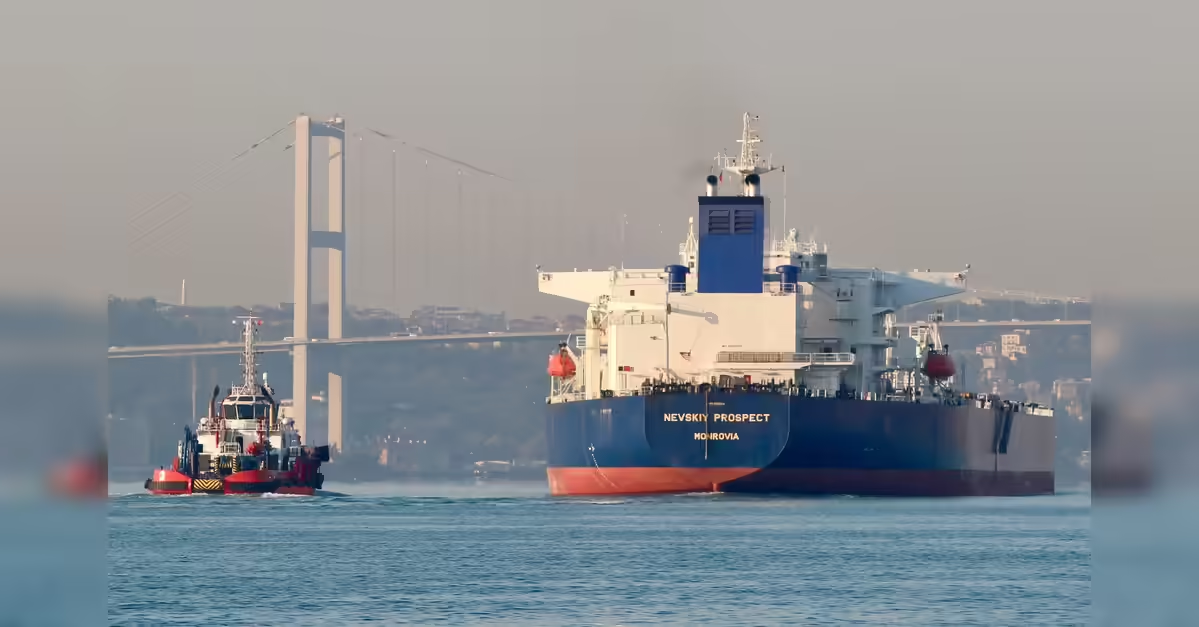
India has dramatically increased its appetite for Russian crude, fundamentally reshaping seaborne oil flows. Evidence of this transformation is clear in the mid-voyage diversions of multiple tankers. The Aframax vessel, Aqua Titan, for instance, loaded Urals crude from a Baltic Sea port in late January, initially signaling the Chinese port of Rizhao as its destination. However, in a stark illustration of market agility, the vessel executed an about-face in Southeast Asian waters in mid-March, rerouting its cargo to New Mangalore, India, where it was scheduled to arrive on March 21. This move followed a strategic green light from the US, enabling India to temporarily boost its Russian purchases, a decision aimed at helping the nation navigate reduced Middle Eastern supplies due to the ongoing war in Iran.
The scale of India’s commitment is substantial: Indian refiners acquired an impressive 30 million barrels of Russian oil in the week immediately following this concession. This surge in demand has seen at least seven tankers laden with Russian oil switch their destinations from China to India, according to our internal ship-tracking data. All of India’s major refiners are now actively participating in the market for Russian crude. This marks a significant shift, as China had served as Moscow’s importer of last resort in recent months after India had previously scaled back its purchases. The Suezmax Zouzou N., carrying Kazakh CPC Blend crude from Novorossiysk, further underscores this trend, having also rerouted from off Rizhao to India’s Sikka, with an estimated arrival date of March 25.
Market Impact and Price Signals: Navigating Shifting Demand
The pronounced shift in Russian oil flows towards India creates a fascinating dynamic against the backdrop of current market pricing. As of today, Brent crude trades at $92.95 per barrel, reflecting a slight dip of 0.31% within a daily range of $92.57 to $94.21. Similarly, WTI crude is priced at $89.45, down 0.25% for the day. This current market snapshot offers a nuanced picture, especially when considering the 14-day Brent trend, which saw prices decline by 7% from $101.16 on April 1 to $94.09 on April 21.
This raises a critical question for investors, many of whom are asking whether WTI is heading up or down: If India is absorbing significant volumes of Russian oil, why has the market seen a recent price downtrend? The answer lies in the complex interplay of factors. While increased demand from India and the potential return of buyers like Japan and South Korea are inherently bullish for crude prices, broader macroeconomic concerns, global inventory levels, and a stronger dollar have exerted downward pressure. The market is currently grappling with these conflicting signals. However, the sustained absorption of Russian crude by a major economy like India places a floor under prices and prevents a more severe downturn, suggesting that while short-term volatility persists, a significant collapse is less likely given robust demand from key growth regions.
Geopolitical Currents and Supply Chain Resilience
India’s strategic pivot to Russian oil underscores a critical aspect of global energy security: the paramount need for nations to secure diverse and affordable energy supplies. The decision to increase Russian purchases, particularly in response to disruptions in Middle Eastern supplies caused by the war in Iran, highlights how geopolitical events can rapidly reshape global trade flows. India, as the world’s third-largest oil consumer, is demonstrating remarkable agility in adapting its sourcing strategy to meet its burgeoning energy requirements.
This resilience extends beyond India’s borders. Russia’s ability to reroute significant volumes of crude to new markets, even amidst stringent sanctions, showcases the inherent flexibility and interconnectedness of the global oil market. The active participation of all major Indian refiners in this trade solidifies India’s role not just as a temporary buyer, but as a long-term strategic partner for Russian energy exports. Furthermore, the diversion of Kazakh CPC Blend crude, as seen with the Zouzou N., indicates a broader trend of supply chain diversification and optimization across the Eurasian landmass, further insulating producers from traditional market pressures and offering new opportunities for buyers.
Forward Outlook: Key Indicators and Investor Expectations
For investors focused on the trajectory of crude oil prices, particularly those asking about the price of oil per barrel by the end of 2026, the ongoing shifts in trade routes and demand centers are paramount. The continued absorption of Russian crude by India and other Asian economies will be a significant determinant. Our proprietary calendar of upcoming energy events provides crucial data points to monitor this evolving landscape. The EIA Weekly Petroleum Status Reports, scheduled for April 22, April 29, and May 6, will offer fresh insights into US crude inventories and demand, which could either reinforce or counteract the bullish signals from Asian demand.
Furthermore, the Baker Hughes Rig Count on April 24 and May 1 will indicate the responsiveness of North American supply to current price levels. A critical event for the broader outlook is the EIA Short-Term Energy Outlook on May 2. This report will provide updated forecasts on global supply and demand balances, incorporating the very trade shifts we are observing. If the EIA revises its demand projections upwards, or its supply forecasts downwards, due to sustained Indian and Asian demand, it could provide a strong catalyst for price appreciation towards the end of 2026. The sustained geopolitical drivers and the demonstrated resilience of Russian oil exports, coupled with robust demand from developing economies, suggest a market that remains tightly balanced, with upward price potential should supply disruptions or stronger-than-expected demand materialize.


