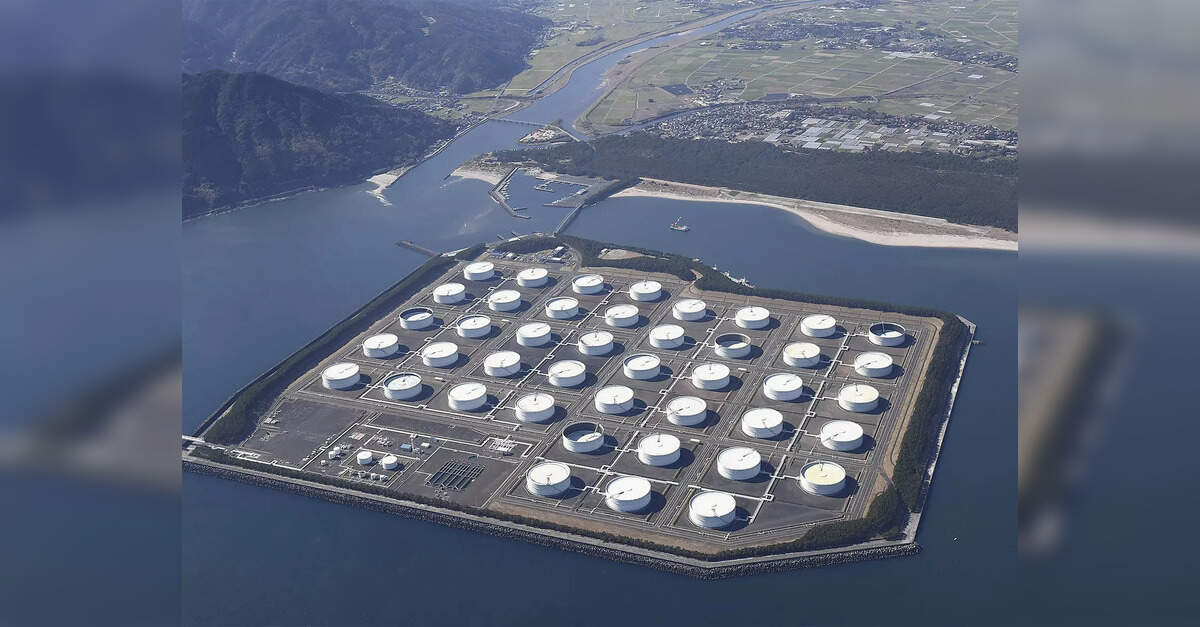
Japan’s strategic decision to release oil from its national and private reserves signals a heightened global concern over supply stability, particularly amidst escalating tensions in the Middle East. This move, which follows a broader directive from the International Energy Agency (IEA), aims to mitigate potential disruptions to maritime traffic in critical chokepoints like the Strait of Hormuz. For energy investors, this situation presents a complex interplay of geopolitical risk, supply management, and market sentiment, creating both challenges and opportunities in the crude oil and natural gas sectors. While immediate actions are being taken to bolster supply, the market’s reaction suggests a nuanced view, prompting a deeper dive into the underlying dynamics that will shape future price trajectories.
The Paradox of Emergency Releases and Current Market Dynamics
Japan has commenced releasing oil from its private-sector reserves, a volume equivalent to 15 days of consumption, with plans for the government to release an additional month of supply later in March. This action is part of a wider international effort, with IEA Executive Director Fatih Birol confirming that nations across Asia Oceania will collectively introduce an “unprecedented” 108.6 million barrels of oil to the global market immediately. These measures are designed to preemptively address potential supply shocks stemming from ongoing conflicts impacting shipping lanes.
However, the market’s immediate response presents a fascinating paradox for investors. As of today, Brent crude trades at $92.89 per barrel, reflecting a marginal intraday dip of -0.38% from its opening, having fluctuated between $92.57 and $94.21. Similarly, WTI crude stands at $89.33, also down -0.38%, within a range of $88.76 to $90.71. Our proprietary data further highlights that despite these significant supply-bolstering efforts and persistent geopolitical risk, Brent crude has actually trended downwards over the past two weeks, shedding approximately $7.07 or 7% from $101.16 on April 1st to $94.09 yesterday. This suggests that while concerns about supply stability are real, the market is currently balancing these fears against other factors, potentially including broader demand outlooks or an assessment that the immediate impact of Middle East disruptions is manageable due to these coordinated releases.
Navigating the Strait of Hormuz: A Persistent Geopolitical Chokepoint
While reserve releases provide a short-term buffer, the long-term stability of global energy flows hinges on the unimpeded passage through critical maritime routes, most notably the Strait of Hormuz. IEA Executive Director Birol himself cautioned that “opening the Strait of Hormuz is vital for a return to stable flows,” underscoring its enduring significance as a global energy bottleneck. This strategic waterway remains a focal point for diplomatic efforts, as evidenced by discussions between Japanese Defence Minister Shinjiro Koizumi and US Secretary of War Pete Hegseth.
During these high-level talks, the US reaffirmed its commitment to enhancing deterrence and response capabilities in the region, providing assurances that the conflict would not alter American force deployments in Japan. Tokyo, in turn, pledged to maintain close communication with the United States and other strategic partners. However, the path to securing the Strait militarily remains complex. Despite calls from the US President for approximately seven nations to dispatch naval assets, several key allies have adopted a cautious stance. Australia has explicitly stated it will not provide naval support, and Japan’s Prime Minister Sanae Takaichi has confirmed that Tokyo currently has no plans to deploy naval assets for escorting vessels. This divergence in military commitment means that while diplomatic channels are active, the threat of disruption to the Strait of Hormuz continues to loom, embedding a persistent geopolitical risk premium into crude oil prices that investors must continually monitor.
Investor Outlook: Deciphering Market Signals and Future Catalysts
Our platform’s proprietary reader intent data reveals that investors are keenly focused on price direction, particularly for WTI crude, and are seeking clarity on longer-term oil price predictions for the end of 2026. Given the recent softening in Brent prices despite the geopolitical backdrop and emergency releases, the immediate signal for WTI bulls is one of caution. The market appears to be weighing existing supply, the effectiveness of reserve releases, and potential demand headwinds more heavily than the immediate threat of supply disruption.
However, the landscape is dynamic, and several upcoming events in our proprietary calendar will be crucial for investors seeking to refine their market outlooks. The EIA Weekly Petroleum Status Reports, scheduled for April 22nd, April 29th, and May 6th, will offer vital insights into US crude oil and product inventories, providing a granular view of supply-demand balances. Unexpected builds could further pressure prices, while significant draws might offer support. The Baker Hughes Rig Count, due on April 24th and May 1st, will signal future North American production trends, directly influencing WTI’s supply side. Perhaps most impactful for those seeking year-end 2026 forecasts, the EIA Short-Term Energy Outlook on May 2nd will provide official projections that could significantly shift market sentiment. Integrated energy majors, often a focus for our readers, typically demonstrate resilience in volatile environments due to their diversified upstream and downstream portfolios, but their performance will still be closely tied to these macro price movements and geopolitical developments.
In conclusion, while Japan’s swift action to release oil reserves, in concert with international partners, provides a critical buffer against immediate supply shocks, the underlying geopolitical tensions in the Middle East persist. Investors should remain vigilant, carefully analyzing inventory data, production trends, and the ongoing diplomatic efforts surrounding the Strait of Hormuz. These factors, alongside global economic performance, will dictate the trajectory of crude oil prices through 2026, making diligent analysis of proprietary market data and upcoming events indispensable for informed investment decisions.


