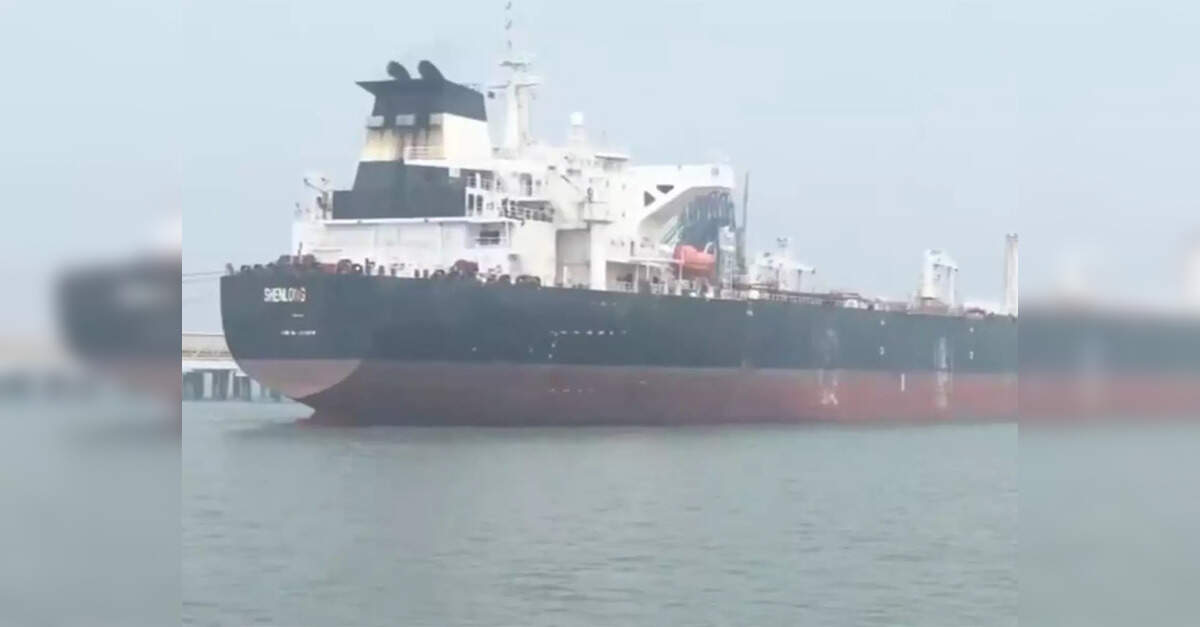
The global oil and gas market remains a complex interplay of supply fundamentals, demand projections, and geopolitical flashpoints. In recent developments, the safe arrival of the Indian-flagged crude oil tanker, Jag Laadki, carrying approximately 80,800 tonnes of Murban crude, is a small but significant win for supply chain stability amidst heightened regional tensions. Scheduled to reach India today, Tuesday, its journey from Fujairah underscores the persistent challenges and risks inherent in vital shipping lanes. For investors, this incident, alongside the ongoing movement of other vessels and critical energy infrastructure reports, offers a crucial lens through which to assess the true cost of geopolitical volatility on energy markets.
Geopolitical Tensions and Crude Oil Flows: The Jag Laadki Case Study
The successful passage of the Jag Laadki, with its 22 Indian seafarers and valuable crude oil cargo, provides a moment of relief in a region fraught with uncertainty. This vessel’s journey is not isolated; it is the fourth of 28 Indian ships that were navigating the complex situation in the war-hit Strait of Hormuz. Prior to its movement, two LPG carriers, the Shivalik and Nanda Devi, carrying a combined 92,712 tonnes of LPG, successfully crossed the strait on March 13 and 14 respectively. The Shivalik has since reached Mundra Port, with Nanda Devi expected at Kandla Port today. Another tanker, Jag Prakash, carrying gasoline from Oman to Africa, also navigated the strait on Friday, en route to Tanga, Tanzania, with an expected arrival of March 21.
While these individual successes are positive, the broader picture remains challenging. There are still 22 Indian-flagged vessels, with 611 seafarers, operating in the western Persian Gulf and 2 more on the eastern side, highlighting the persistent need for vigilance and coordinated effort. The incident with the Jag Laadki, despite its safe resolution, serves as a stark reminder of the vulnerability of maritime trade to regional instability. Port authorities, such as the Jawaharlal Nehru Port Authority (JNPA), are actively monitoring vessel movements and providing concessions on anchorage, berth hire, and storage charges to mitigate disruptions, showcasing the systemic efforts to maintain energy flows. Such operational resilience is critical for investors evaluating the long-term reliability of global crude and refined product supplies.
Market Snapshot: Geopolitical Risk vs. Supply Stability
The immediate market reaction to such events is often nuanced, reflecting a balance between actual supply disruptions and the ever-present geopolitical risk premium. As of today, Brent Crude trades at $92.89 per barrel, marking a marginal decline of 0.38% within a day range of $92.57-$94.21. Similarly, WTI Crude stands at $89.33, also down 0.38% for the day, trading between $88.76 and $90.71. Gasoline prices are at $3.11, down 0.64%. While these figures reflect a slight intraday dip, the broader trend over the past two weeks has seen Brent crude retreat from $101.16 on April 1st to $94.09 on April 21st, a notable decrease of $7.07 or approximately 7%.
This recent downtrend suggests that while geopolitical risks are undeniable, other factors like demand concerns or improved supply outlooks may be exerting more immediate pressure. However, the successful passage of vessels like Jag Laadki, while mitigating immediate supply shocks, crucially underpins the existing price floor. The fact that crude remains in the low-$90s despite a 7% decline over two weeks, coupled with ongoing regional tensions, indicates that a significant risk premium is still baked into current prices. Investors should interpret this as a market that is highly sensitive to any further escalation, with robust downside protection provided by the continuous threat to critical shipping infrastructure.
Navigating Future Volatility: Key Economic Indicators and Upcoming Events
Looking ahead, the interplay between geopolitical events and fundamental market data will dictate crude and product price trajectories. Investors must keep a close watch on scheduled data releases that provide critical insights into supply, demand, and inventory levels. This week, the EIA Weekly Petroleum Status Report, due today, Wednesday, will offer a fresh look at U.S. crude oil and product inventories, refinery utilization, and demand indicators. Following this, the Baker Hughes Rig Count on Friday will give a snapshot of drilling activity, indicating future supply potential.
Further into the next 14 days, the API Weekly Crude Inventory report on April 28th and another EIA Weekly Petroleum Status Report on April 29th will continue to shape market sentiment. The EIA Short-Term Energy Outlook, scheduled for May 2nd, will be particularly crucial, providing updated forecasts for global supply and demand dynamics, which will be heavily scrutinized for any shifts in outlook related to ongoing conflicts or economic growth projections. These reports, especially those detailing inventory builds or draws, will either confirm a more stable supply picture or highlight potential vulnerabilities, amplifying the impact of geopolitical events on energy pricing. For instance, any unexpected draw in crude inventories against a backdrop of continued shipping threats could trigger a sharp upward price movement, reminding investors that underlying stability remains fragile.
Investor Sentiment: Pricing in Uncertainty
Our proprietary reader intent data reveals a clear preoccupation among investors with the direction of oil prices, with questions such as “is wti going up or down” and “what do you predict the price of oil per barrel will be by end of 2026?” dominating queries. This reflects a market grappling with profound uncertainty, where successful individual tanker movements like the Jag Laadki’s safe arrival offer micro-level reassurance but do not resolve macro-level anxieties. Investors are keenly balancing the potential for sustained demand recovery against the specter of supply disruptions from geopolitical flashpoints and the strategic importance of regions like the Strait of Hormuz, which handles a significant portion of the world’s seaborne oil.
The efforts by port authorities to facilitate cargo operations, offering concessions and rebates, underscore the industry’s focus on maintaining supply chain resilience. The reported decline in export-bound containers at JNPA from 5,600 to 3,900, with no reported congestion, suggests a degree of adaptive capacity in logistics. However, this also indicates a potential shift in trade patterns or caution in export activity. Ultimately, while the immediate management of distressed vessels provides a degree of confidence in operational capabilities, the long-term price trajectory for crude oil and related products will be a delicate dance between sustained global supply, geopolitical stability, and the pace of economic growth. Investors should remain agile, closely monitoring both the fundamental data from upcoming reports and any shifts in the geopolitical landscape to position their portfolios effectively for a market that continues to price in significant uncertainty.


