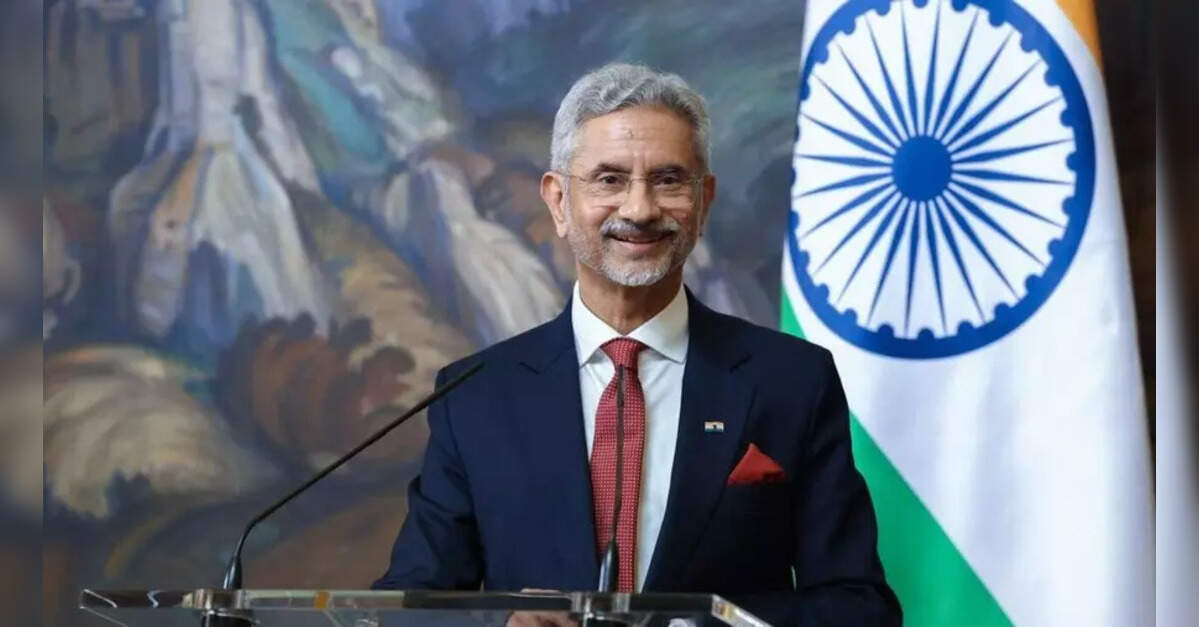
The strategic Strait of Hormuz remains a focal point for global energy markets, and recent statements from India’s External Affairs Minister, S Jaishankar, offer critical insights for investors navigating its inherent risks. While New Delhi has confirmed there is no “blanket arrangement” with Iran for the safe passage of Indian-flagged vessels through this vital chokepoint, ongoing diplomatic engagement has successfully facilitated recent transits. This nuanced approach highlights the complex interplay of geopolitics and energy security, demanding close attention from market participants.
Market Dynamics and Investor Sentiment Amidst Geopolitical Jitters
The geopolitical landscape surrounding the Strait of Hormuz is inherently volatile, yet current crude prices suggest a market that is not fully pricing in extreme disruption. As of today, Brent crude trades at $92.9 per barrel, reflecting a modest daily dip of 0.36%, while WTI crude stands at $89.25, down 0.47%. This relative stability, however, masks underlying anxieties. Over the past two weeks, Brent has actually seen a notable decline of 7%, falling from $101.16 on April 1st to $94.09 on April 21st. This trend indicates that despite escalating regional tensions and calls from figures like US President Donald Trump for international naval deployments, the market’s immediate reaction has been more influenced by broader supply-demand fundamentals or a belief that major disruptions remain contained.
Our proprietary data indicates investors are keenly focused on price direction, frequently asking about the future trajectory of WTI and broader oil prices into late 2026. This underscores a prevailing uncertainty regarding how geopolitical flashpoints, like those in the West Asia, will ultimately translate into sustained price movements. The current pricing suggests a geopolitical risk premium is present but not inflated, implying that while the market acknowledges the potential for disruption, it remains cautiously optimistic about the containment of conflicts or the effectiveness of diplomatic channels, such as those India is employing.
India’s Diplomatic Blueprint for Hormuz Transit
India’s strategy for navigating the Strait of Hormuz presents a unique diplomatic blueprint. Minister Jaishankar explicitly stated that there is no formal, standing agreement with Iran for the transit of Indian-flagged vessels. Instead, India relies on direct, ongoing diplomatic communication, an approach he described as focused on “reason and coordination.” This engagement has yielded tangible results, exemplified by the recent safe passage of two Indian-flagged liquefied petroleum gas (LPG) carriers, the Shivalik LPG Carrier and Nanda Devi LPG Carrier, transporting approximately 92,712 metric tonnes of LPG. Their successful transit through the strait on Saturday, heading towards India, underscores the efficacy of New Delhi’s tailored, bilateral diplomacy.
This model, however, is not a “blanket arrangement” and, as Jaishankar noted, cannot necessarily be replicated by other nations. He emphasized that “each relationship with Iran stands on its own merits,” suggesting that India’s specific geopolitical standing and historical ties with Tehran allow for a level of trust and engagement that may not be available to all. For investors, this implies that while India may have a working mechanism for its own energy supplies, the broader international shipping community still faces significant uncertainties and potential vulnerabilities, particularly if diplomatic solutions are not universally available or effective.
The Critical Chokepoint: Vulnerability and Global Supply Implications
The Strait of Hormuz remains one of the world’s most critical energy chokepoints, with roughly one-fifth of global oil shipments passing through its narrow confines. The absence of a formal, multilateral arrangement for safe passage, coupled with heightened regional tensions, accentuates its vulnerability. Calls from the US President for major global economies, including China, France, Japan, South Korea, and the United Kingdom, to deploy naval forces to safeguard shipping routes highlight the international community’s concern over potential disruptions. Any significant impedance to traffic through the Strait would have immediate and severe repercussions on global crude and product prices, impacting everything from Brent and WTI to gasoline prices, which currently stand at $3.1 per gallon.
Investors must consider the potential for escalating rhetoric or miscalculation to translate into concrete supply chain disruptions. While India’s diplomatic success is a positive signal for its own energy security, the broader picture for global oil supply remains precarious. The reliance on ad-hoc diplomatic solutions rather than formal, universally recognized safeguards means that the risk premium associated with Hormuz remains a persistent, if currently subdued, factor in energy market valuations. Diversification of supply routes and strategic petroleum reserves become even more critical in such an environment.
Forward Outlook: Upcoming Data and Geopolitical Volatility
Looking ahead, the interplay between geopolitical events and fundamental market data will dictate the trajectory of crude prices. Investors will closely monitor a series of upcoming energy events for insights into supply-demand balances and production trends. The EIA Weekly Petroleum Status Reports, scheduled for April 22nd, April 29th, and May 6th, will provide crucial data on US crude inventories, refinery activity, and product supplied, offering a snapshot of domestic demand. Complementing this, the Baker Hughes Rig Count on April 24th and May 1st will shed light on North American drilling activity, a key indicator of future supply.
Perhaps most impactful for longer-term outlooks, the EIA Short-Term Energy Outlook (STEO) due on May 2nd will offer updated forecasts for global supply, demand, and prices, directly addressing investor inquiries about where oil prices might stand by the end of 2026. These reports, combined with the fluid diplomatic situation in West Asia, will shape market sentiment. While India’s diplomatic efforts offer a sliver of stability for its own shipping, the broader market remains susceptible to sudden shifts. Investors should remain vigilant, understanding that while current prices reflect a cautious equilibrium, the underlying geopolitical risks in the Strait of Hormuz continue to present a significant variable in the global energy equation.


