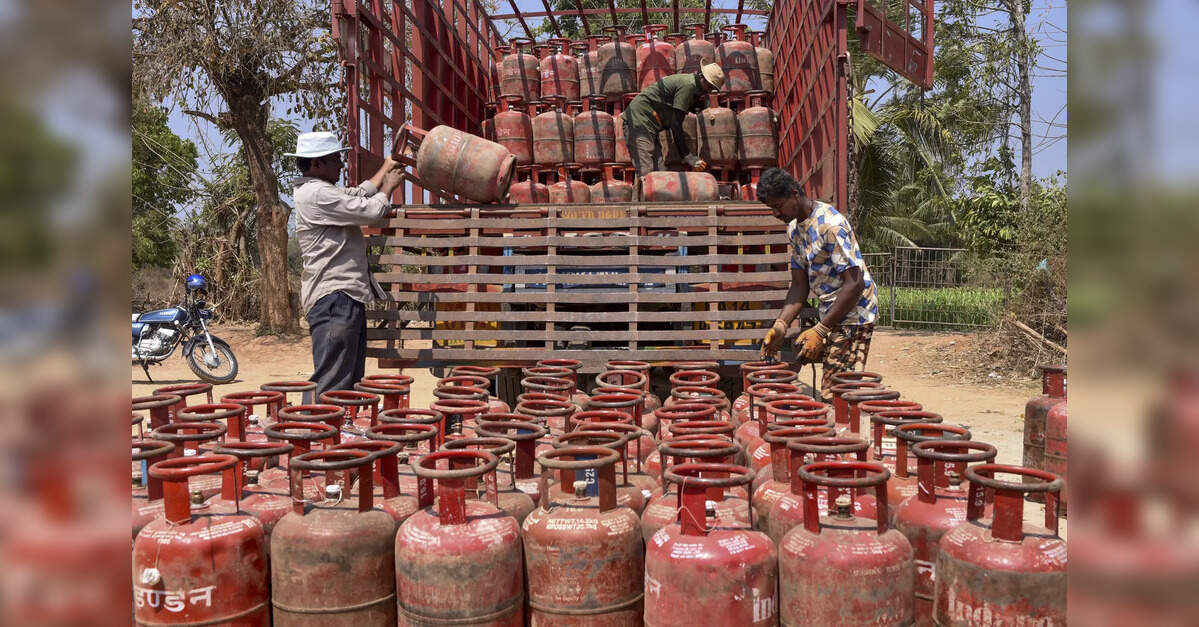
The recent advisory from major Oil Marketing Companies (OMCs) regarding stable domestic LPG supplies, urging consumers to avoid panic bookings, might seem like a routine operational update. However, for astute energy investors, this communication offers a deeper signal: an underlying confidence in the downstream sector’s operational resilience amidst a broader market characterized by measured demand and fluctuating crude prices. This stability in a critical consumer segment reflects robust infrastructure, efficient logistics, and potentially, a more predictable demand environment for these integrated players. As we unpack this, we’ll connect these downstream assurances to current market dynamics, upcoming catalysts, and the pressing questions on investors’ minds regarding crude oil’s trajectory.
LPG Supply Assurance: A Signal of Downstream Resilience
The joint statement from major OMCs, including Indian Oil, Bharat Petroleum, and HP, confirming secure and uninterrupted domestic LPG supplies, goes beyond mere public relations. It underscores a sophisticated and robust distribution network capable of handling consistent demand without strain. The emphasis on digital booking platforms (IVRS, SMS, mobile apps) and the discouragement of physical visits or early bookings highlight an optimized system designed for efficiency. For investors, this operational stability in a high-volume, essential commodity like LPG translates directly into predictable revenue streams and reduced operational risks for the OMCs. These companies, often integrated across the energy value chain, benefit from a solid domestic demand base that can act as a buffer against volatility in upstream crude markets. Their ability to maintain supplies even during past crises, such as the COVID-19 pandemic, reinforces their operational prowess and capacity for sustained performance.
Crude Market Headwinds: Navigating the Current Price Environment
While downstream LPG operations signal stability, the broader crude oil market paints a picture of recent moderation. As of today, Brent crude trades at $92.9 per barrel, reflecting a 0.36% decline on the day. Similarly, WTI crude stands at $89.24, down 0.48%. This daily dip follows a more significant trend; Brent has seen a notable correction over the past two weeks, moving from $101.16 on April 1st to $94.09 on April 21st, representing a 7% decrease. This downward trajectory in crude prices, alongside gasoline trading at $3.11 per gallon (-0.64% today), suggests that the market is currently digesting a period of adequate supply and perhaps a recalibration of demand expectations. The OMCs’ calm advisory on LPG demand aligns with this broader sentiment, indicating that the immediate consumer-level demand is well-met, without signs of panic-driven stockpiling that could otherwise signal underlying economic anxiety or supply fears. This measured approach from OMCs can be interpreted as a subtle indicator of a demand landscape that is stable, rather than surging, contributing to the recent easing in crude benchmarks.
Upcoming Catalysts: Shaping the Near-Term Outlook
Investors should keenly watch a series of upcoming events that will further shape the market’s perception of supply-demand balances and price trajectories. The EIA Weekly Petroleum Status Reports, scheduled for April 22nd and April 29th, will provide crucial data on crude oil, gasoline, and distillate inventories, refining activity, and product supplied (a proxy for demand). Any unexpected builds or drawdowns could prompt significant market reactions. Following closely, the Baker Hughes Rig Counts on April 24th and May 1st will offer insights into upstream activity and future supply potential from North America. Perhaps the most influential forward-looking report will be the EIA Short-Term Energy Outlook (STEO) due on May 2nd. This publication will update demand and supply forecasts for the coming months and year, offering critical guidance for strategic positioning in energy equities. These data points, combined with continued monitoring of geopolitical developments, will either reinforce the current “demand calm” narrative or introduce new volatility, making the next two weeks pivotal for understanding crude oil’s immediate direction.
Investor Queries: Decoding Demand and Price Trajectories
Our proprietary reader intent data reveals a prevalent investor concern: “is WTI going up or down?” and “what do you predict the price of oil per barrel will be by end of 2026?” These questions highlight the market’s ongoing search for clarity amid price fluctuations. While precise predictions are challenging, the OMCs’ confidence in LPG supply stability offers a piece of the puzzle. It suggests that immediate domestic consumption, a significant component of overall demand, remains robust but not inflationary. This provides a floor of sorts for downstream-focused integrated energy companies. For crude prices, the current “demand calm” and the 14-day Brent correction indicate that the market has absorbed recent supply news without significant upward pressure. The path forward for WTI and Brent will be dictated by the interplay of global economic growth, OPEC+ production policies, and the data points we’ve outlined above. Investors should recognize that while upstream volatility persists, the foundational stability demonstrated by OMCs in essential consumer segments provides a degree of resilience for integrated energy players, potentially making their stock performance less susceptible to the wild swings of the crude spot market compared to pure-play exploration and production firms. A diversified approach, considering both upstream and downstream strengths, remains prudent in this environment.


