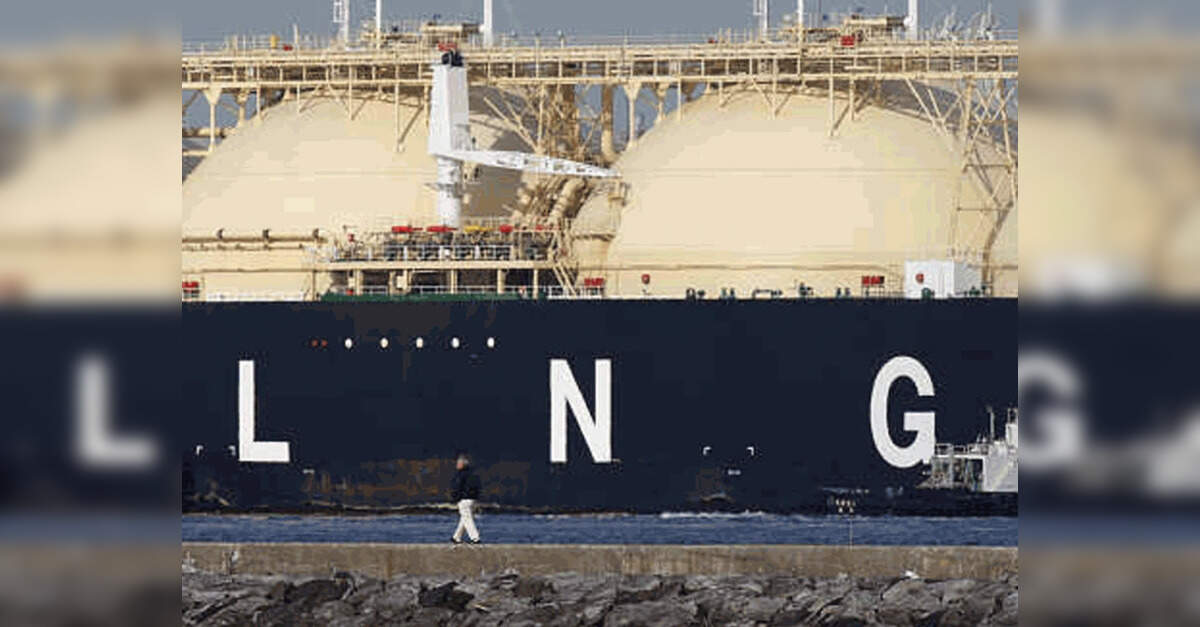
India’s swift move to secure spot Liquefied Natural Gas (LNG) supplies for its critical urea production signals a significant shift in global energy procurement strategies, directly influenced by escalating geopolitical tensions in West Asia. This proactive stance, spurred by a substantial 40% reduction in gas imports from Qatar due to vessel movement constraints, underscores the fragility of global supply chains and the immediate impact on key industrial sectors. For energy investors, this development is not merely a localized event but a powerful indicator of sustained demand in the spot LNG market, potential upward pressure on gas prices, and the intertwined risks of energy security and food inflation. As the world’s largest importer of urea, India’s actions reverberate across commodity markets, demanding close attention to both short-term price movements and long-term strategic adjustments.
India’s Aggressive Spot LNG Bid Reshapes Market Dynamics
The decision by the Indian government to issue global tenders for spot gas, with the first phase of purchases anticipated by Tuesday, marks a decisive intervention to mitigate domestic urea production shortfalls. This comes after key manufacturers, including those served by Petronet LNG, faced significant supply disruptions, leading some to initiate annual maintenance shutdowns earlier than planned. The inability of tankers to reach Qatar’s Ras Laffan terminal, a direct consequence of the escalating conflict in West Asia, has highlighted the vulnerability of even established long-term contracts when maritime routes are compromised. This sudden influx of demand from a major economy like India for immediate LNG cargoes is poised to tighten the global spot market, potentially driving up prices for short-term deliveries. Investors should watch for increased volatility in regional gas hubs as other nations, too, reassess their supply resilience in light of persistent geopolitical risks.
Geopolitical Tensions Underpinning Crude Volatility
The very conflict disrupting India’s LNG imports from Qatar is simultaneously a primary driver of volatility across the broader crude oil market. As of today, Brent Crude trades at $92.9, reflecting a modest daily decline of 0.36%, though its range today saw it dip to $92.57 before recovering slightly. WTI Crude mirrors this trend, standing at $89.24, down 0.48%. This recent stability belies a more significant trend; Brent has actually seen a notable decline of 7% over the past two weeks, falling from $101.16 on April 1st to $94.09 by April 21st. Despite this short-term dip, the underlying geopolitical premium remains robust. Many of our readers are actively questioning the future trajectory of oil prices, with common inquiries centering on whether WTI will trend up or down, and what the price per barrel might be by the end of 2026. India’s heightened spot LNG demand, a direct consequence of regional instability, serves as a stark reminder that supply-side shocks, whether to gas or oil, are a persistent threat. While the immediate focus is on gas, any further escalation in West Asia, particularly involving major oil-producing nations, could quickly erase recent crude price declines and push benchmarks back towards, or even above, recent highs, creating a challenging environment for investors seeking directional clarity.
Fertilizer Security and the Looming Kharif Season
India’s proactive procurement of both spot gas and global urea tenders is a direct response to the critical importance of the upcoming Kharif season. Starting in June, this monsoon planting period accounts for over half of India’s foodgrain production, encompassing staple crops like rice, oilseeds, pulses, and cotton. The government’s expectation to receive the bulk of ordered urea by the end of March, and to attain “comfortable stocks of fertilisers” by May 15th, ahead of the Kharif demand peak, highlights the urgency. Any sustained disruption to urea availability could have severe implications for agricultural yields and, consequently, food inflation, a sensitive issue for policymakers. For investors, monitoring the success of India’s procurement efforts and the stability of global fertilizer prices will be crucial. Companies involved in fertilizer production, logistics, and agricultural commodities could see significant impacts, either positive from increased demand or negative from supply chain volatility.
Navigating Future Energy Markets: Key Data Points for Investors
Looking ahead, energy investors must remain attuned to a series of upcoming events that will provide further clarity on market fundamentals. The current volatility, exacerbated by geopolitical events like the West Asia conflict and India’s subsequent market intervention, makes these data points even more critical. This week, we anticipate the EIA Weekly Petroleum Status Report on Wednesday, April 22nd, which will offer fresh insights into U.S. crude oil and product inventories, refining activity, and demand indicators. Following this, the Baker Hughes Rig Count on Friday, April 24th, will shed light on North American drilling activity, a key barometer for future supply. Further critical reports are scheduled for the following week, including the API Weekly Crude Inventory on April 28th and another EIA Weekly Petroleum Status Report on April 29th. The EIA’s Short-Term Energy Outlook on May 2nd will provide updated projections for supply, demand, and prices across various energy commodities. These reports, alongside real-time updates on geopolitical developments, will be instrumental in shaping investor sentiment and guiding decisions in a market grappling with persistent supply-side risks and evolving demand patterns, especially as major importers like India adjust their strategies.


