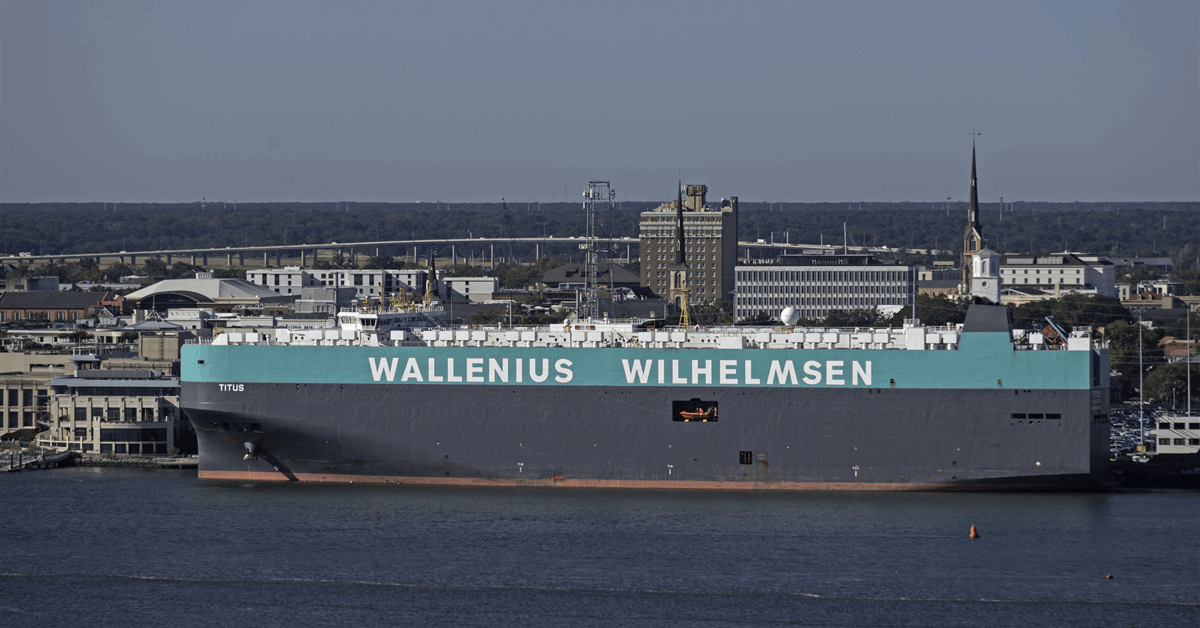
Equinor’s latest move into the green shipping fuel market signals a calculated pivot for the Norwegian energy giant, one that savvy investors should scrutinize closely. By securing a two-year contract with Wallenius Wilhelmsen to supply locally produced bio-methanol from 2026, Equinor is not merely dabbling in alternative fuels; it is cementing its position as a key player in the decarbonization of the maritime sector. This strategic commitment to scalable, lower-emission solutions offers a compelling narrative for long-term value creation, especially as the broader energy landscape continues its complex transition amidst fluctuating traditional commodity prices.
Equinor’s Strategic Dive into Green Shipping Fuels
Equinor’s agreement with Wallenius Wilhelmsen represents more than just a supply deal; it’s an affirmation of bio-methanol’s growing role in maritime decarbonization. The contract, set to commence in 2026, will see bio-methanol delivered to critical European hubs like Zeebrugge and Antwerp, fueling Wallenius Wilhelmsen’s new dual-fuel methanol vessels. What makes this particularly interesting for investors is Equinor’s innovative “mass-balance” production method. Utilizing existing infrastructure at its Tjeldbergodden facility in Norway, which boasts an impressive 900,000 metric tons per year methanol capacity, Equinor will produce bio-methanol from bio-methane in the gas grid. This approach, certified according to ISCC EU, not only enables rapid scaling by leveraging existing assets but also contributes significantly to emissions reduction, promising a 95 percent cut in CO2 compared to conventional fuels. This isn’t Equinor’s first foray, either; prior agreements with industry titans like Maersk and NCL underscore a clear, consistent strategy to corner this nascent, high-growth market, positioning the company as a leader in practical, scalable low-carbon fuel solutions.
Navigating Market Volatility: A Hedging Strategy Amidst Crude Fluctuations
The timing of Equinor’s deepened commitment to bio-methanol is particularly pertinent given the current dynamics in the conventional oil market. As of today, Brent Crude trades at $92.9, a modest decline of 0.36% within a daily range of $92.57-$94.21. Similarly, WTI Crude stands at $89.24, down 0.48% for the day. While these are strong prices historically, the 14-day trend reveals a more significant softening, with Brent falling from $101.16 on April 1st to $94.09 on April 21st, representing a notable 7% drop. This volatility in traditional crude markets, which has our readers frequently asking about the immediate direction of WTI or projecting end-of-year oil prices, underscores the strategic value of Equinor’s diversification. Investing in stable, contract-backed green fuel supply chains provides a crucial hedge against the inherent cyclicality and geopolitical sensitivities of fossil fuels. For investors evaluating the long-term resilience of energy majors, Equinor’s move signifies a proactive approach to mitigating risk and securing future revenue streams independent of short-term crude price swings, offering a more predictable growth trajectory than a pure-play oil producer.
Bio-Methanol’s Scalability and Investment Outlook
The core of Equinor’s bio-methanol strategy lies in its inherent scalability and environmental benefits, which are key drivers for investor interest in sustainable energy. The production method, which effectively captures methane emissions from manure feedstock and converts it into bio-methanol using existing infrastructure, minimizes environmental impact while maximizing efficiency. This “less pressure on pristine land, natural resources and the environment” approach aligns perfectly with ESG mandates increasingly scrutinized by institutional investors. Wallenius Wilhelmsen’s Vice President of Energy and Regulations highlighted a critical point for the industry: “Long-term agreements help create the demand signals fuel producers need to invest and scale production.” This feedback loop is vital. Equinor’s multi-year contracts provide the revenue visibility necessary to justify further investment in bio-methanol production, which could see its Tjeldbergodden facility, already producing 900,000 metric tons annually, expand capacity or replicate its model. For investors asking about the long-term performance of companies like Repsol, Equinor’s strategy serves as a blueprint for how integrated energy companies can build durable value by addressing both current energy needs and future environmental imperatives.
Forward Vision: Upcoming Catalysts and Equinor’s Strategic Position
Looking ahead, the next few weeks will bring a flurry of key energy reports that, while primarily focused on traditional oil and gas, will indirectly shape the broader investment landscape for companies like Equinor. Investors should pay close attention to the EIA Weekly Petroleum Status Reports on April 22nd, April 29th, and May 6th, as well as the Baker Hughes Rig Counts on April 24th and May 1st. These reports will offer critical insights into current supply, demand, and drilling activity, influencing sentiment around the profitability of conventional upstream operations. However, the most significant forward-looking event will be the EIA Short-Term Energy Outlook on May 2nd. This outlook will provide crucial forecasts for crude oil, natural gas, and refined product prices, as well as production and consumption trends, extending well into 2026. While Equinor benefits from strong traditional revenues, its strategic commitment to bio-methanol positions it uniquely to thrive regardless of minor fluctuations in these reports. This forward-thinking approach, driven by long-term decarbonization goals and firm contracts, suggests Equinor is building a resilient business model that can deliver sustainable returns, addressing investor concerns about long-term oil price stability by diversifying its portfolio into areas with clear growth trajectories and robust demand signals from the shipping sector.


