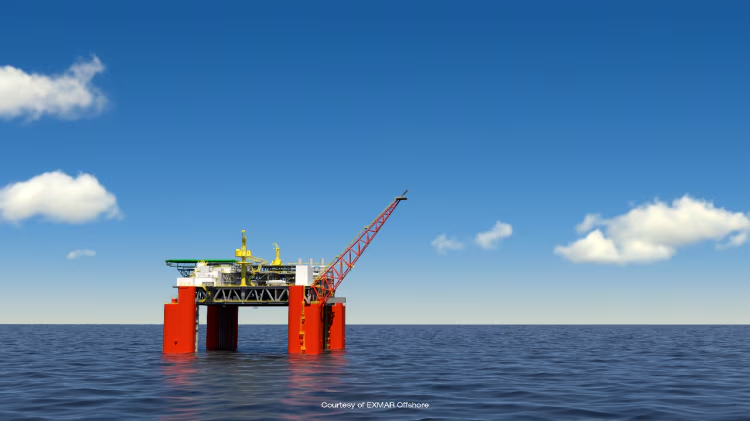
BP’s recent approval to proceed with its Kaskida deepwater project in the Gulf of Mexico marks a pivotal moment for the supermajor and for the broader deepwater investment landscape. This development is not merely a procedural green light; it represents a significant strategic recommitment by BP to long-cycle hydrocarbon production in a region historically critical to its portfolio, particularly after the profound impact of the 2010 Deepwater Horizon incident. For investors, Kaskida offers a tangible indicator of BP’s dual-strategy execution: pursuing energy transition initiatives while simultaneously shoring up its core oil and gas assets to ensure robust cash flow and shareholder returns well into the next decade. As we delve into the implications, it’s clear this project will shape BP’s production profile and investor sentiment for years to come.
Kaskida: A Cornerstone for BP’s Future Production & Deepwater Resurgence
The Kaskida project is poised to be BP’s first full-blown new field development in the U.S. Gulf of Mexico since the catastrophic Macondo well incident, signaling a decisive return to large-scale deepwater exploration and production. Scheduled to commence crude production in 2029, Kaskida is a long-term play, but one with substantial upside. The initial phase alone is anticipated to yield approximately 275 million barrels of oil equivalent, tapping into an estimated 10 billion barrels of discovered resources within the Gulf’s Paleogene fields. This $5 billion investment is a testament to BP’s confidence in both its technological advancements – enabling the safe management of Kaskida’s high-pressure, complex geology, which had previously kept the field undeveloped for nearly two decades since its discovery around 2006 – and the enduring demand for hydrocarbons. For investors, this project underscores BP’s commitment to leveraging its deepwater expertise, securing future production volumes, and enhancing shareholder value through strategic capital allocation in world-class assets.
Navigating Current Market Dynamics and Investor Queries
Against the backdrop of such long-term strategic moves, the immediate energy market provides a critical context. As of today, Brent crude trades at $92.96 per barrel, reflecting a modest daily dip of 0.3%, while WTI crude stands at $89.36, down 0.35%. This minor daily fluctuation comes after a more significant downward trend over the past two weeks, with Brent having softened by approximately 7% from $101.16 on April 1st to $94.09 yesterday. This recent softening in crude prices naturally prompts questions from our investor community, with a significant volume of inquiries focusing on future price direction. Many readers are asking about the trajectory of WTI and what we predict for oil prices by the end of 2026. While short-term volatility is a constant in energy markets, BP’s commitment to projects like Kaskida illustrates a long-term perspective. These multi-billion-dollar investments are made with a view that global energy demand, particularly for oil, will remain robust for decades, justifying the significant upfront capital and extended development timelines. Therefore, while investors monitor weekly inventory reports and rig counts for immediate trading signals, a deeper analysis of BP’s strategy reveals a strong belief in the foundational value of large-scale, high-return hydrocarbon assets.
Regulatory Landscape and Environmental Scrutiny: A Calculated Risk
The approval of Kaskida by the Department of Interior was not without its challenges, facing objections from environmental advocacy groups and Democratic lawmakers concerned about the potential for another Deepwater Horizon-like incident and the broader implications of ultra-deepwater drilling. This highlights the increasingly complex regulatory and social license environment for major oil and gas projects. BP’s emphasis on “the safety of our people and the environment” as its highest priority is not merely rhetoric; it reflects the heightened scrutiny and stringent operational requirements now demanded of deepwater operators. For investors, the successful navigation of these regulatory hurdles for Kaskida provides reassurance regarding BP’s operational capabilities and its ability to secure approvals for critical projects. It also signals that, despite political pressures and the energy transition narrative, strategic hydrocarbon developments in key basins like the Gulf of Mexico can still gain traction, albeit with significantly enhanced safety protocols and environmental safeguards.
Upcoming Market Catalysts and the Long-Term Deepwater Outlook
While Kaskida’s production is years away, several upcoming market events will continuously shape the investment environment for companies like BP and the broader deepwater sector. Investors will closely watch the EIA Weekly Petroleum Status Reports on April 22nd, April 29th, and May 6th for immediate insights into crude inventory levels and demand trends. Similarly, the Baker Hughes Rig Count on April 24th and May 1st will offer a pulse on upstream activity, while the API Weekly Crude Inventory reports on April 28th and May 5th provide supplementary data. Perhaps most impactful for the longer-term outlook, the EIA Short-Term Energy Outlook (STEO) due on May 2nd will provide updated forecasts for supply, demand, and prices, potentially influencing investor sentiment towards long-cycle projects. These data points, while short-term in nature, feed into the broader narrative of energy security and supply certainty. For BP, a strong and stable market outlook reinforces the strategic value of Kaskida. This project, alongside others like the recently sanctioned Tiber-Guadalupe development, demonstrates BP’s long-term commitment to the Gulf of Mexico, reinforcing its position as a key player in deepwater exploration and production, and offering significant future growth potential for patient investors.