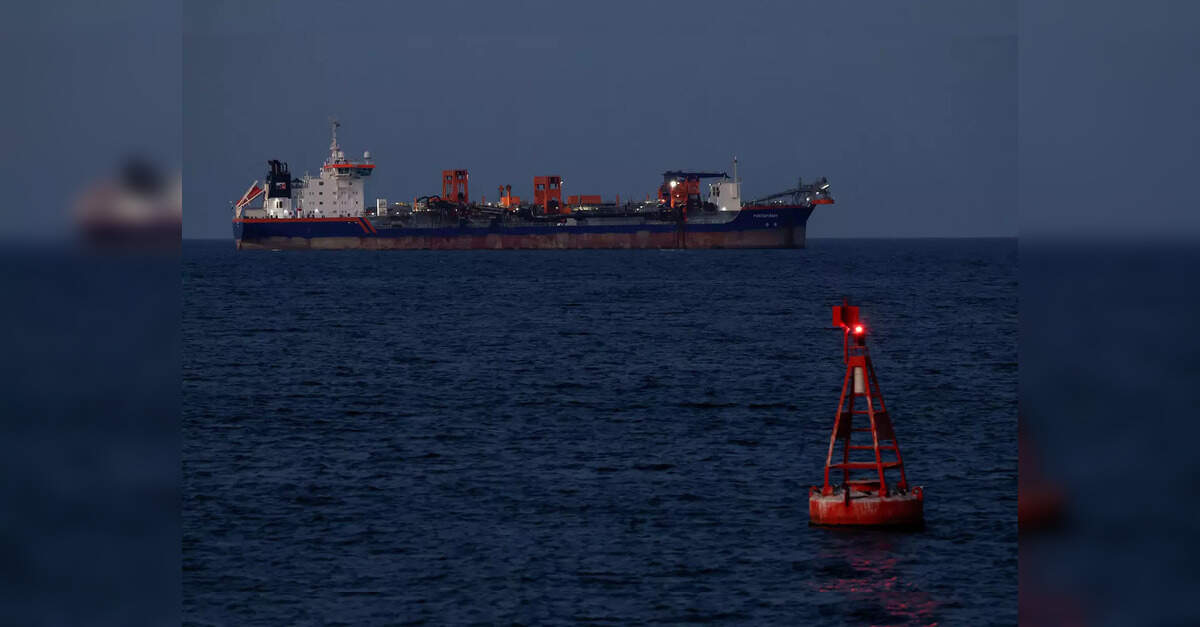
The Strait of Hormuz, a choke point through which a significant portion of the world’s seaborne oil passes, remains a critical area of geopolitical and economic sensitivity for energy markets. Recent developments indicate a limited but notable de-escalation concerning the transit of Indian-flagged liquefied petroleum gas (LPG) vessels. Iranian authorities have reportedly granted assurances for safe passage through the Strait, a move that provides a degree of relief for specific trade routes amidst broader regional tensions. For investors, understanding the implications of such micro-level de-escalations within a volatile macro environment is paramount to navigating energy market risks and opportunities. While this particular risk has eased, the fundamental geopolitical landscape in West Asia continues to demand vigilance, and its interplay with global supply-demand dynamics dictates the broader trajectory of crude and refined product prices.
Geopolitical De-escalation: A Specific Risk Mitigated
In a move signaling a measured approach to international relations, Iranian officials have confirmed that Indian-flagged vessels transporting LPG will be afforded safe transit through the Strait of Hormuz. This confirmation follows ongoing coordination efforts by India’s Ministry of Ports, Shipping and Waterways, which has been actively monitoring its maritime assets and personnel in the Persian Gulf region. Currently, 24 Indian-flagged vessels, crewed by 668 Indian seafarers, operate within the Persian Gulf, with 76 seafarers on three specific vessels positioned east of the Strait. The case of the Shivalik, an LPG carrier last reported in the Gulf of Oman and expected to reach its destination by March 21, exemplifies the practical implications of these assurances. Iranian Ambassador to India, Mohammad Fathali, emphasized the long-standing friendship and shared interests between the two nations as the basis for this commitment, highlighting mutual responsibility. This development, while specific to Indian LPG carriers, is significant. It demonstrates that even amid heightened regional conflicts, targeted diplomatic channels can alleviate immediate supply chain vulnerabilities, preventing a direct and immediate disruption to critical energy flows for key importers like India. However, it’s crucial for investors to recognize this as a precise de-escalation of *one* specific risk, rather than a comprehensive resolution of the broader geopolitical instability impacting the region.
Market Reaction and Broader Price Trends
The market’s immediate reaction to this news has been somewhat muted, suggesting that while positive, this specific de-escalation doesn’t fundamentally alter the overarching supply-demand narrative or the broader geopolitical risk premium. As of today, Brent Crude trades at $92.96 per barrel, reflecting a slight dip of 0.3% within a daily range of $92.57 to $94.21. Similarly, WTI Crude stands at $89.36, down 0.35%, fluctuating between $88.76 and $90.71. Gasoline prices also saw a minor decline to $3.11, a 0.64% decrease. This relative stability, or minor downward pressure, suggests that the market either had this specific risk priced in or that other factors are exerting more significant influence. Looking at the 14-day trend, Brent has seen a more substantial decline, moving from $101.16 on April 1st to $94.09 on April 21st, a decrease of $7.07 or 7%. This broader downward trend indicates that despite persistent regional tensions, the market is grappling with a complex mix of supply expectations, demand outlooks, and potentially a recalibration of geopolitical risk premiums, where localized de-escalations, while welcome, do not override the larger picture. For LPG investors, the assured passage reduces a direct logistical bottleneck, but broader energy price movements will still be dictated by global crude fundamentals.
Investor Concerns and the Path Forward
Our proprietary intent data from OilMarketCap.com reveals that investors are keenly focused on the near-term direction of crude prices. Queries such as “is WTI going up or down” are prominent, underscoring a deep uncertainty about market momentum amidst the current geopolitical backdrop. This specific assurance for Indian LPG transit provides a small piece of the puzzle, easing concerns about a direct, immediate interruption of supply from the Strait for a vital energy commodity. However, it doesn’t address the underlying tensions that could still impact other shipping lanes or crude oil flows. Investors are right to remain cautious. While India’s LPG supply security via Hormuz appears temporarily stable, the broader implications of the West Asia conflict on global energy security, particularly crude oil and refined products, remain high. The persistent calls from Iranian officials for international pressure on the US to de-escalate regional conflicts highlight the fragility of the current situation. For investors, this means maintaining a diversified portfolio, hedging against potential disruptions, and closely monitoring all signals from the region, as localized assurances can quickly be overshadowed by broader escalations.
Navigating Future Volatility: Key Events on the Horizon
Even as specific geopolitical risks are mitigated, the energy market remains highly sensitive to fundamental data releases. Investors must look beyond headline news to understand the true supply-demand picture. Over the next two weeks, several key events will provide crucial insights. The EIA Weekly Petroleum Status Reports, scheduled for April 22nd and April 29th, will offer detailed updates on U.S. crude oil, gasoline, and distillate inventories, providing a critical gauge of domestic supply and demand. Any significant build or draw could shift market sentiment, potentially overriding the impact of regional geopolitical news. Furthermore, the Baker Hughes Rig Count on April 24th and May 1st will shed light on North American drilling activity, indicating future production trends. Perhaps most significant for a forward-looking perspective will be the EIA Short-Term Energy Outlook on May 2nd. This comprehensive report will provide updated forecasts for global and domestic energy markets, including oil prices, production, and consumption, offering a macro framework against which to assess current events. While the easing of the Indian LPG transit risk is positive, these upcoming data points will be instrumental in shaping investor outlooks for the broader oil and gas market, influencing decisions far beyond the immediate geopolitical headlines.


