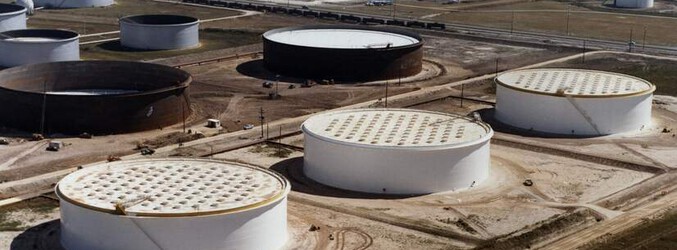
The global oil market is once again navigating a period of heightened volatility, driven by significant geopolitical events and strategic responses from major energy consumers. The latest move sees the United States initiating a substantial drawdown from its Strategic Petroleum Reserve (SPR), with an initial request to exchange 86 million barrels (MMbbl) of crude oil. This action is part of a larger 172 MMbbl release announced recently, which itself is coordinated with an international effort totaling 400 MMbbl. For investors, understanding the implications of this immense supply injection, its timing, and the underlying market drivers is paramount to making informed decisions in a rapidly shifting energy landscape.
The Strategic Petroleum Reserve: A Calculated Intervention
The decision to tap the SPR on such a scale underscores the gravity of the current energy crisis. The 86 MMbbl exchange represents a significant portion of the emergency reserves, with deliveries slated to commence by the end of next week and continue over a four-month period. This is not a simple sale but an exchange, meaning companies borrowing the crude will be required to return additional barrels as a premium to the Energy Department. The deadline for bids for this solicitation passed on March 17, setting the stage for the oil to hit the market imminently. This strategic maneuver by the Trump administration is a direct response to the dramatic surge in crude, gasoline, diesel, and jet fuel prices, which have been severely impacted by the US-Israel invasion of Iran. The resulting near-standstill of shipping traffic in the Strait of Hormuz, a critical chokepoint normally responsible for approximately one-fifth of global oil flows, has pushed energy markets into turmoil. Beyond market stabilization, the release also carries a political dimension, aimed at alleviating pressure on President Donald Trump regarding rising fuel costs ahead of November’s midterm elections.
Market Dynamics and Price Realities
Despite the colossal scale of the announced SPR release, the immediate market reaction reveals a complex interplay of forces. As of today, Brent Crude trades at $92.96 per barrel, down a modest 0.3% within a daily range of $92.57 to $94.21. Similarly, WTI Crude stands at $89.36, registering a 0.35% decline, with its daily range between $88.76 and $90.71. Gasoline prices also reflect this slight softening, currently at $3.11, down 0.64%. While any downward movement is welcome for consumers, a broader look at the market trend shows Brent Crude has fallen by $7.07, or 7%, over the past 14 days, from $101.16 on April 1st to $94.09 on April 21st. This suggests that while the announcement of the SPR release might have contributed to some downward pressure, the current price levels remain elevated, indicating that the underlying supply disruptions from the Strait of Hormuz and strong demand are still exerting significant upward pressure. Investors should recognize that the market has likely already begun to price in the anticipated supply injection, yet ongoing geopolitical risks are preventing a more substantial correction.
Navigating Future Supply and Demand Signals
For discerning investors, the coming weeks will offer crucial data points to assess the true impact of the SPR release and the broader market trajectory. With deliveries expected to begin shortly, attention will turn to how this additional supply manifests in inventory reports. The upcoming EIA Weekly Petroleum Status Reports on April 22, April 29, and May 6, alongside the API Weekly Crude Inventory updates on April 28 and May 5, will be vital. These reports will provide the first tangible evidence of crude moving into commercial storage and refineries, offering insights into whether the SPR barrels are effectively easing tight supply conditions or merely being absorbed without significant price relief. Furthermore, the Baker Hughes Rig Count on April 24 and May 1 will illustrate domestic drilling activity, which could impact future supply. The Energy Department’s plan to replace approximately 200 MMbbl within the next year, 20% more than what is being drawn down, introduces a critical forward-looking demand factor. This scheduled replenishment will create future buying pressure, potentially offsetting some of the current bearish sentiment from the release. Finally, the EIA Short-Term Energy Outlook on May 2 will be eagerly awaited, as analysts assess how the agency revises its forecasts in light of the SPR action, the ongoing geopolitical crisis, and the broader economic outlook. These events are not just dates on a calendar; they are critical signposts for understanding the evolving supply-demand balance.
Investor Outlook: Weighing Volatility Against Long-Term Fundamentals
The questions on many investors’ minds this week, such as whether WTI is going up or down, and what the price of oil per barrel will be by the end of 2026, underscore the prevailing uncertainty. While the immediate injection of 86 MMbbl is designed to cool prices, the market’s response demonstrates that the geopolitical premium stemming from the Strait of Hormuz disruption remains a powerful force. The “exchange” nature of the SPR release is also critical: it’s a temporary loan, not a permanent depletion. The Energy Department’s commitment to replenishing the reserve with 200 MMbbl within a year means a significant amount of future demand is already built into the market. This scheduled replacement demand could provide a floor for prices later in the year and into 2027, preventing a protracted slump even if the immediate crisis subsides. Investors should consider that while the SPR action provides short-term relief, the fundamental supply constraints, coupled with the long-term energy transition and underinvestment in new production capacity, suggest that crude prices are likely to remain elevated and volatile. The path for WTI and Brent for the remainder of 2026 will heavily depend on the duration of the Strait of Hormuz disruptions, the effectiveness of international coordination, and the pace of SPR replenishment. Expect continued price swings, but with a structural bias towards higher levels than historical averages, as the market balances immediate supply boosts against enduring geopolitical risk and future demand for reserve rebuilding.